Skip to content
English · IE · EUR

Search

Your cart

Møbelpartner · Furniture knowledge

Furniture guides

50 guides to choosing materials, caring for your furniture and preparing reupholstery, chair weaving or new cushions. Find answers and the next step for your piece of furniture.

Knowledge you can use for your furniture

Start with what you want to resolve: a worn cover, a woven seat, a cushion made to measure or a surface that requires care. The guides help you distinguish between the tasks and gather the information that makes an assessment precise.

Choose a topic below. Each guide has relevant resources and links to the next step. If you already have images and a description, you can contact Møbelpartner.
50 guides

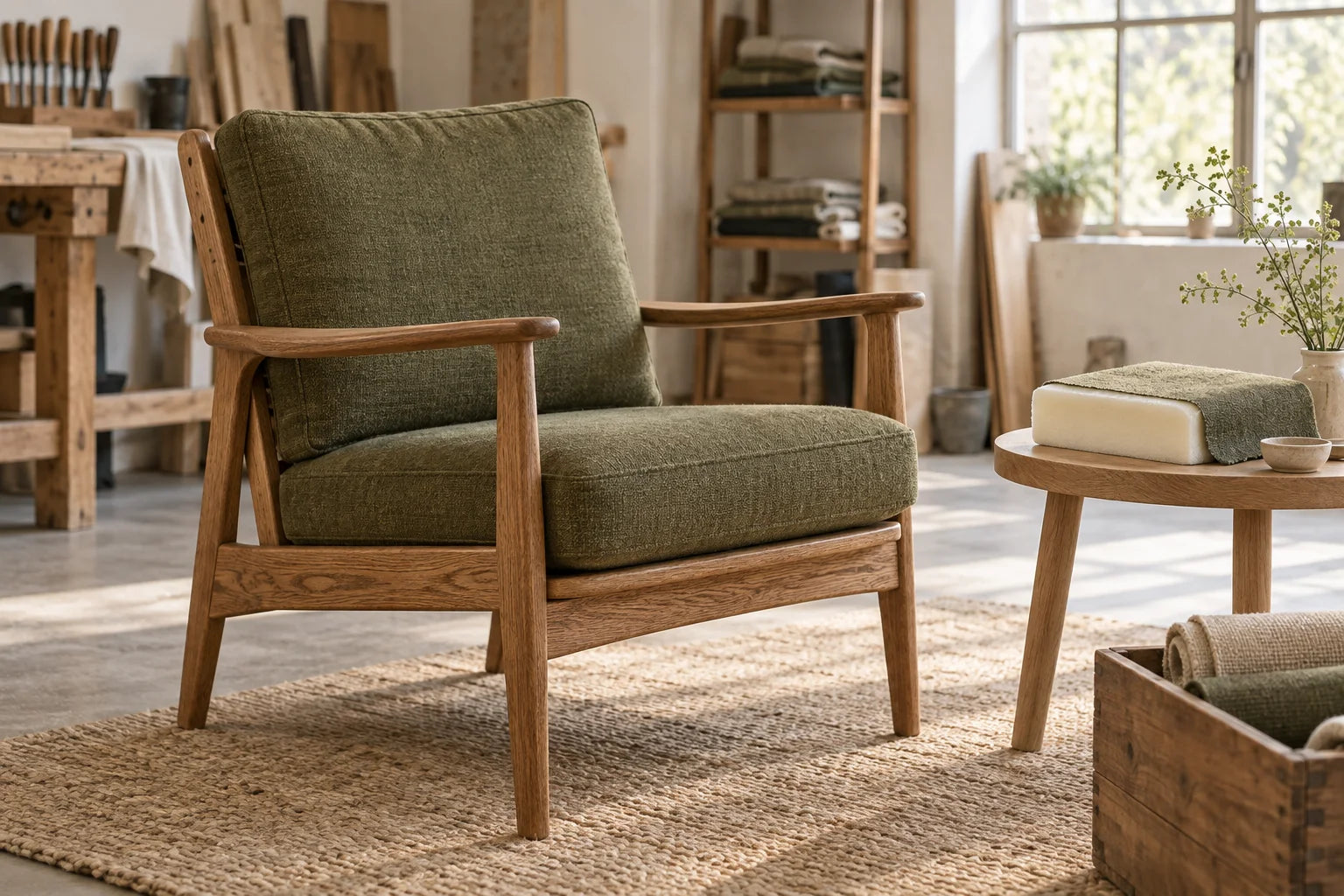
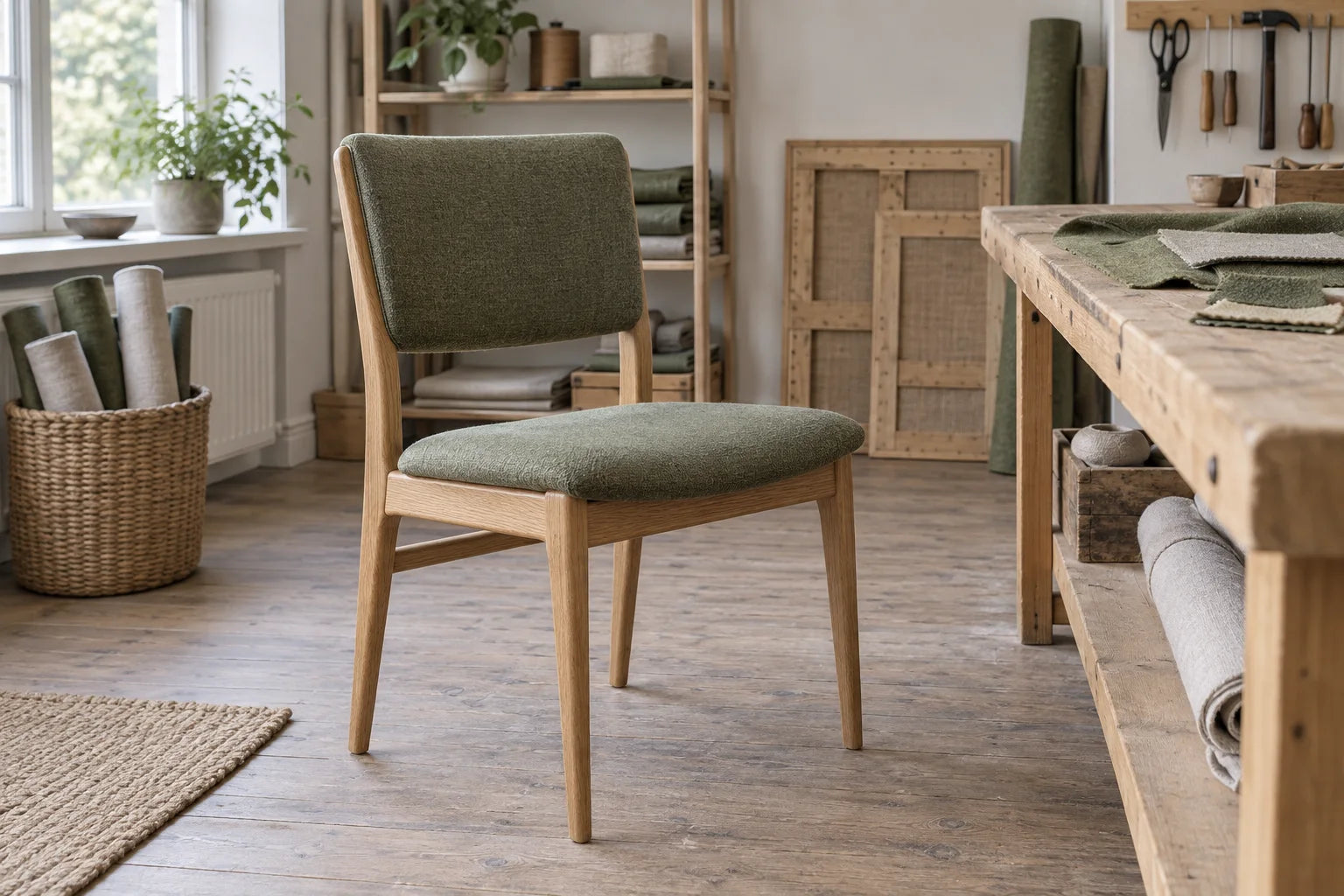
Chair with upholstered seat and back in green wool in a light workshop

Reupholstery

Chair with an upholstered back: what needs replacing?

Do both seat and back need reupholstering? See how to assess fabric, filling, joints and finishing details on a chair with an upholstered back.

Read the guide
Upholstery materials and fabric swatches neatly arranged on a wooden table

Reupholstery

What does reupholstery cost? How to read the quote

Understand what a quote for reupholstery covers: labour, fabric, foam, details and transport. Use the checklist to compare the same task.

Read the guide
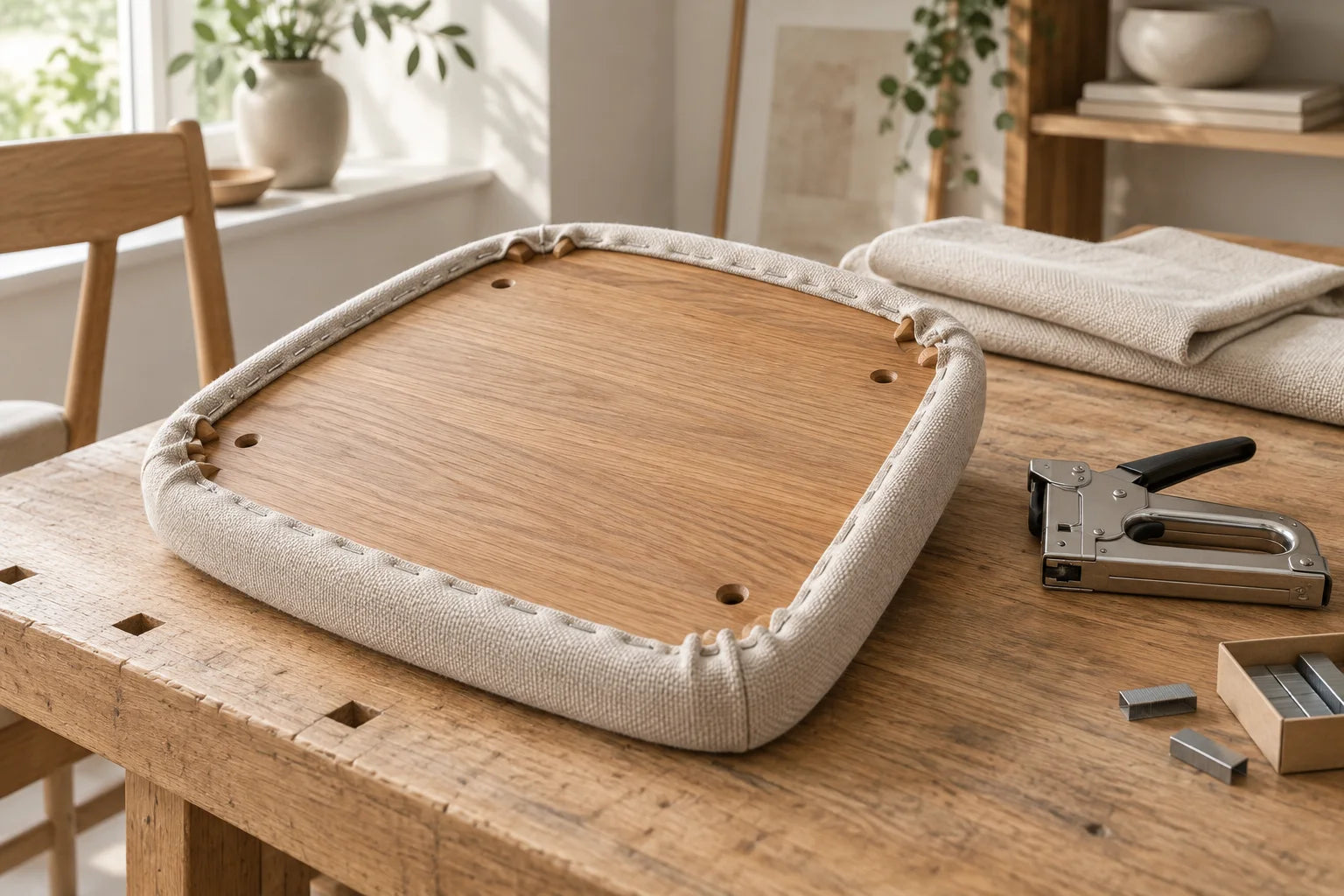
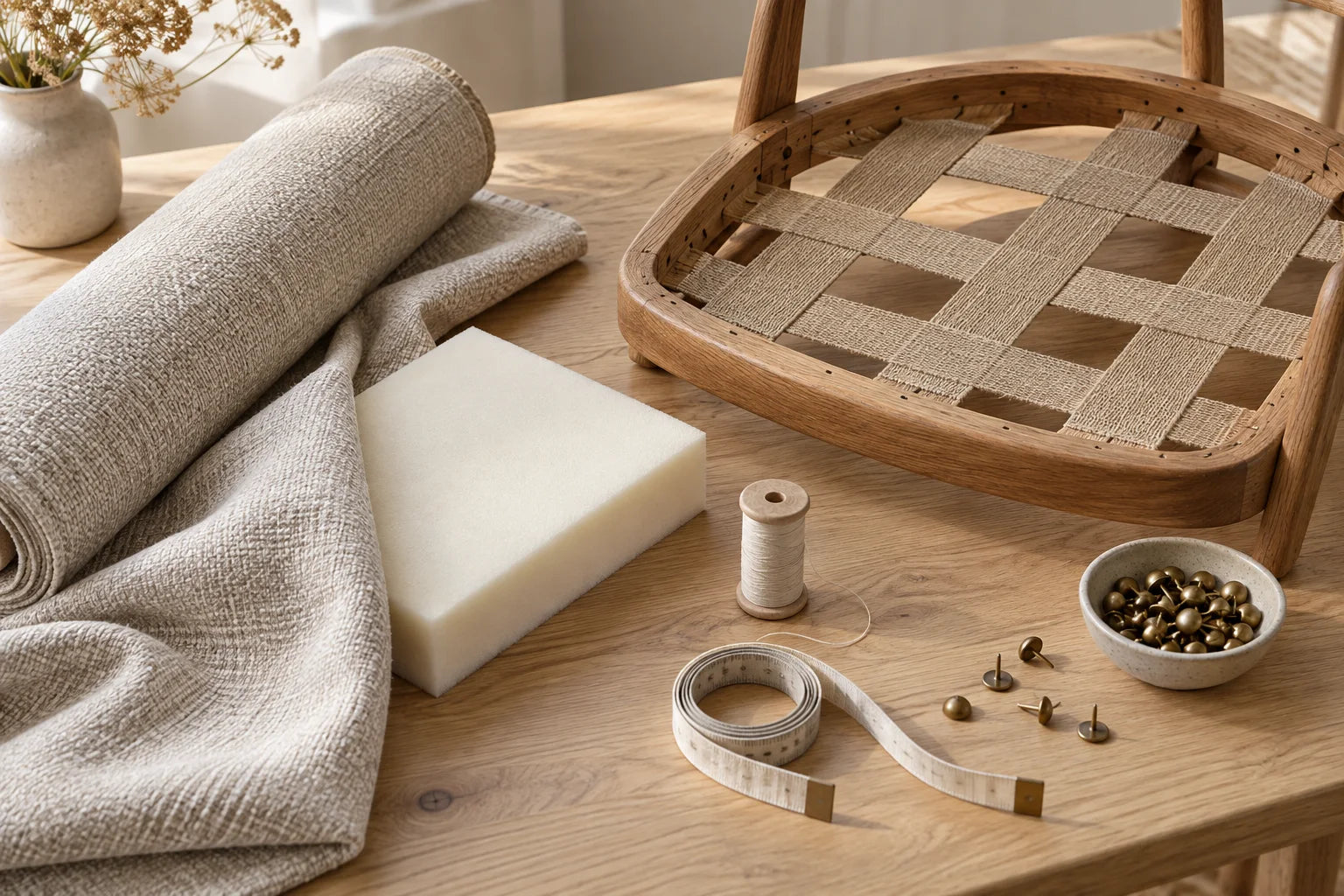
A removable chair seat with fabric and stapling tools on a workshop bench

Reupholstery

Reupholstering a chair yourself: how to assess the job

Assess whether your chair is suitable for reupholstery as a DIY project. Get a sequence for a single loose seat and clear indications for a larger job.

Read the guide
Light sofa with a loose seat cushion and fabric samples in a calm room

Reupholstery

Can you reupholster the sofa yourself?

Considering reupholstering the sofa yourself? Define the work between loose cushions, removable cover and fixed upholstery, before taking the sofa apart.

Read the guide
Old green armchair with wood armrests in a light interior

Reupholstery

Old armchair: preserve the form, renew the comfort

An old armchair may need more than new fabric. Read about form, support, original details and the photos that help before reupholstery.

Read the guide
Four matching dining chairs with light upholstered seats at a wooden table

Reupholstery

Recovering a set of chairs: achieve a consistent result

Plan re-covering several chairs together. Clarify differences in wear, fabric direction, colour and comfort, and agree on a sample before finishing the whole set.
Read the guide
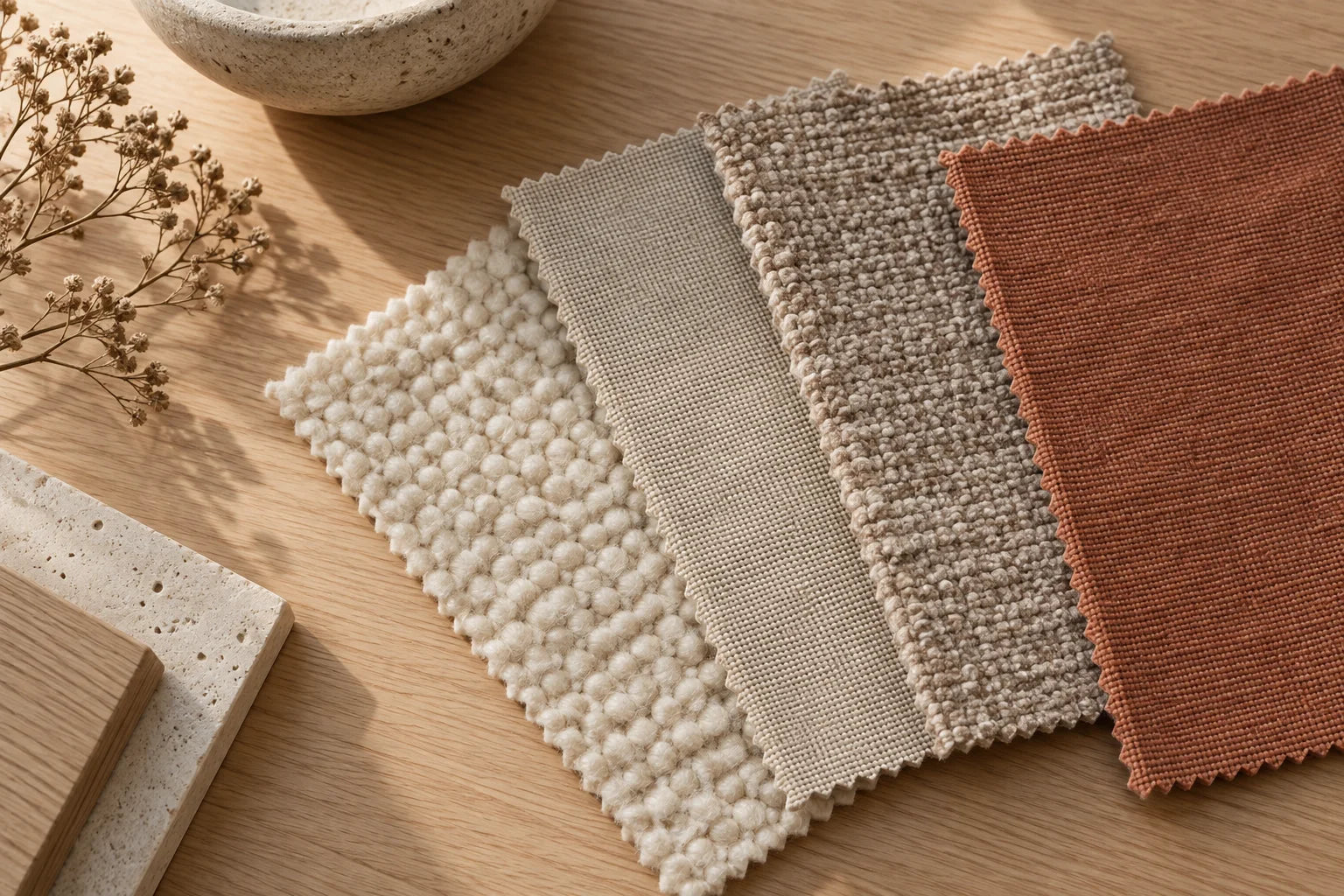
Upholstery fabric swatches in muted colors folded out on a table

Fabric & leather

Fabric for chairs: choose for use, shape and maintenance

Select fabric for reupholstering of chairs based on daily use, the chair's shape and the care you wish to give it. Use the checklist before the final colour choice.

Read the guide
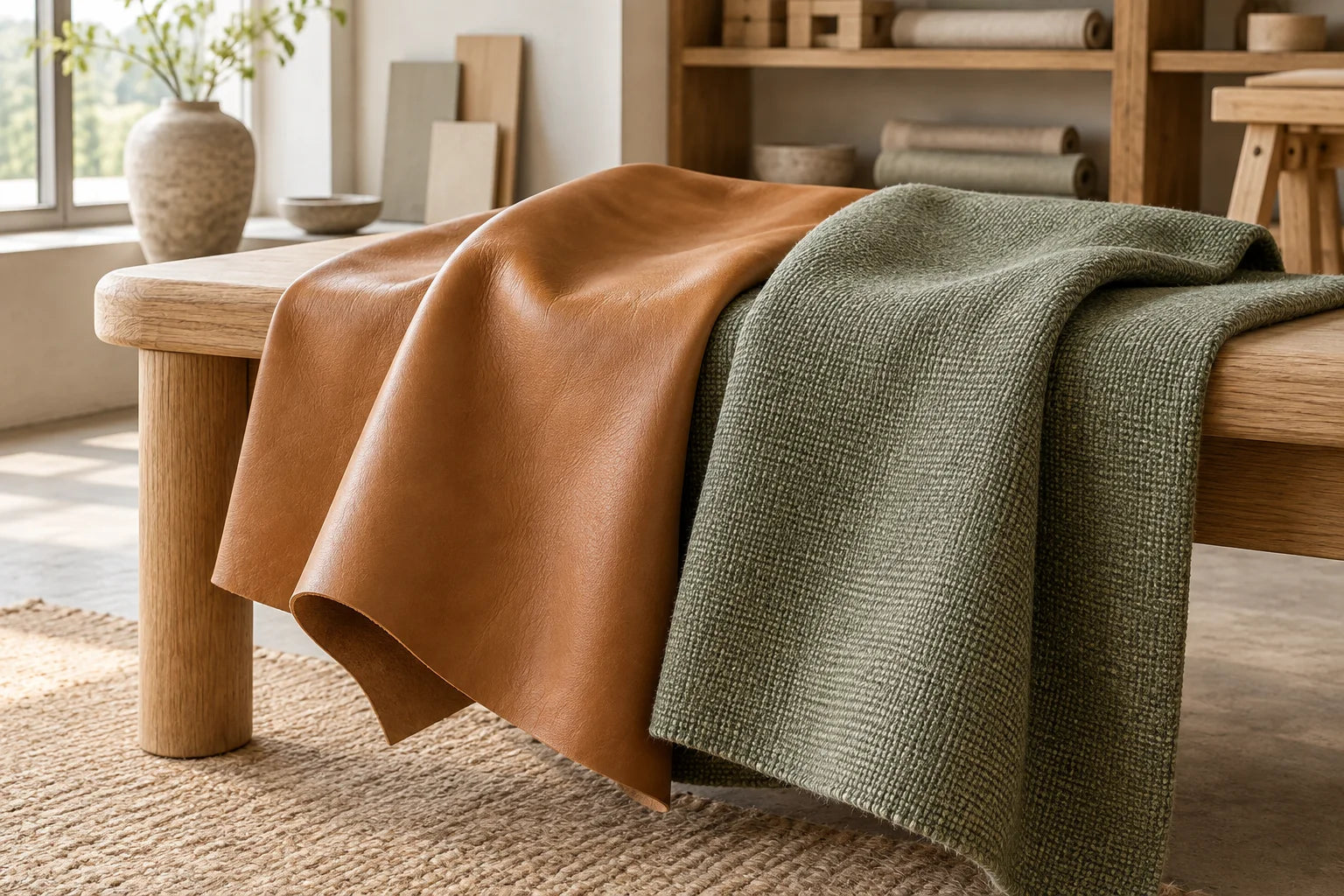
Brown leather samples next to a grey fabric sample on a wooden table

Fabric & leather

Leather for chairs: choosing the surface and appearance

Leather for chairs varies in surface, colour range and care. Clarify the specific quality, natural markings and the chair's form, before you choose the cover.
Read the guide
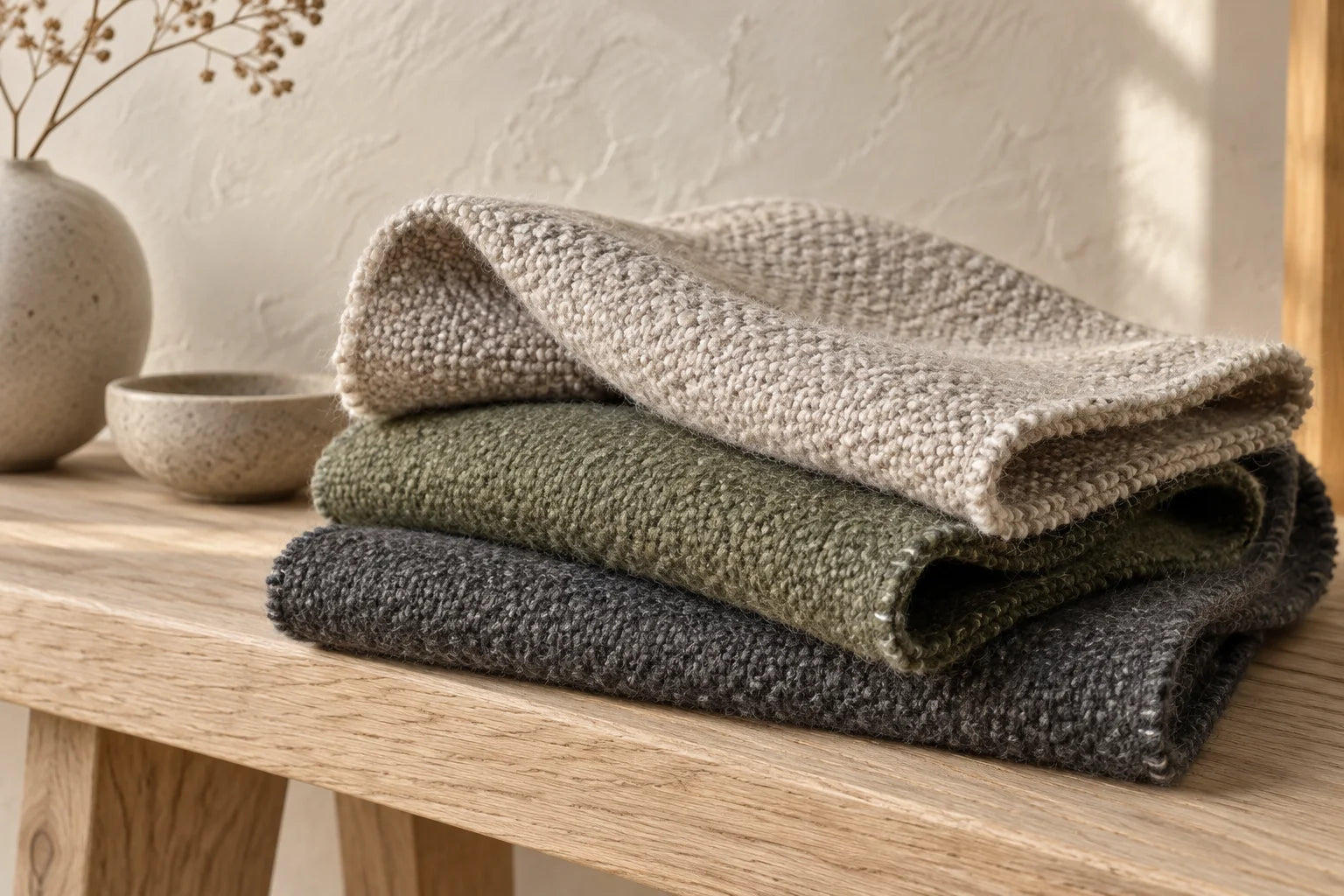
Folded wool fabrics in natural tones with a clear weave structure

Fabric & leather

Wool as upholstery fabric: properties and choices

Considering wool for a sofa or chair? Compare the specific weave, fibre composition, surface and care requirements rather than wool content alone.
Read the guide
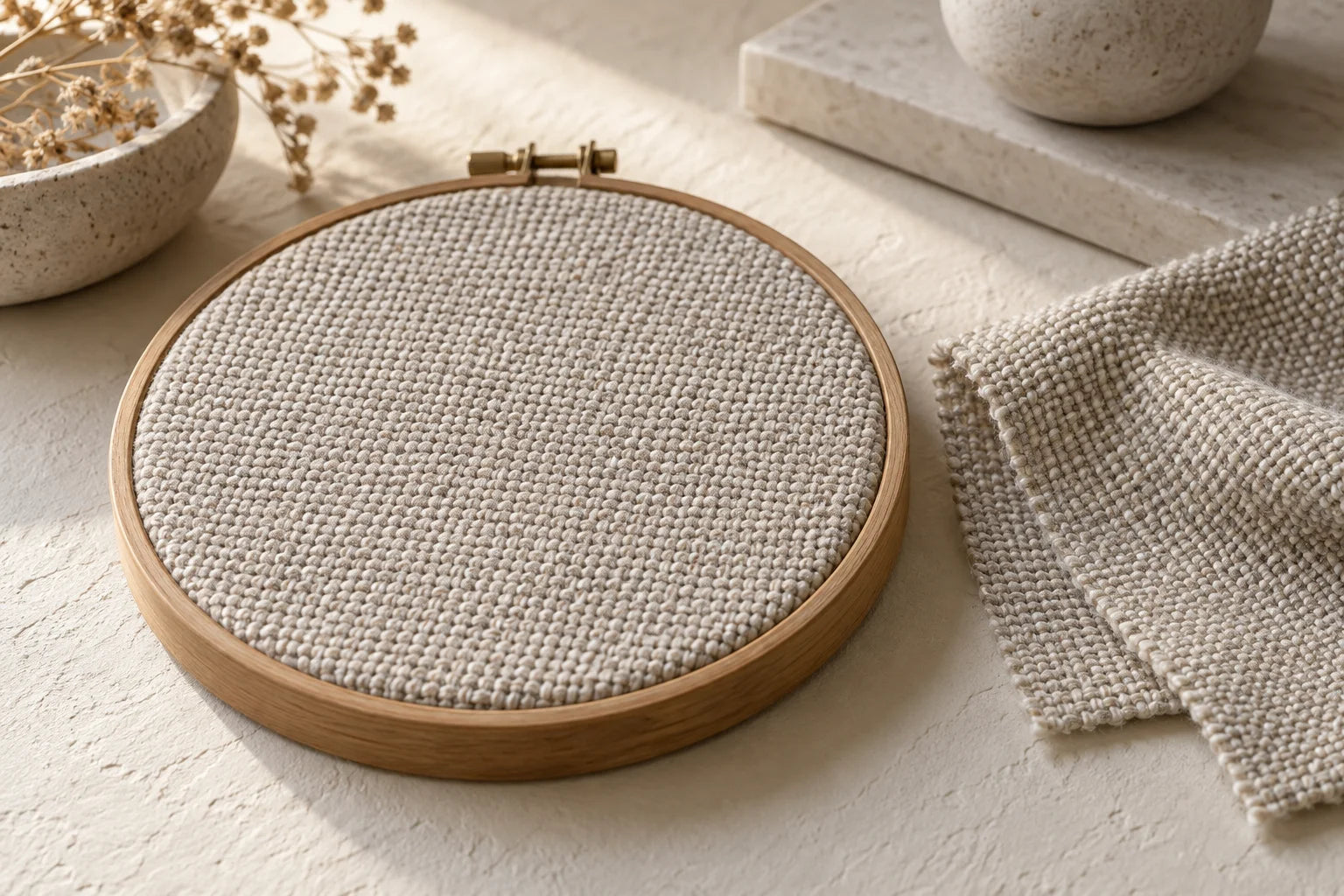
Tightly woven Upholstery fabric stretched in a round wooden frame as a material detail

Fabric & leather

Martindale: what does the number tell you about your upholstery fabric?

Martindale measures resistance to wear in a laboratory test. See why the figure is not a lifetime guarantee, and which other information you should compare.

Read the guide
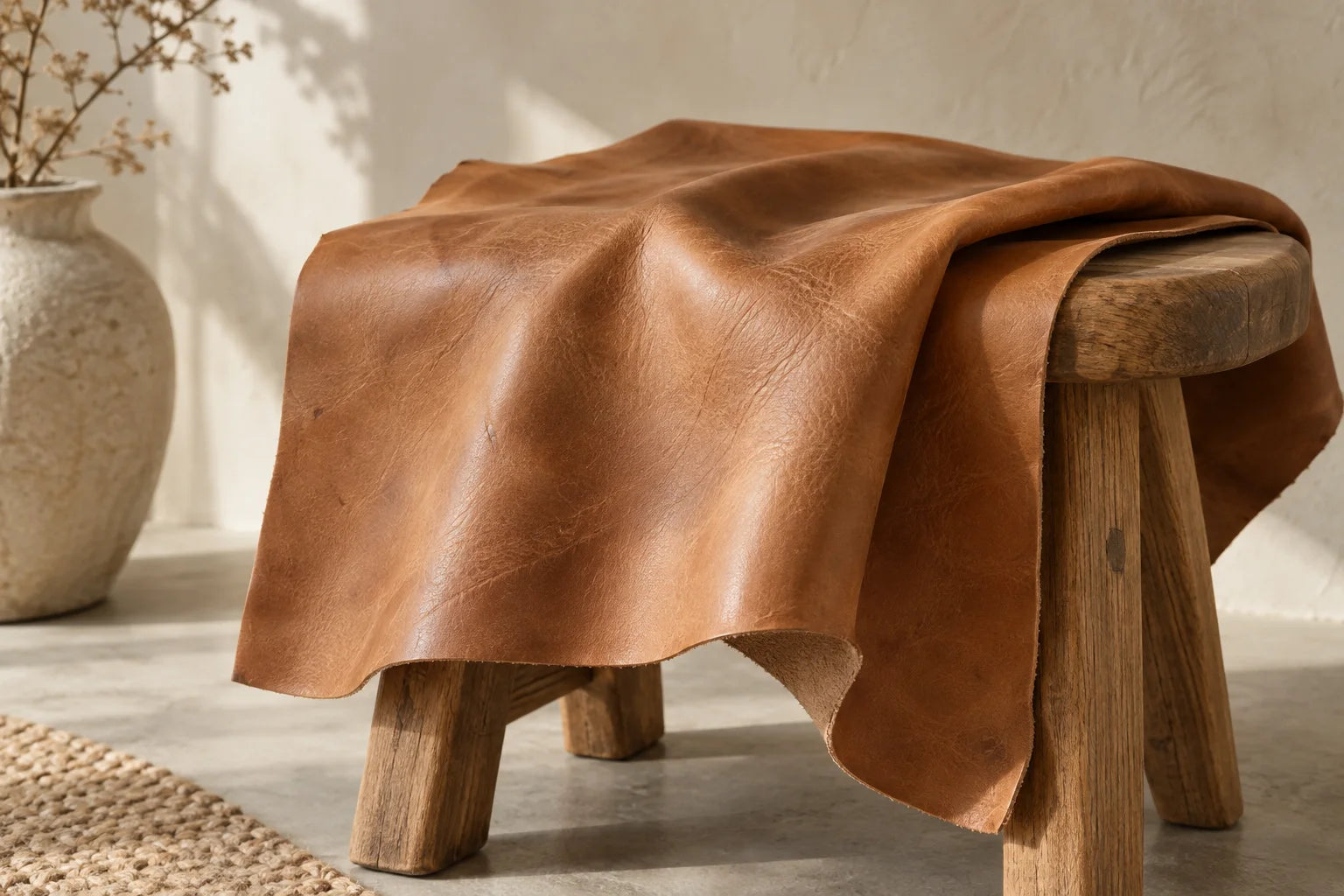
Natural cognac-coloured leather draped over a low wooden stool

Fabric & leather

Aniline leather: natural surface, patina and care

Aniline leather reveals the hide's natural character. Read about appearance, variation, patina and the questions to clarify before choosing and caring for it.

Read the guide
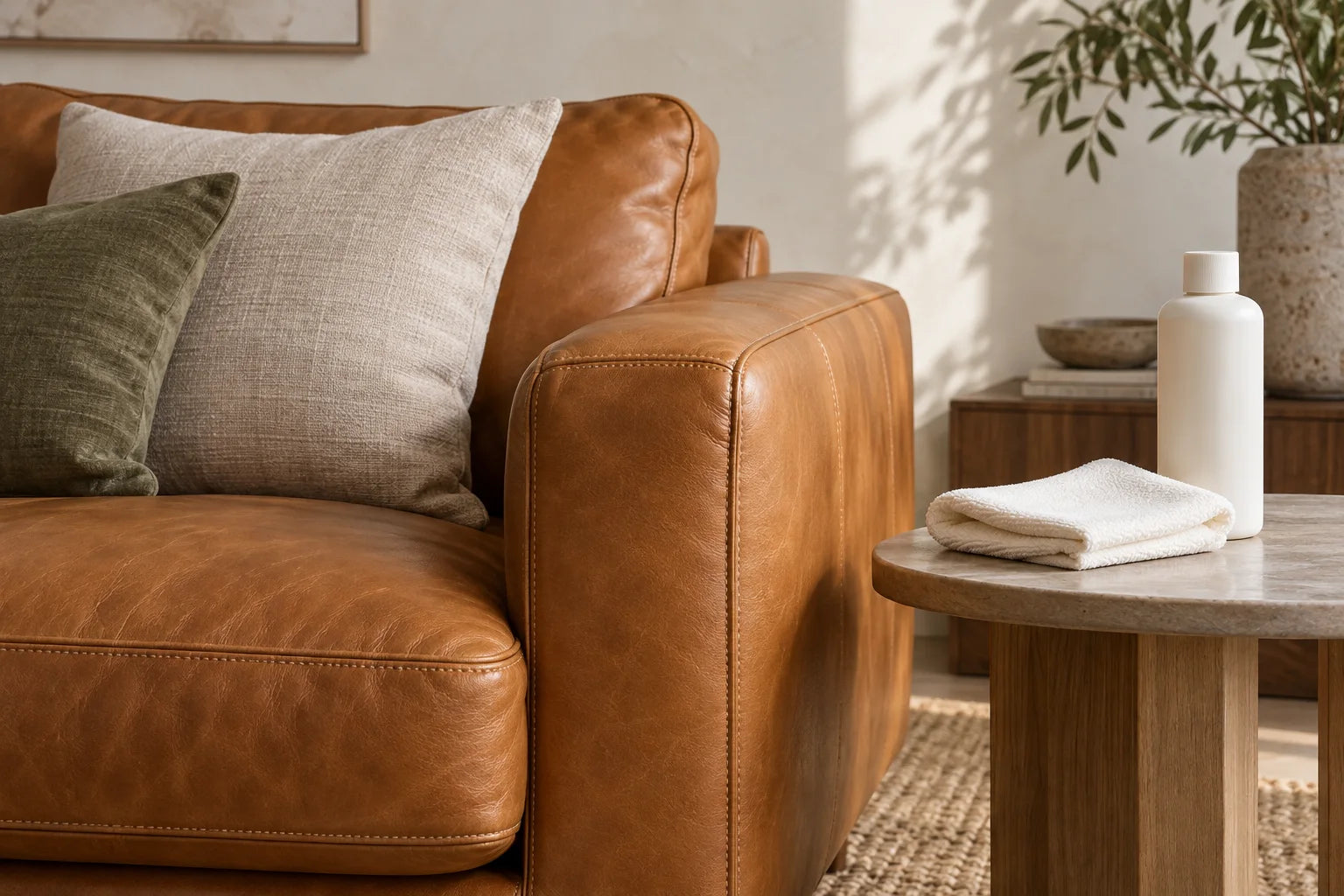
Leather armrest with a folded white cloth and a neutral bottle beside it

Fabric & leather

Leather care for sofas: identify your leather type first

Proper leather care begins with the leather type. Find product name, care instructions and previous treatment, before you clean or condition the sofa.

Read the guide
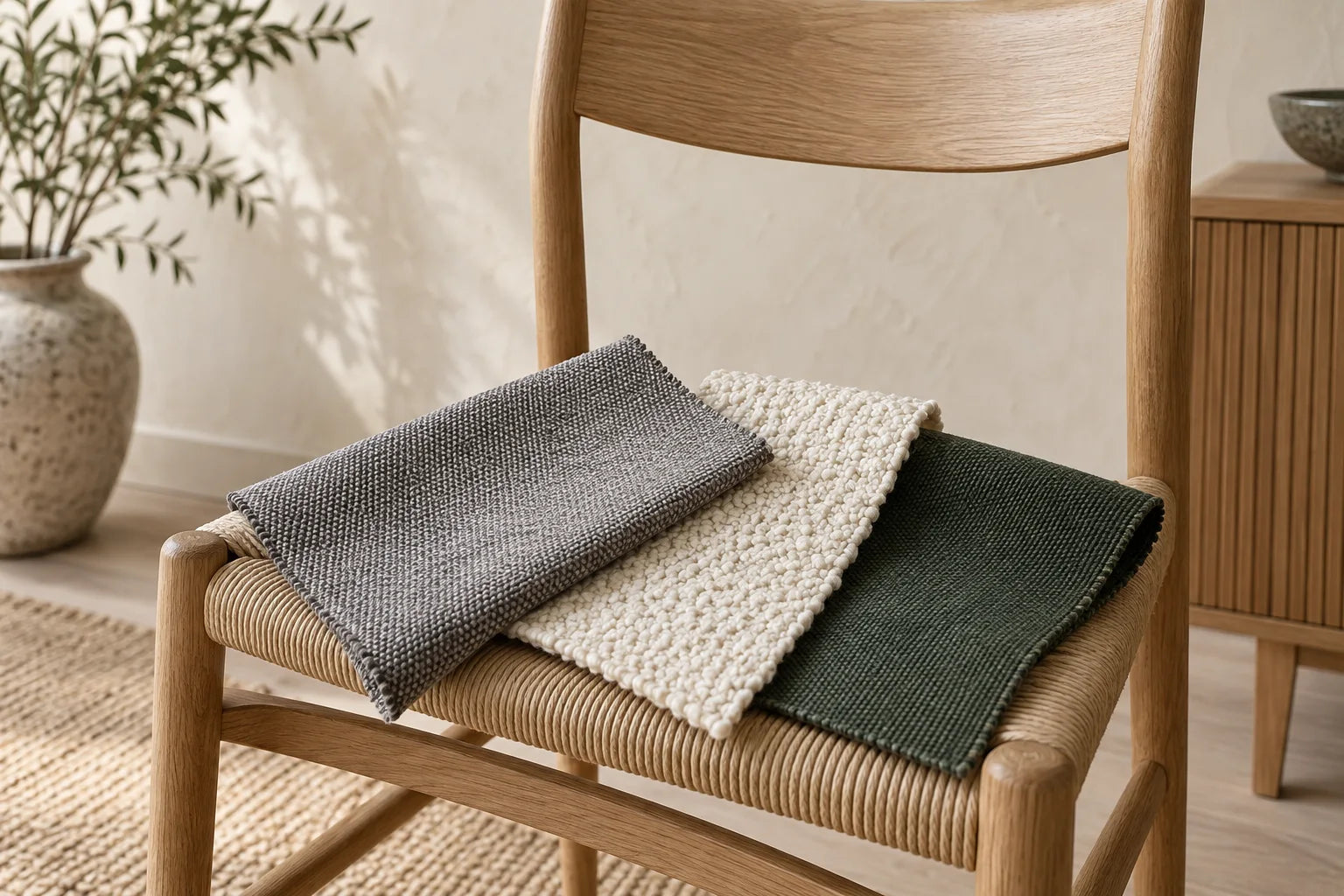
Densely woven and coarse fabric samples on the seat of a light wooden chair

Fabric & leather

Abrasion-resistant Upholstery fabric: look beyond the abrasion rating

Durable upholstery fabric is about more than a high Martindale figure. Compare structure, care, light, seams and the load the fabric must actually withstand.

Read the guide
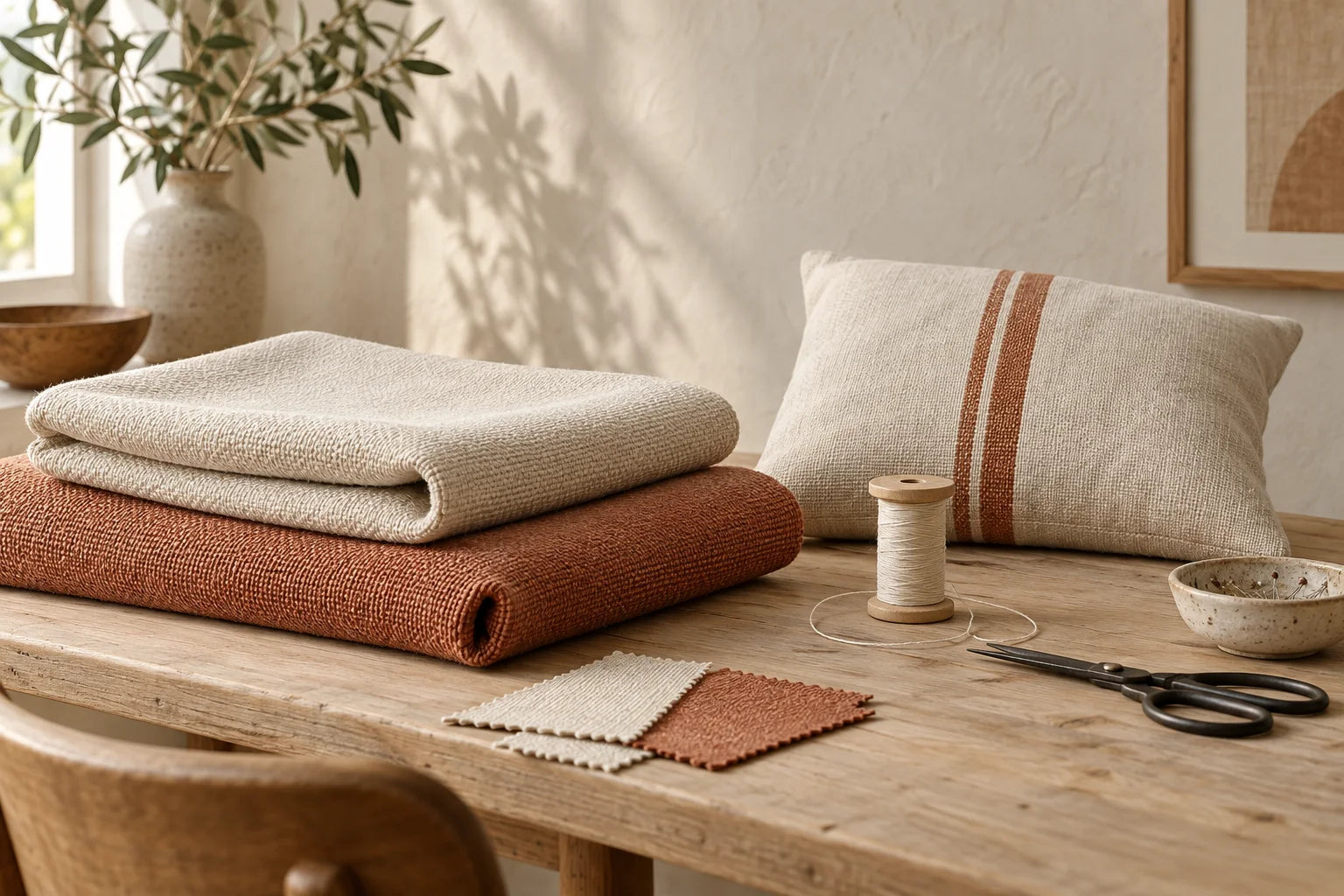
Cotton fabrics, sewing thread and a striped cushion cover on a wooden table

Fabric & leather

Cotton as upholstery fabric: what should you examine?

Cotton is not a single fabric quality. Examine the weave, product data, colour and finished construction before choosing cotton for furniture upholstery.

Read the guide
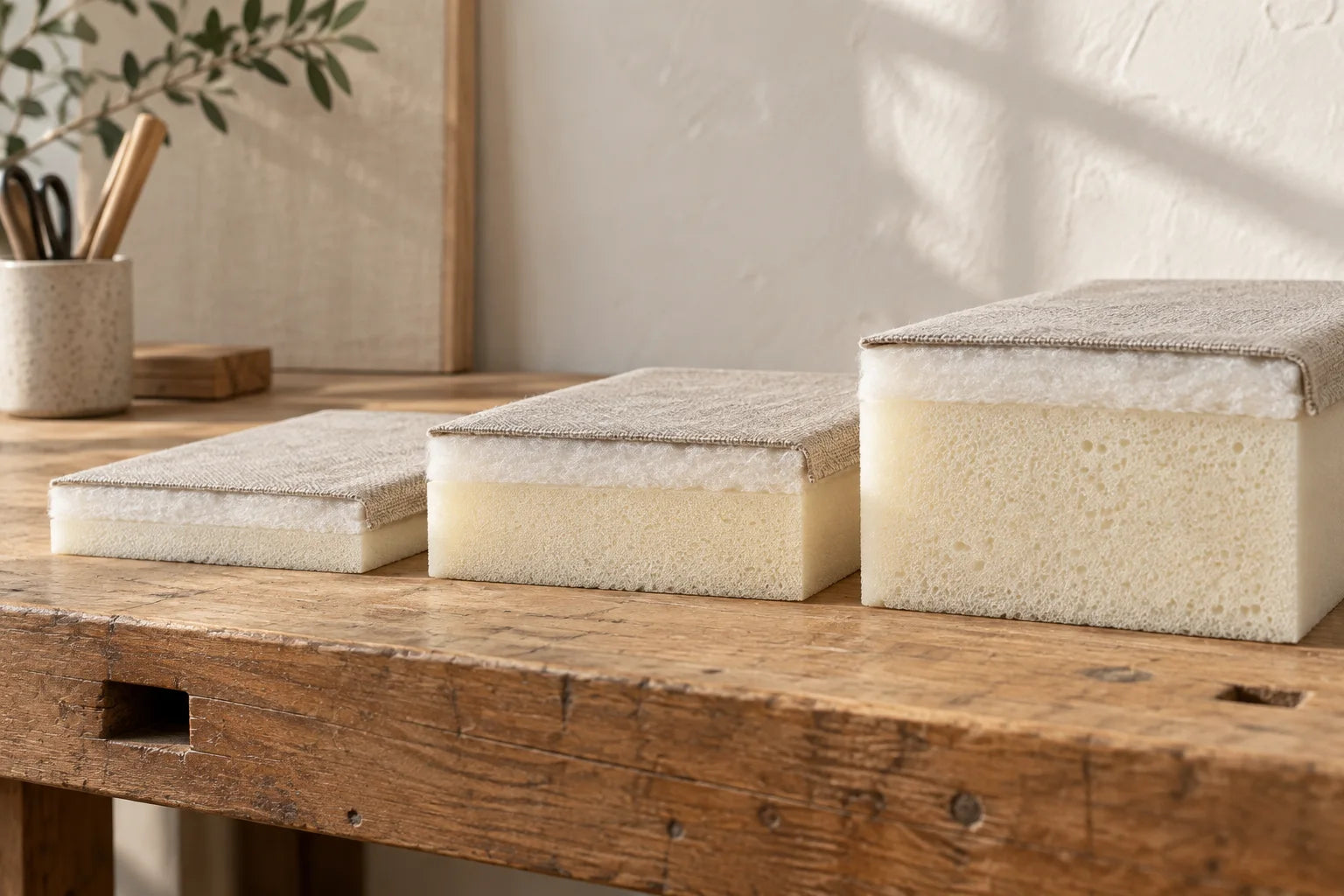
Three foam samples with fabric on top show different thicknesses

Fabric & leather

Foam for upholstery: comfort beneath the cover

Foam for furniture upholstery must fit the furniture's base and shape. Clarify support, thickness and the layers to be preserved before ordering new.

Read the guide
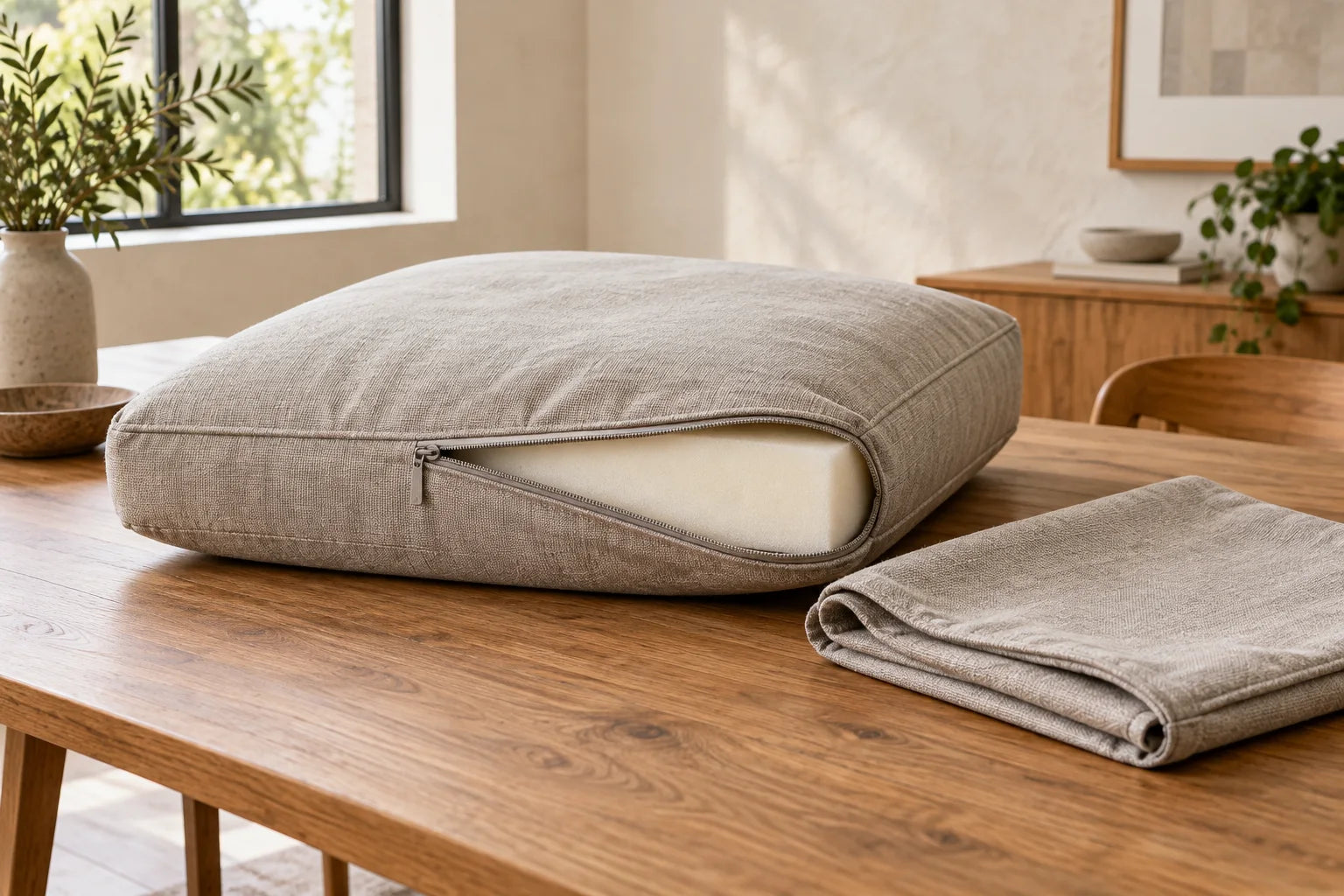
An open zip reveals the foam beneath a cushion’s light cover

Cushions & foam

New covers or new cushions? How to choose

Should a cushion have new upholstery, new filling or both? Use the symptoms to define the task and avoid replacing parts that still function.

Read the guide
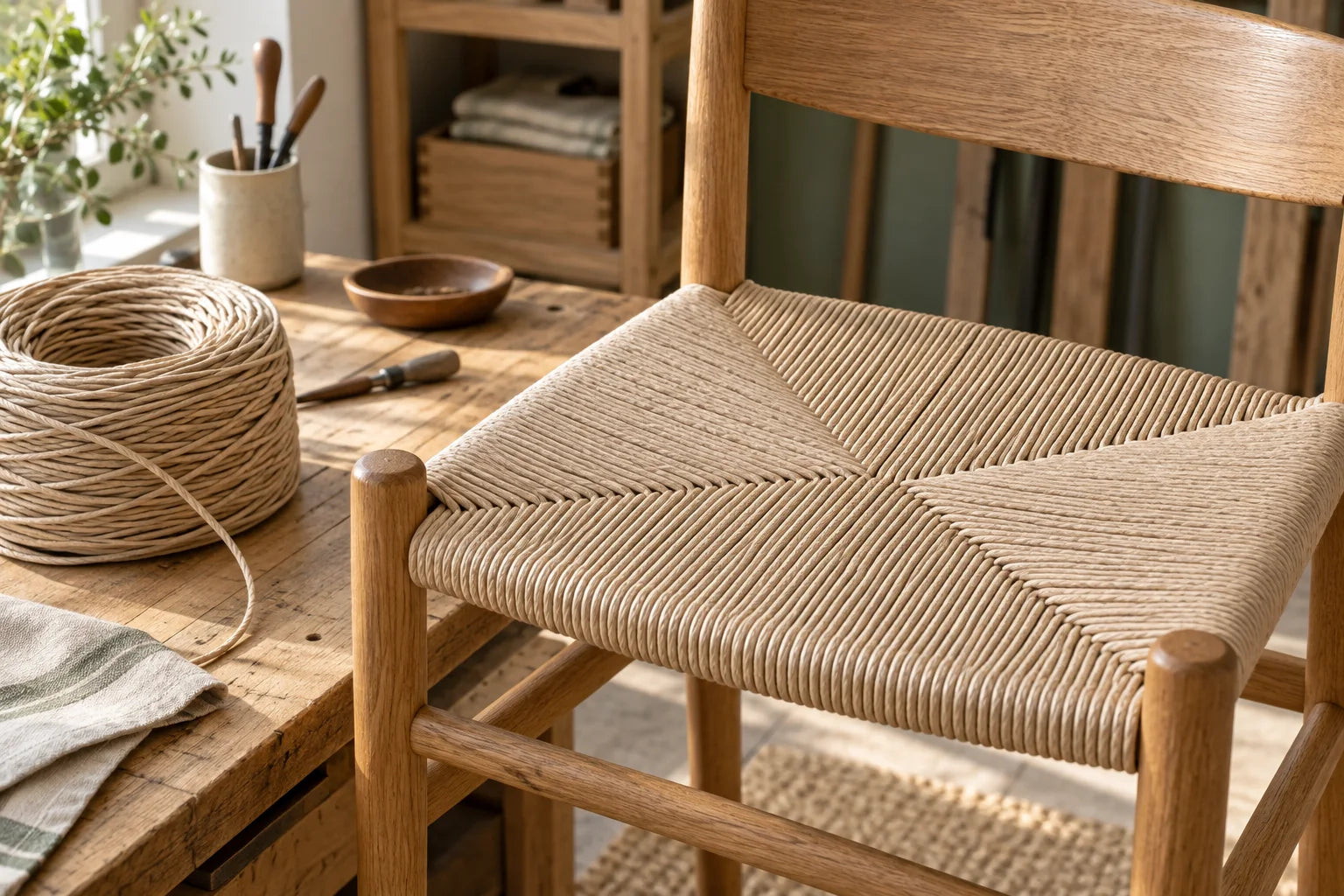
A roll of natural-coloured paper cord beside a woven chair seat

Chair weaving

Paper cord for chair weaving: quality, colour and pattern

Paper cord for chair weaving must match the chair, pattern and fixing. See what you should clarify regarding dimension, colour and the existing construction.

Read the guide
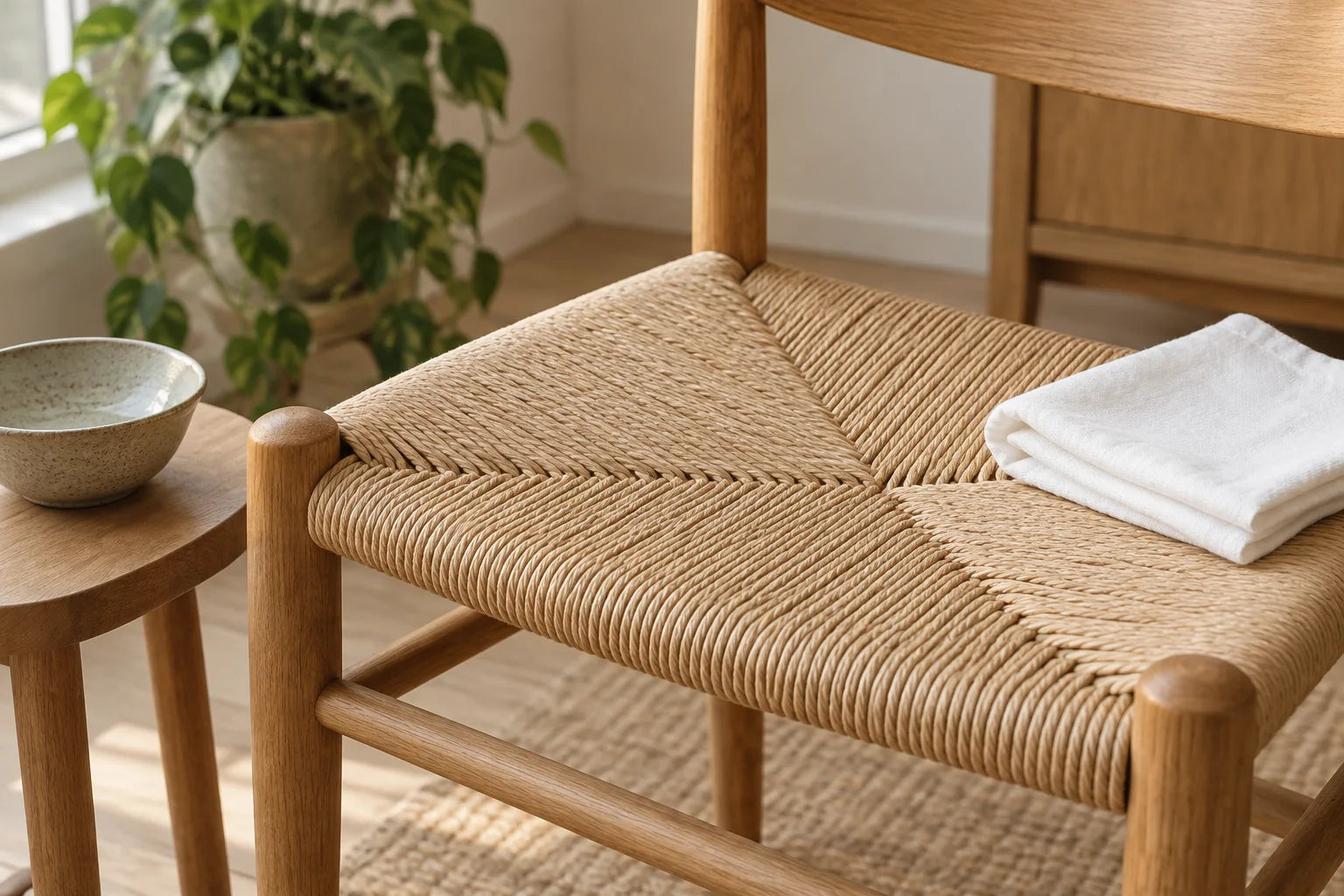
White cloth beside a natural-coloured woven paper cord seat

Chair weaving

Cleaning paper cord: gentle care for the seat

Clean paper cord gently and avoid rubbing a stain over a larger area. Follow the simple steps for dust, spills and assessing a damaged seat.

Read the guide
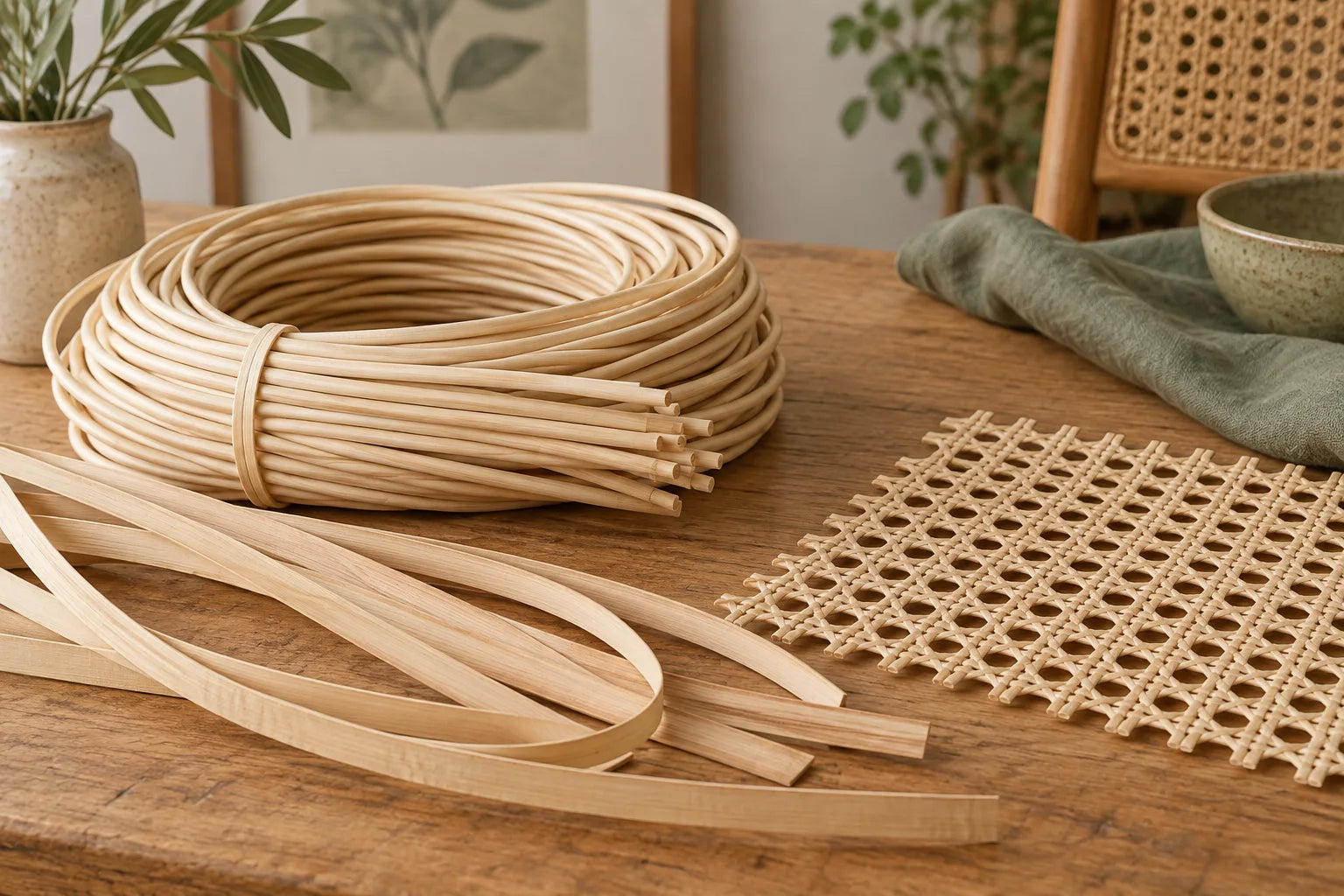
Round rattan canes, flat cane strips and a sample of open weaving on a table

Chair weaving

What is rattan cane? Know the material in your weaving

Rattan cane, rattan and cane strips are related terms, but the materials differ in form and use. Learn to describe the weaving so you get the right assessment.

Read the guide
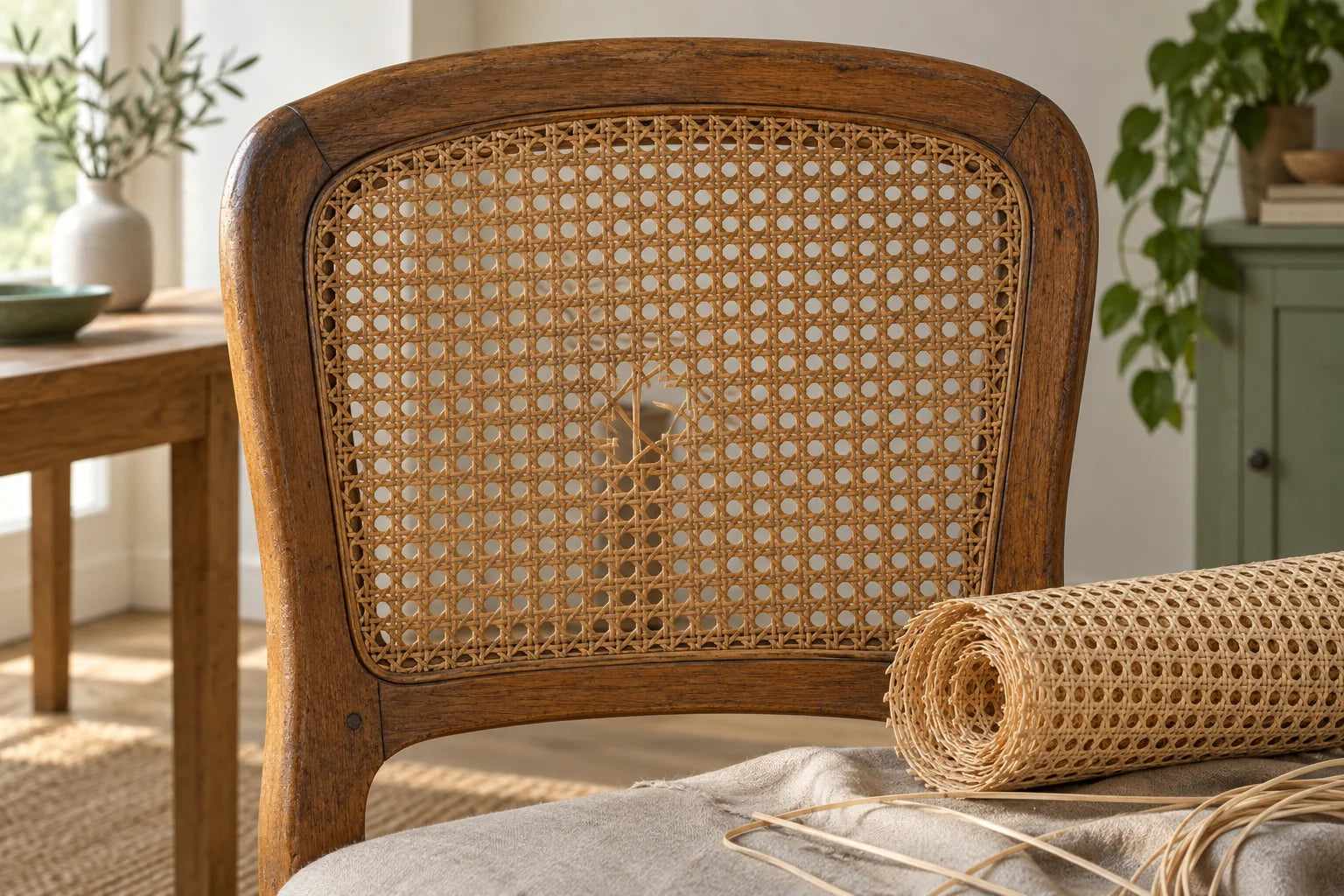
A small break in the French caning on a wooden chair’s backrest

Chair weaving

Damaged French caning: repair or replacement?

A hole in French caning may be due to a local damage or a weakened seat. See what determines whether a part can be repaired, or the weaving should be replaced.

Read the guide
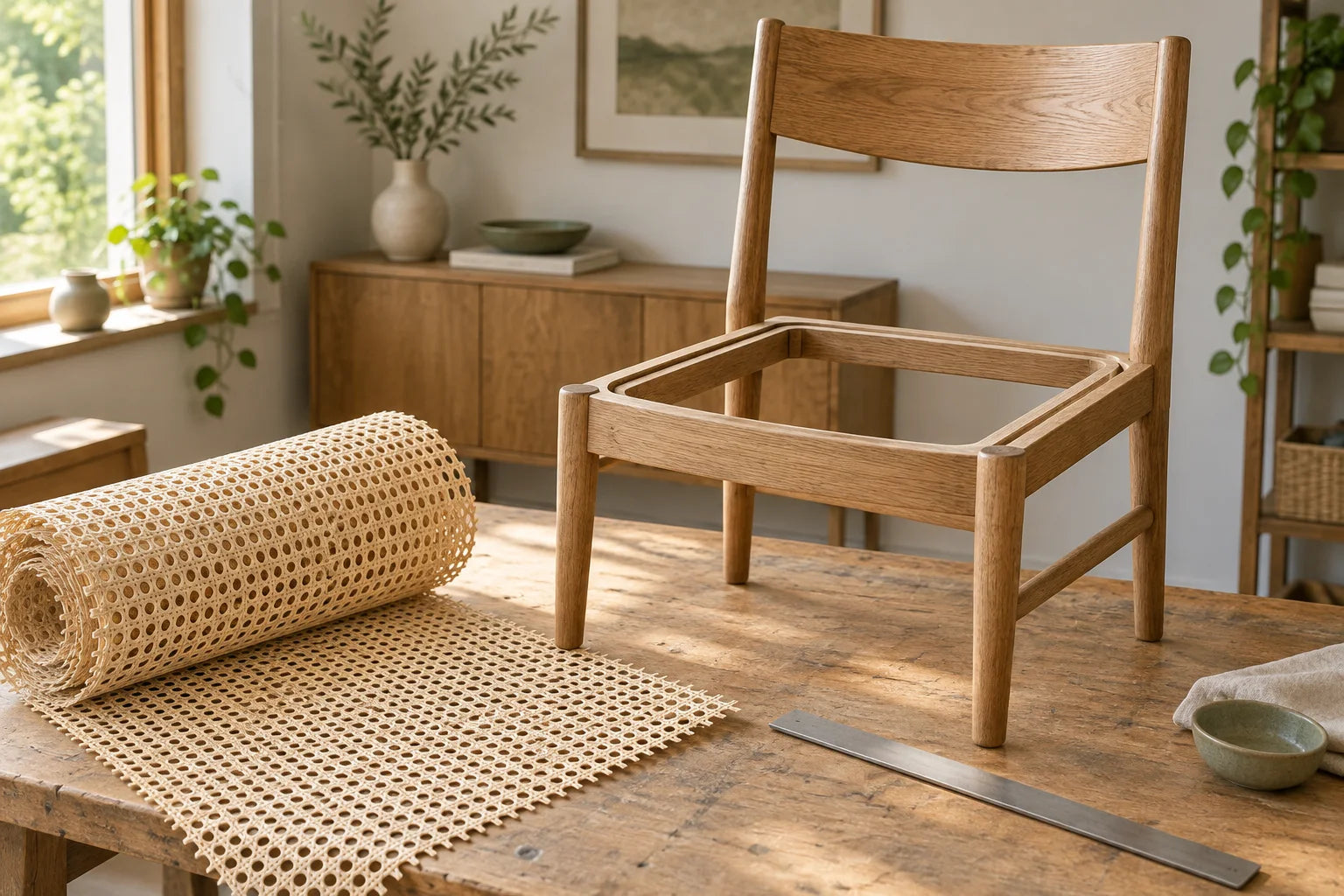
A roll of French caning beside an empty wooden frame with a groove

Chair weaving

French caning by the metre: does it suit your chair?

French caning sold by the metre is not suitable for every chair. Check the groove, fastening, pattern and dimensions before ordering a pre-woven sheet.

Read the guide
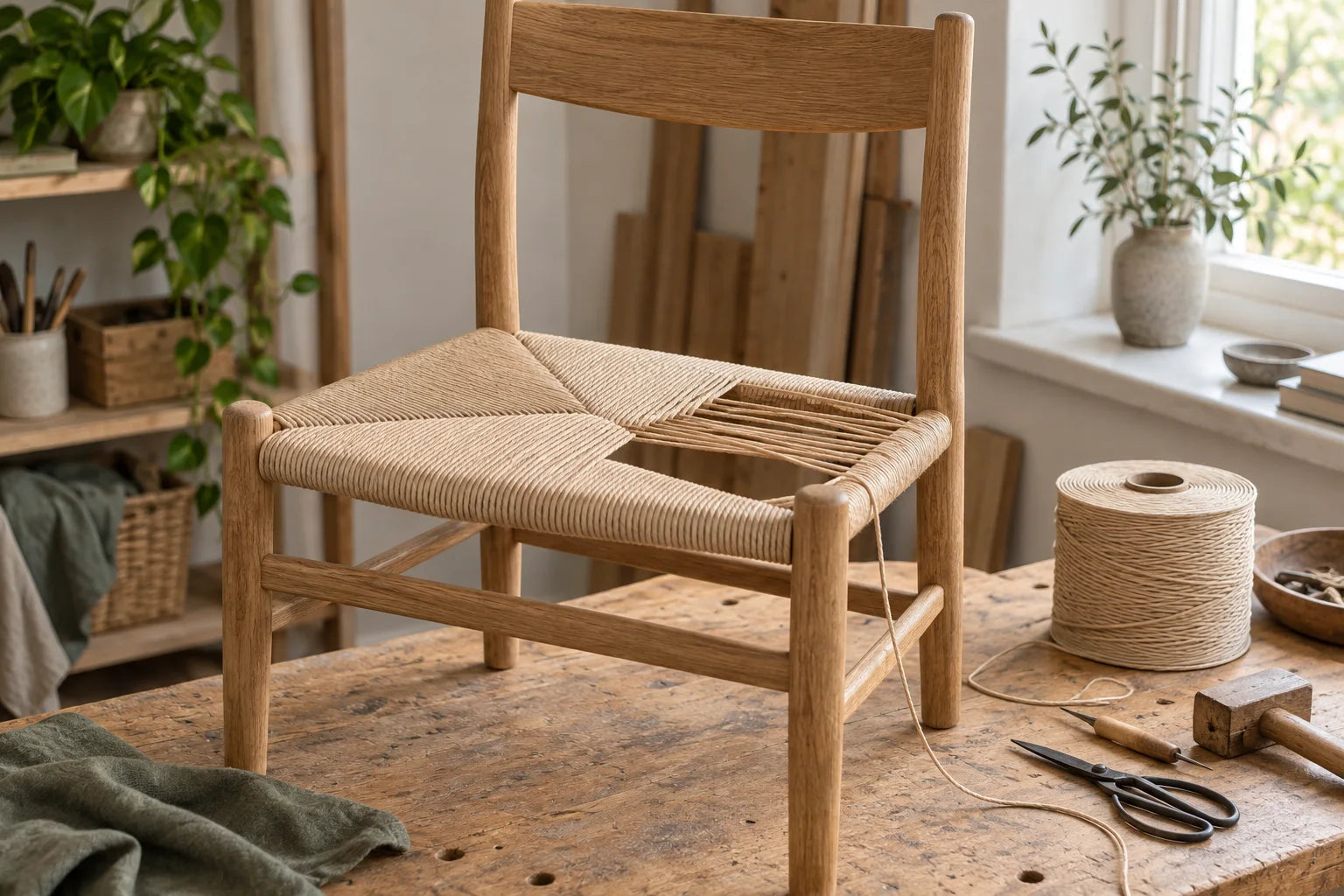
A wooden chair seat being woven with paper cord, with tools on the table

Chair weaving

DIY chair weaving: understand the technique before you start

Do you want to weave a chair yourself? Identify material, pattern and fixing, document the underside and assess the frame before removing the old weaving.

Read the guide
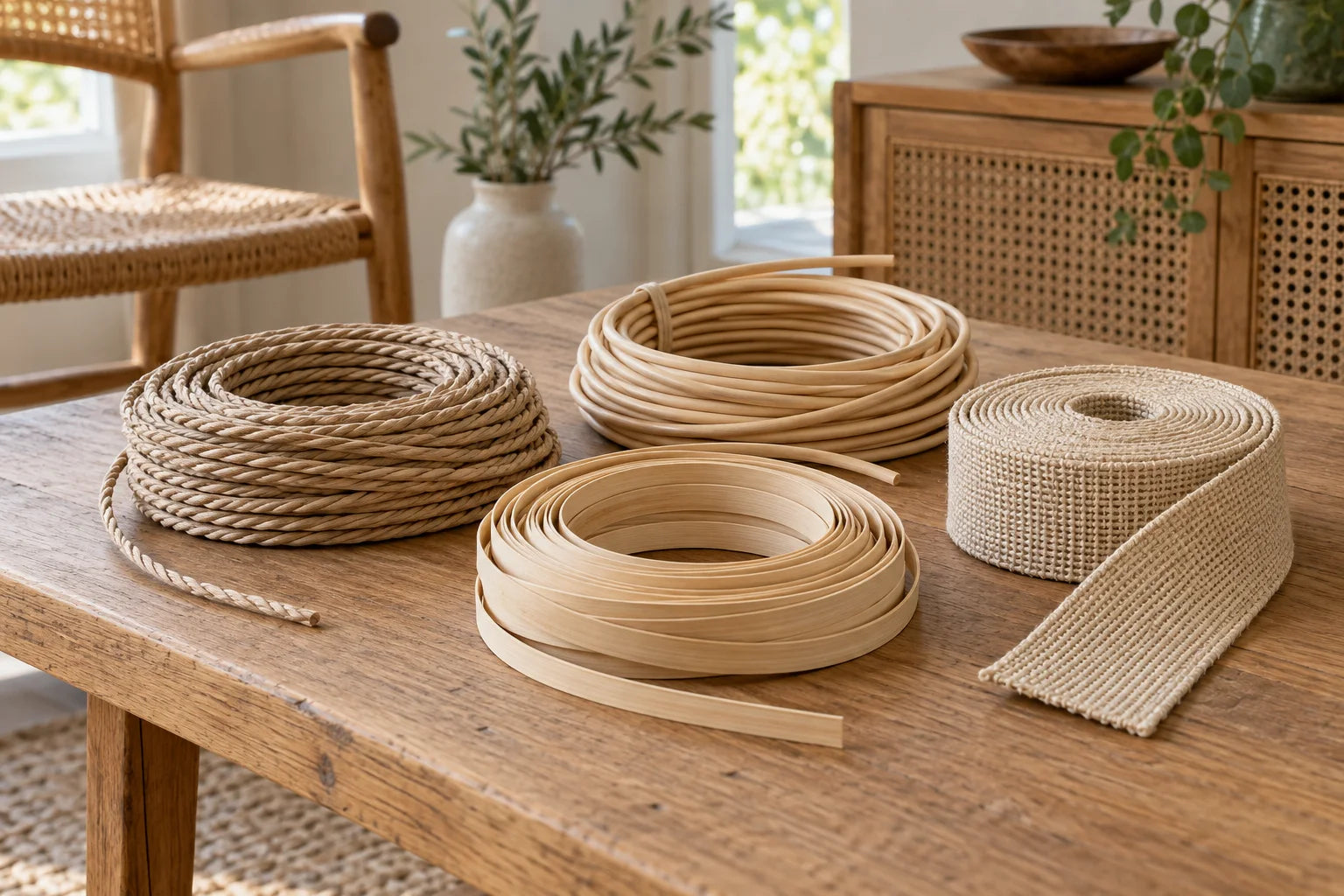
Four different weaving materials in rolls and bundles on a wooden table

Chair weaving

Chair weaving materials: cord, cane, cane strips and webbing

Paper cord, rattan cane, cane strips and webbing are different materials for furniture seats. Use shape, pattern and fastening to identify the right approach.

Read the guide
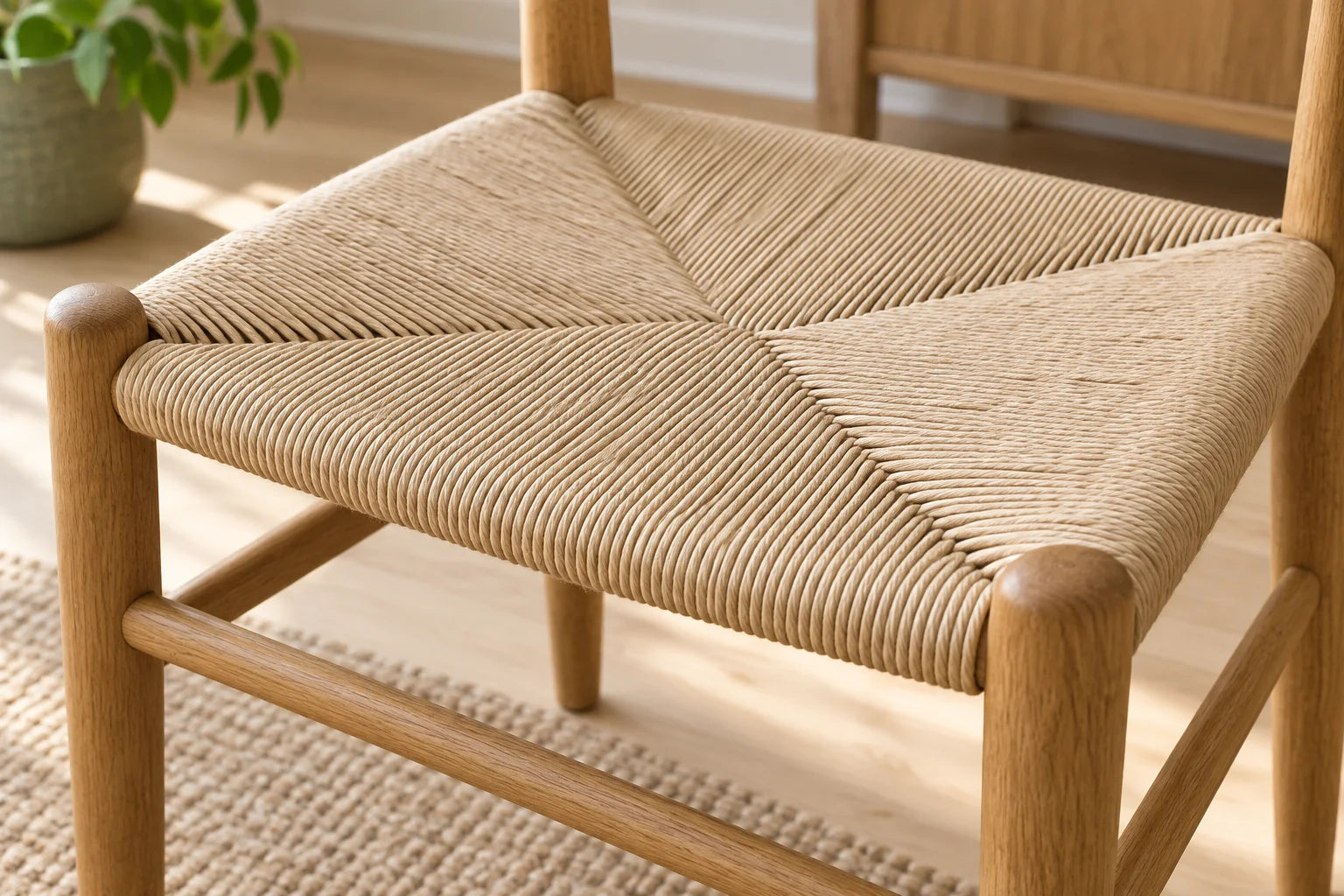
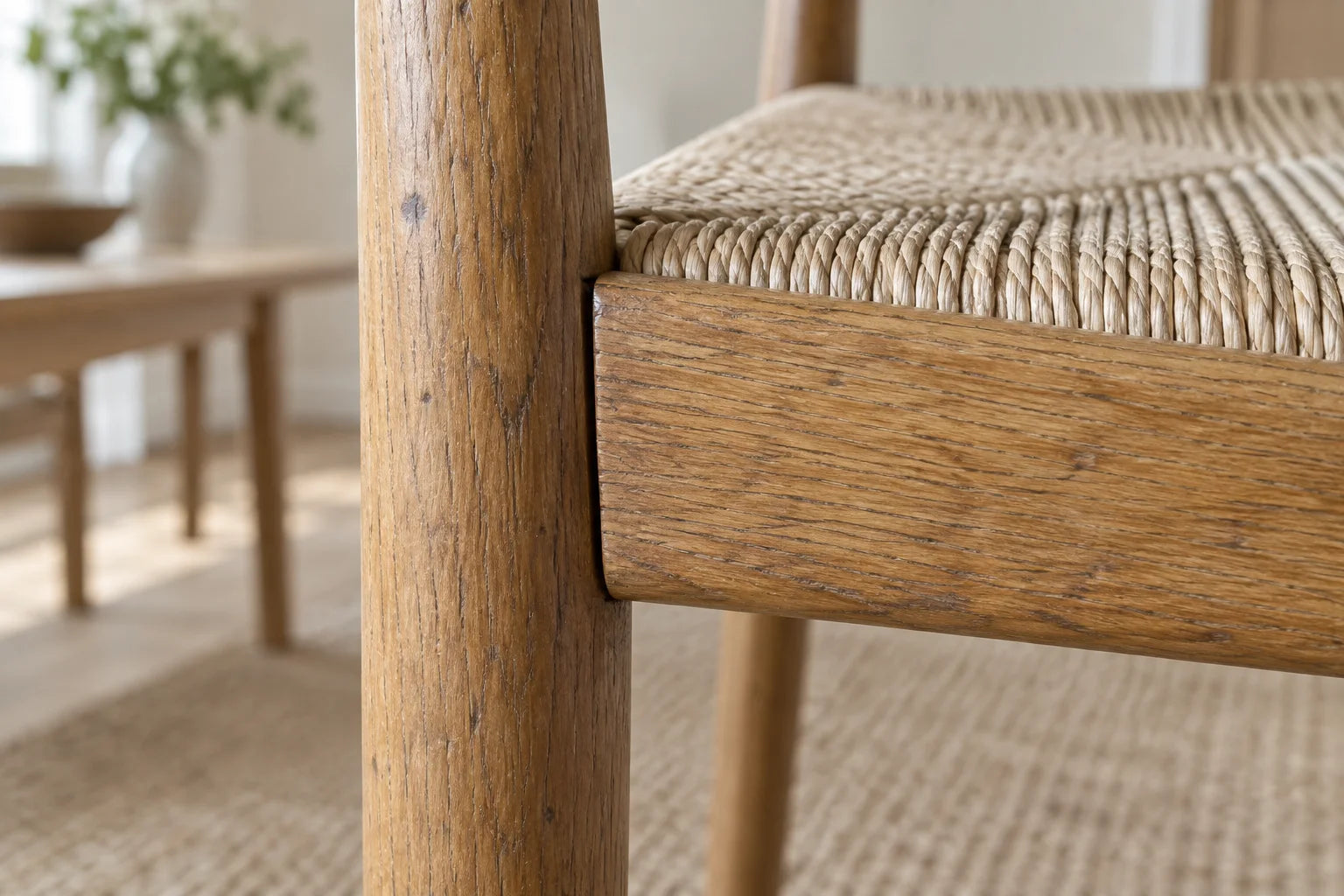
Close-up of a natural-coloured paper cord seat in a rounded oak frame

Chair weaving

New weaving on the Y-chair: what you need to consider

New weaving on the Y-chair also requires attention to the frame, colour and the rest of the set. See which images and choices make the assessment precise.

Read the guide
A small gap in the joint between a chair leg and the seat frame

Chair weaving

Y-chair with loose joints: weaving and frame must be assessed together

A Y-chair with loose joints must be assessed before a new seat is woven. Document movement, cracks and previous repairs without stressing the chair.

Read the guide
Side profile of a moulded wooden chair, showing the transition between seat and back

Care & repair

Syver chair with soft back: what needs to be examined?

A flexible back on a Syver chair can indicate different problems. See how to document the shell, fastenings and upholstery before an assessment.

Read the guide
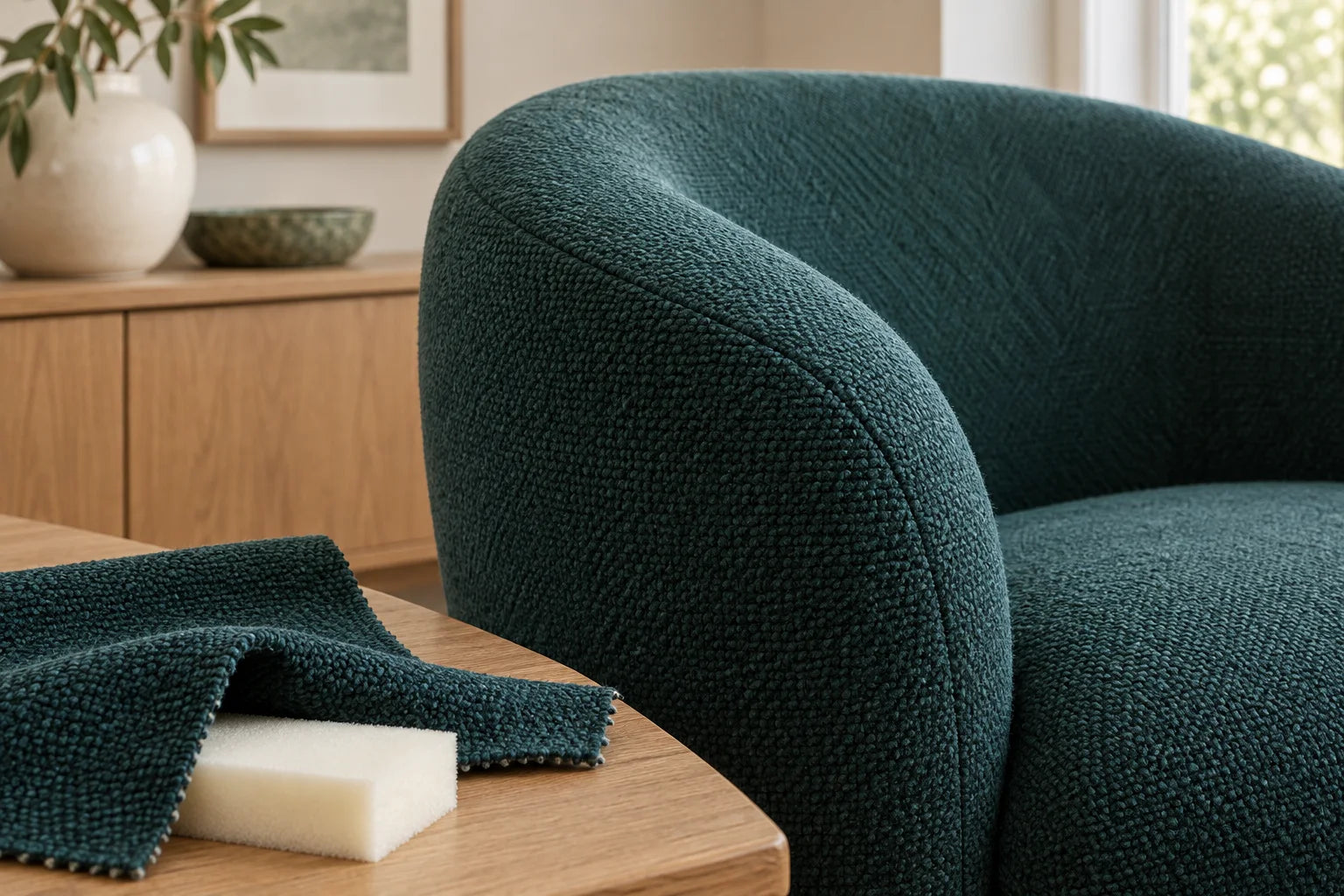
Close-up of green wool over a round upholstered form with a fabric sample beside it

Reupholstery

Reupholstery of Svanen: form, foam and material selection

When reupholstering Svanen the upholstery, foam and the chair's form must be assessed together. Get material sample, stitching, condition and quote sorted before the work.

Read the guide
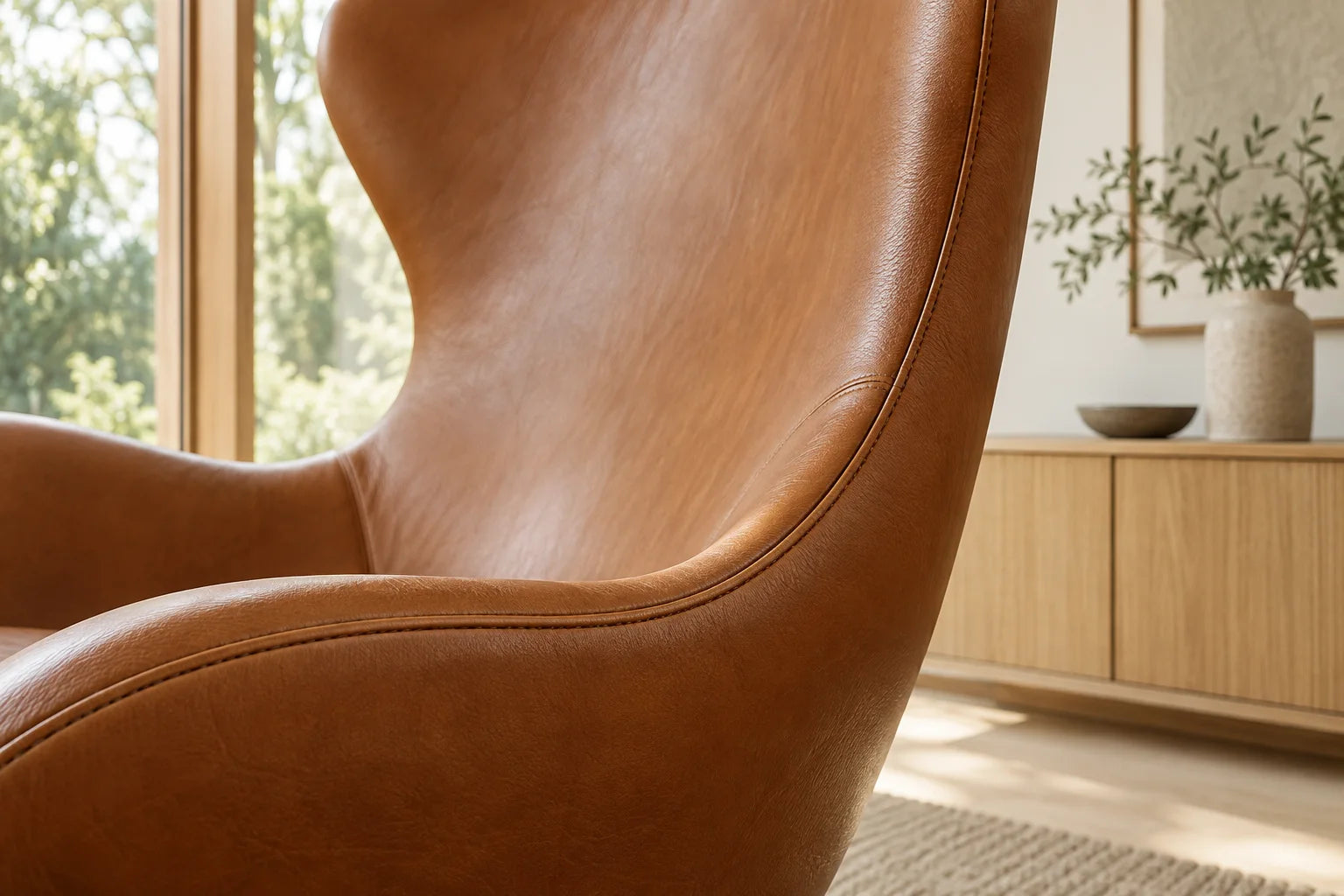
Detail of a tall, rounded armchair with cognac-coloured leather and a curved seam

Reupholstery

Ægget before reupholstery: five things to clarify

Before Ægget is reupholstered, the model, condition, construction, material and finishes should be clarified. Use five questions as the basis for a individual quote.

Read the guide
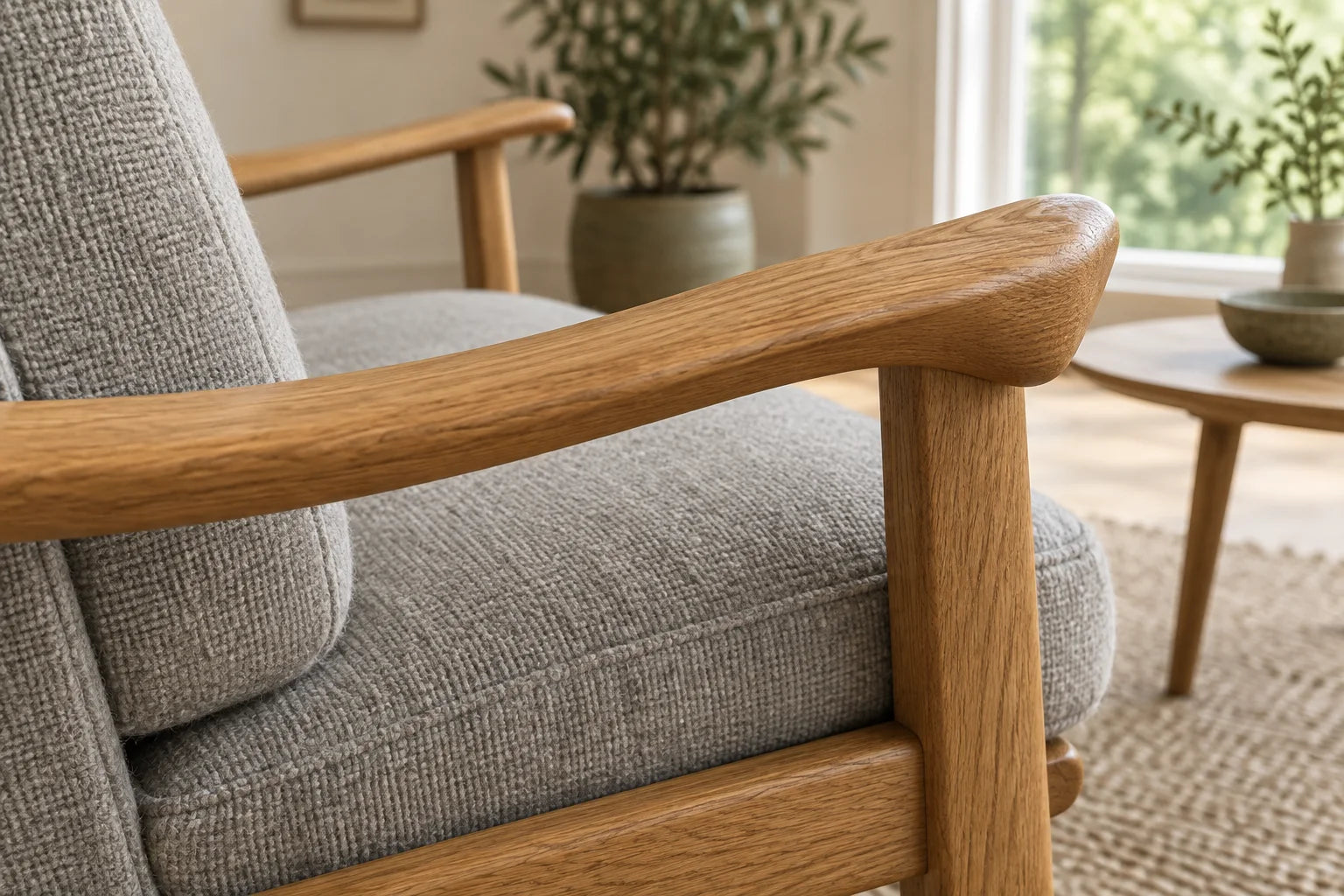
Wooden detail at a wide armchair armrest with grey wool upholstery

Reupholstery

Bamsestolen: details you should preserve during reupholstery

The Bamsestol's buttons, edges and wooden details are part of its character. Document them and have its construction assessed before re-covering.

Read the guide
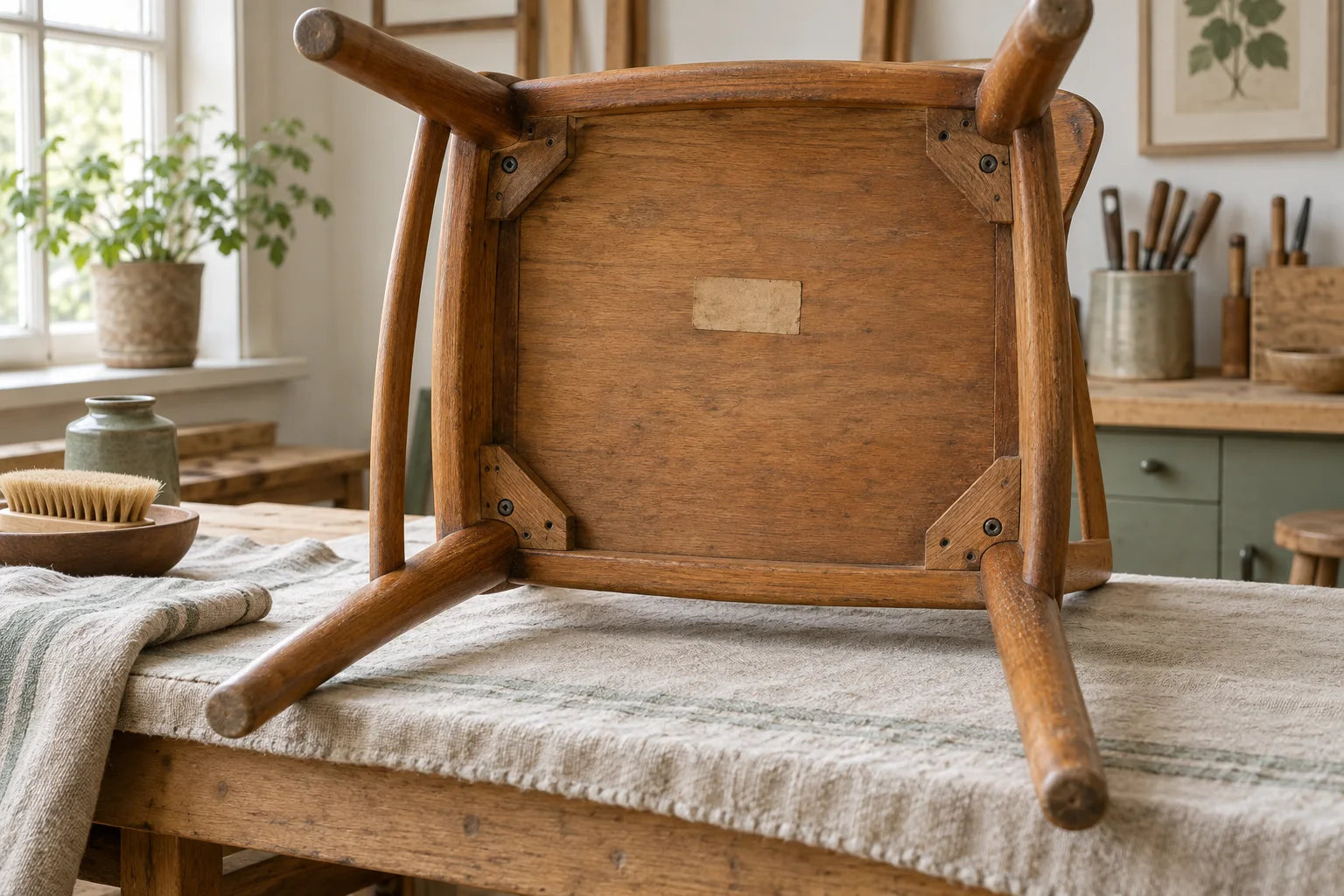
The underside of an older wooden chair with joints and a worn label

Reupholstery

Wegner chair: find the model before reupholstery

Wegner has designed many different chairs. Find the model, manufacturer, and construction, so that an assessment of reupholstery is based on the correct piece of furniture.

Read the guide
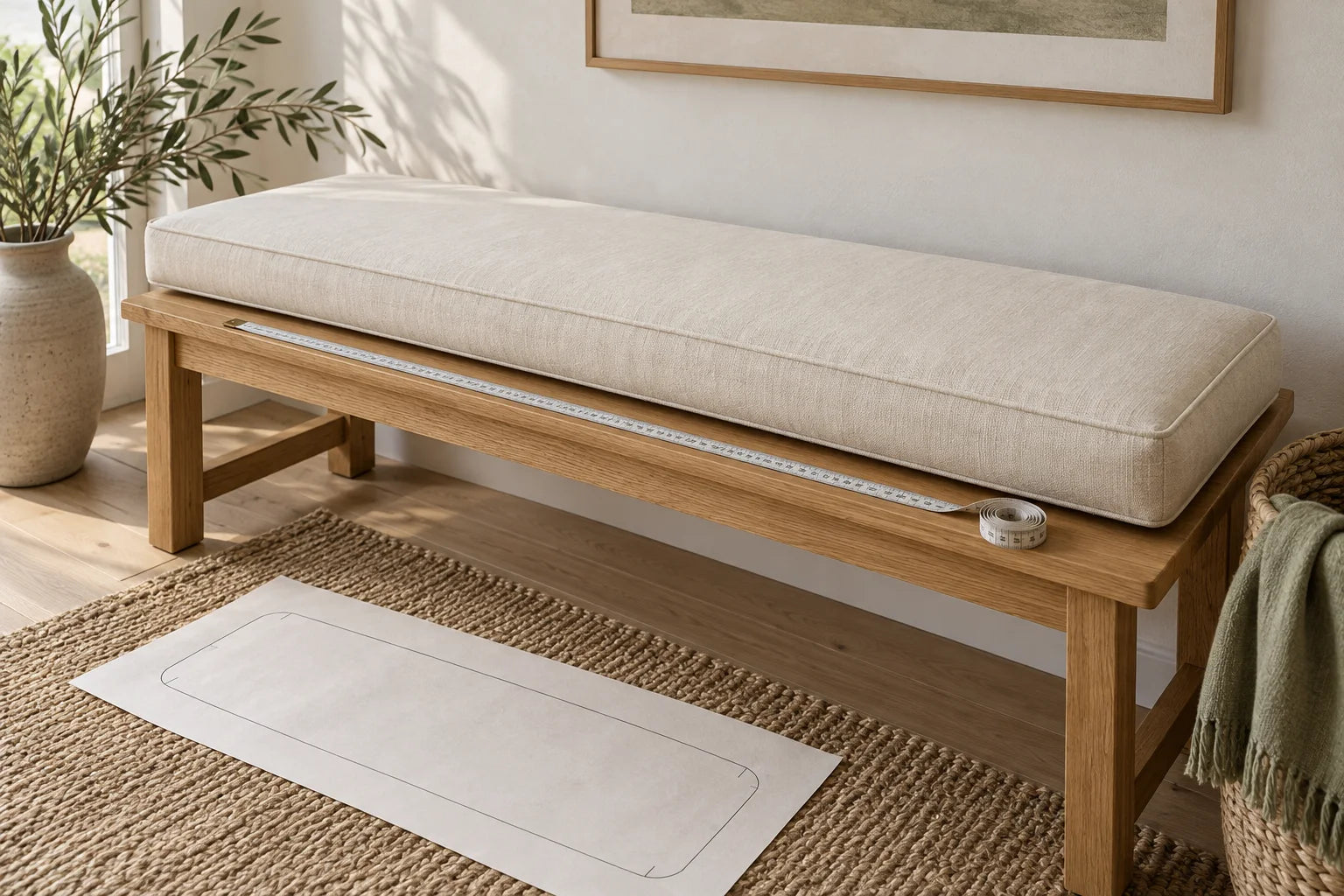
A light bench cushion with a measuring tape and a paper template beside it

Cushions & foam

Made-to-measure cushions: how to create a usable measurement basis

Measure the space for the cushion, draw the shape and mark front and back edges. Get a practical checklist so raw measurements, finished measurements and seam allowances are not mixed up.

Read the guide
Sage green bench cushion in a light kitchen alcove with wooden table

Cushions & foam

Indoor bench cushions: fit, thickness and attachment

Bench cushions must match table height, backrest and any lids. See how you choose division, thickness and fixing for an indoor bench.

Read the guide
Blue-grey cushions on a wooden bench on a covered terrace

Cushions & foam

Outdoor cushions: think fabric, filling and drying together

An outdoor fabric does not make the whole cushion waterproof. Plan upholstery, filling, seams, ventilation and storage according to the terrace where the cushion is to be used.

Read the guide
Light cushions in an empty boat cabin with one cushion lifted for ventilation

Cushions & foam

New boat cushions: templates, ventilation and comfort

Plan boat cushions with numbered parts, templates and space for ventilation. Distinguish between cabin, cockpit and cushions with both seating and sleeping functions.

Read the guide
Terracotta-coloured cushions in an empty caravan seating area

Cushions & foam

Caravan cushions: when the seat is also your bed

Caravan cushions often serve as both seating and beds. Plan both arrangements, joins, access to storage and the support you want.

Read the guide
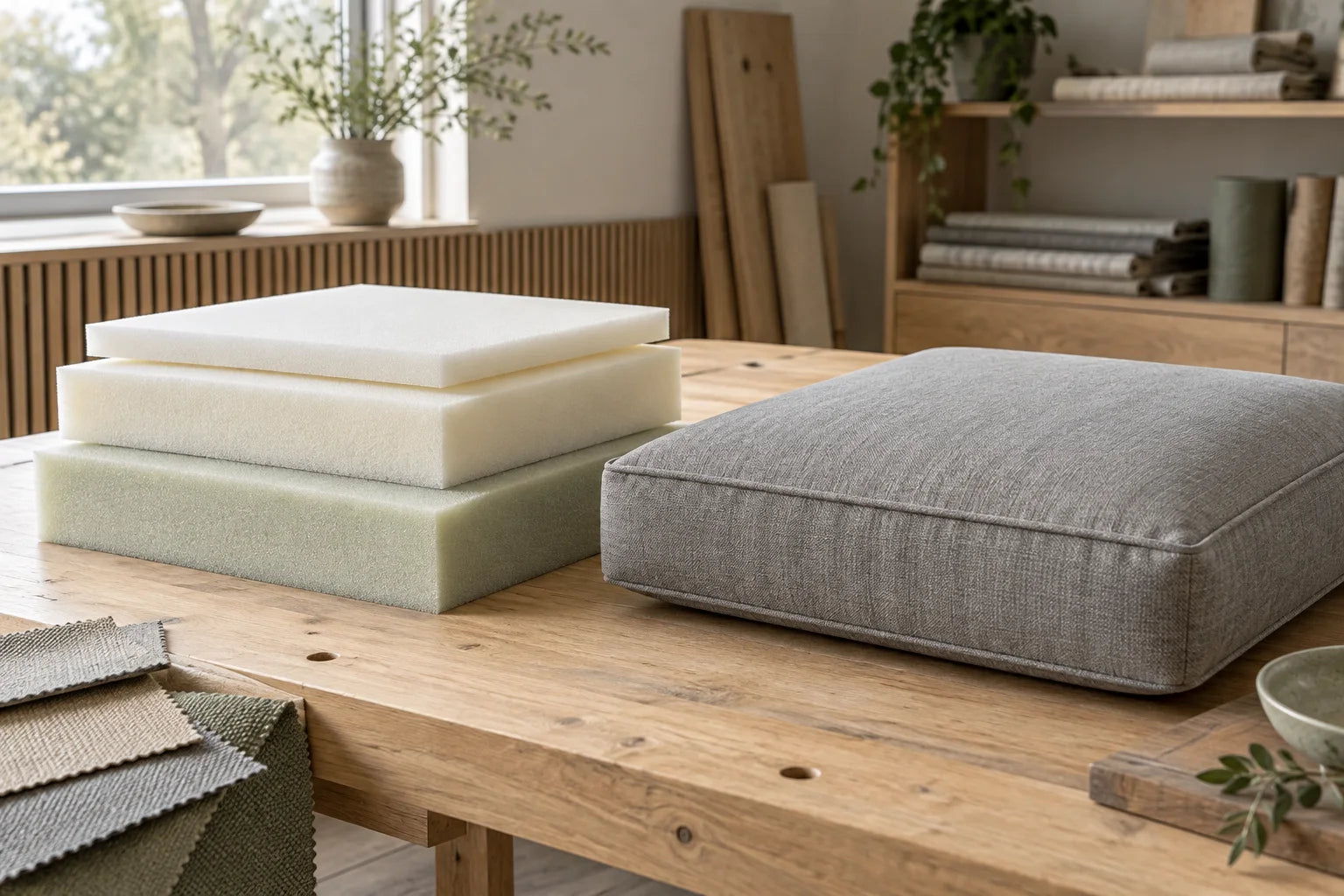
Foam sheets of various thicknesses beside a finished grey cushion

Cushions & foam

Foam for cushions: choose support, thickness and construction

Select foam for cushions based on function, base and thickness. Learn to describe the desired support and distinguish between a foam core and a complete cushion.

Read the guide
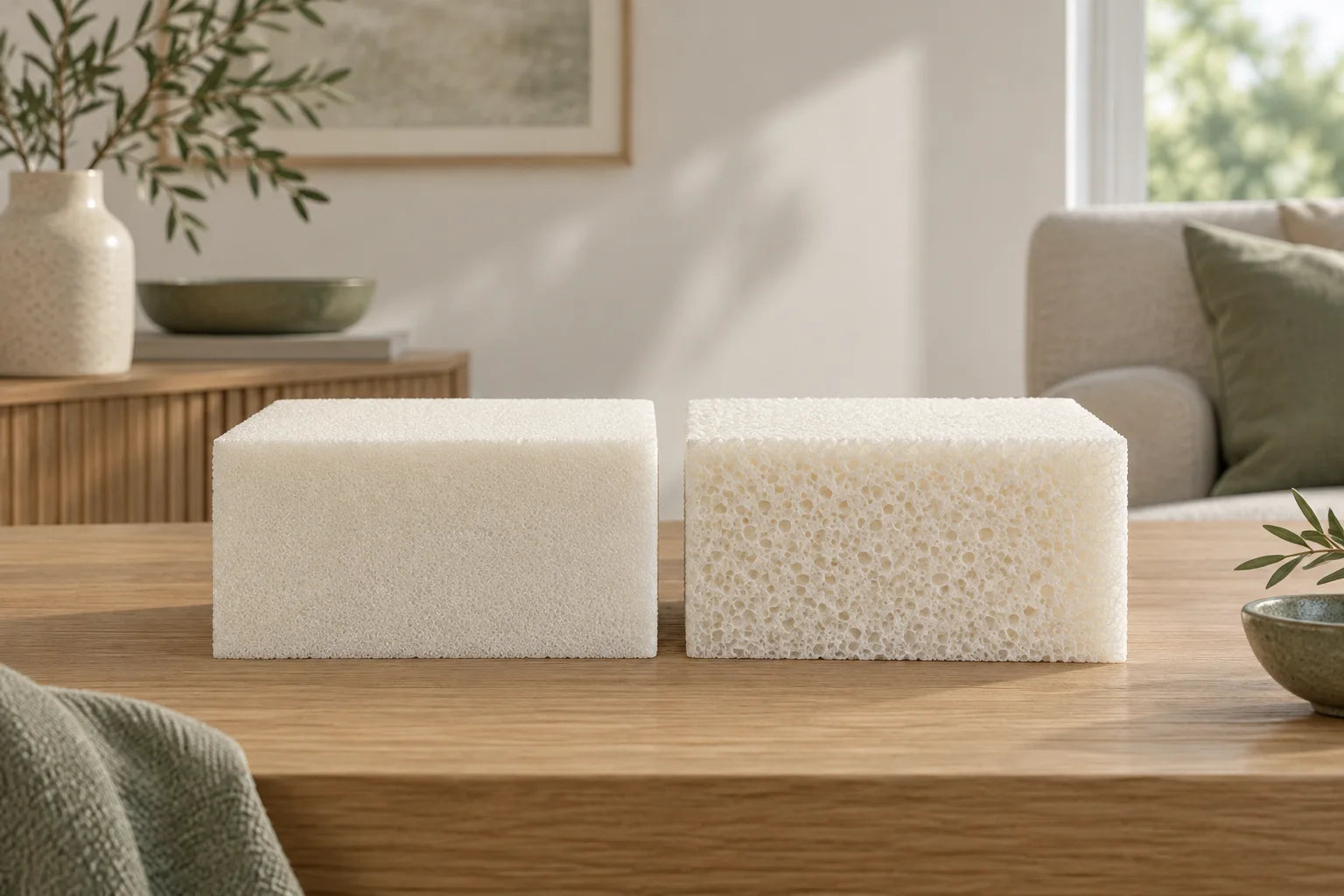
Two equal-sized foam blocks with different cell structures

Cushions & foam

High-resilience foam for cushions: density is not the same as firmness

Density is mass per unit volume, while hardness describes resistance to pressure. Learn how to compare high-resilience foam without confusing the figures.

Read the guide
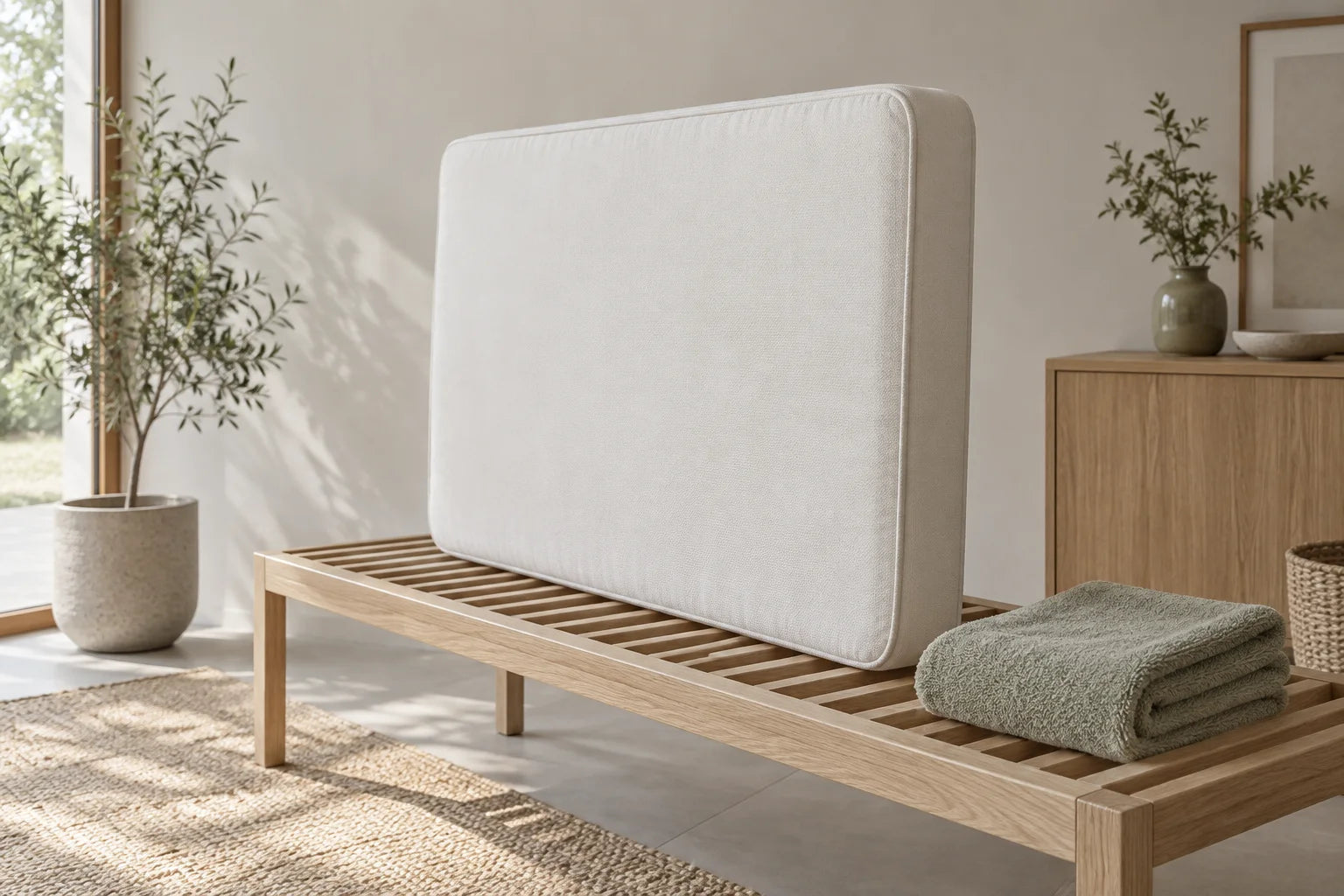
A light cushion stands on edge on an airy wooden stand next to a folded cloth

Cushions & foam

Can you wash foam rubber? Read this first

Foam rubber should not automatically be washed in a machine or soaked. Find the material's instructions and distinguish between upholstery, foam, and a persistent odour problem.

Read the guide
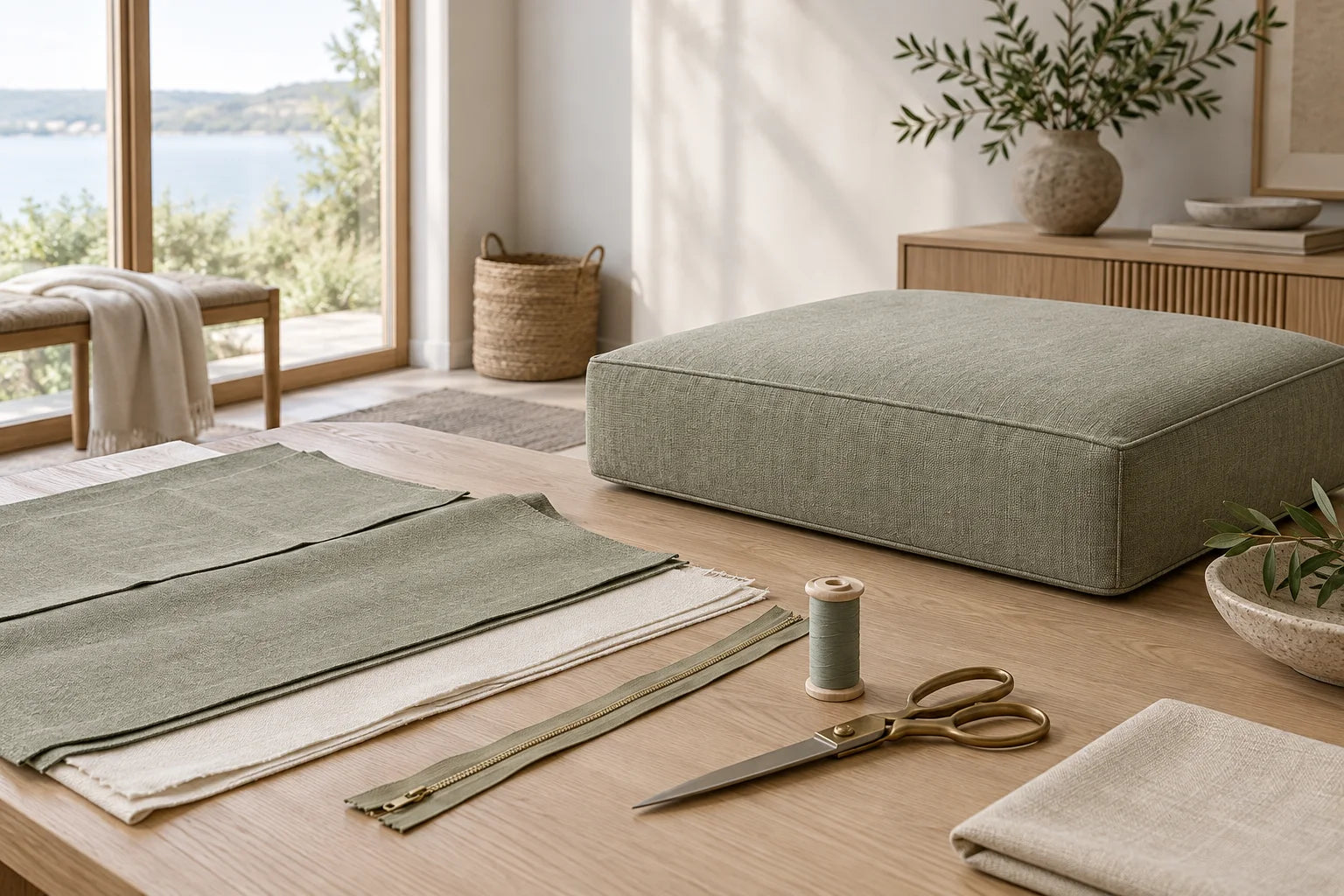
Cut fabric pieces, a zip and sewing thread beside a finished cushion

Cushions & foam

Sewing cushion covers: measurements, zip and seam allowances

Plan a cushion cover with clear finished dimensions, separate seam allowances and a practical zip. Make a sample before cutting the final upholstery fabric.

Read the guide
Clean cushions stored upright with air gaps on a wooden shelving unit

Cushions & foam

Storage of cushions during winter: a practical checklist

Store cushions clean and completely dry in a suitably ventilated place. Use the checklist for inspection, labelling and reuse next season.

Read the guide
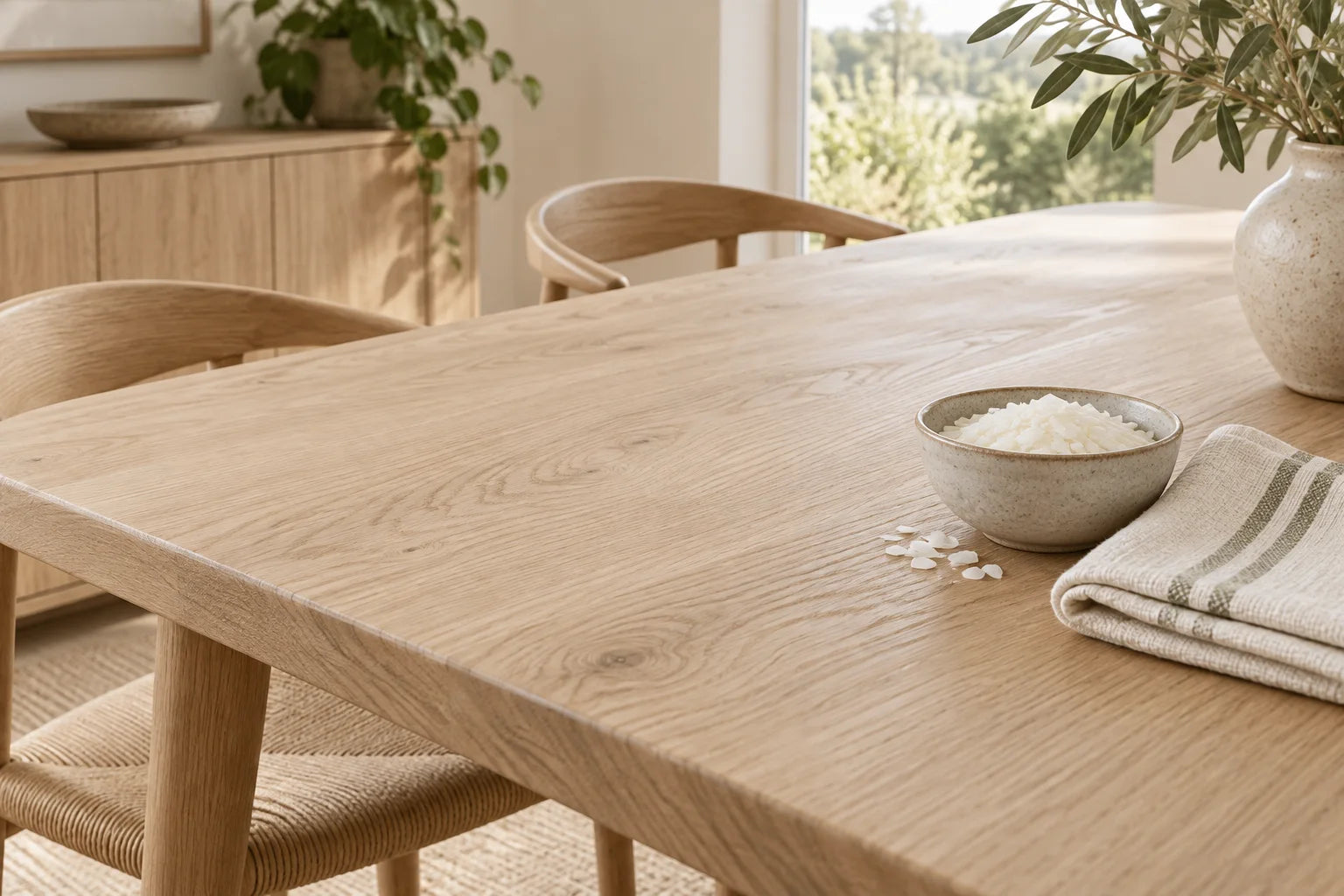
Light oak table with soap flakes in a bowl and a folded cloth

Care & repair

Soap treatment for an oak table: start with the surface

An oak table should only be soaped when the surface is suitable. Find the existing finish and follow the table's instructions before cleaning and re-treatment.

Read the guide
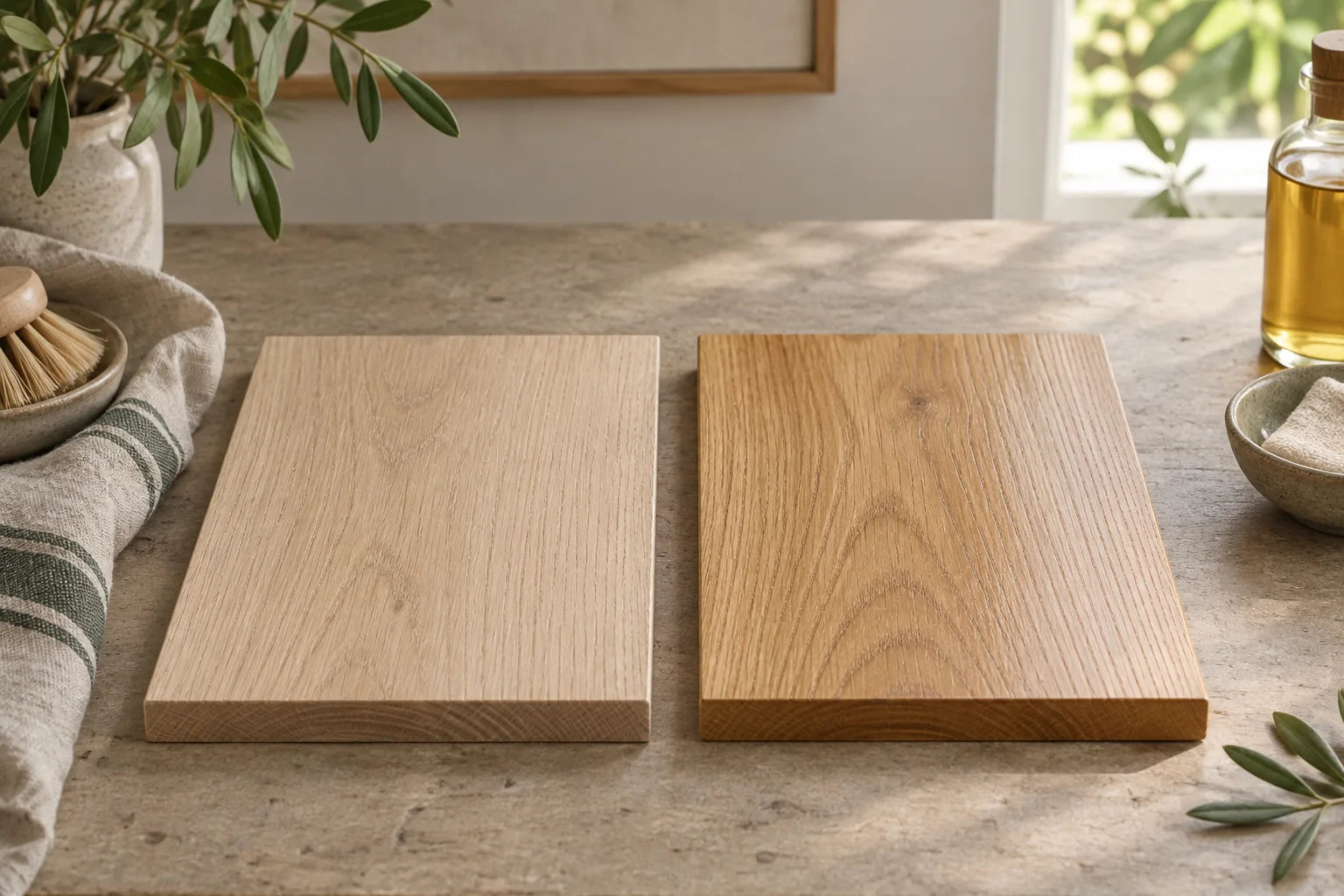
Two oak test pieces, one with light matte and one with warmer oiled finish

Care & repair

Soap or oil for wooden furniture: how to choose

Soap and oil offer different looks and maintenance routines. Choose based on the existing finish, the furniture's construction, and the result you desire.

Read the guide
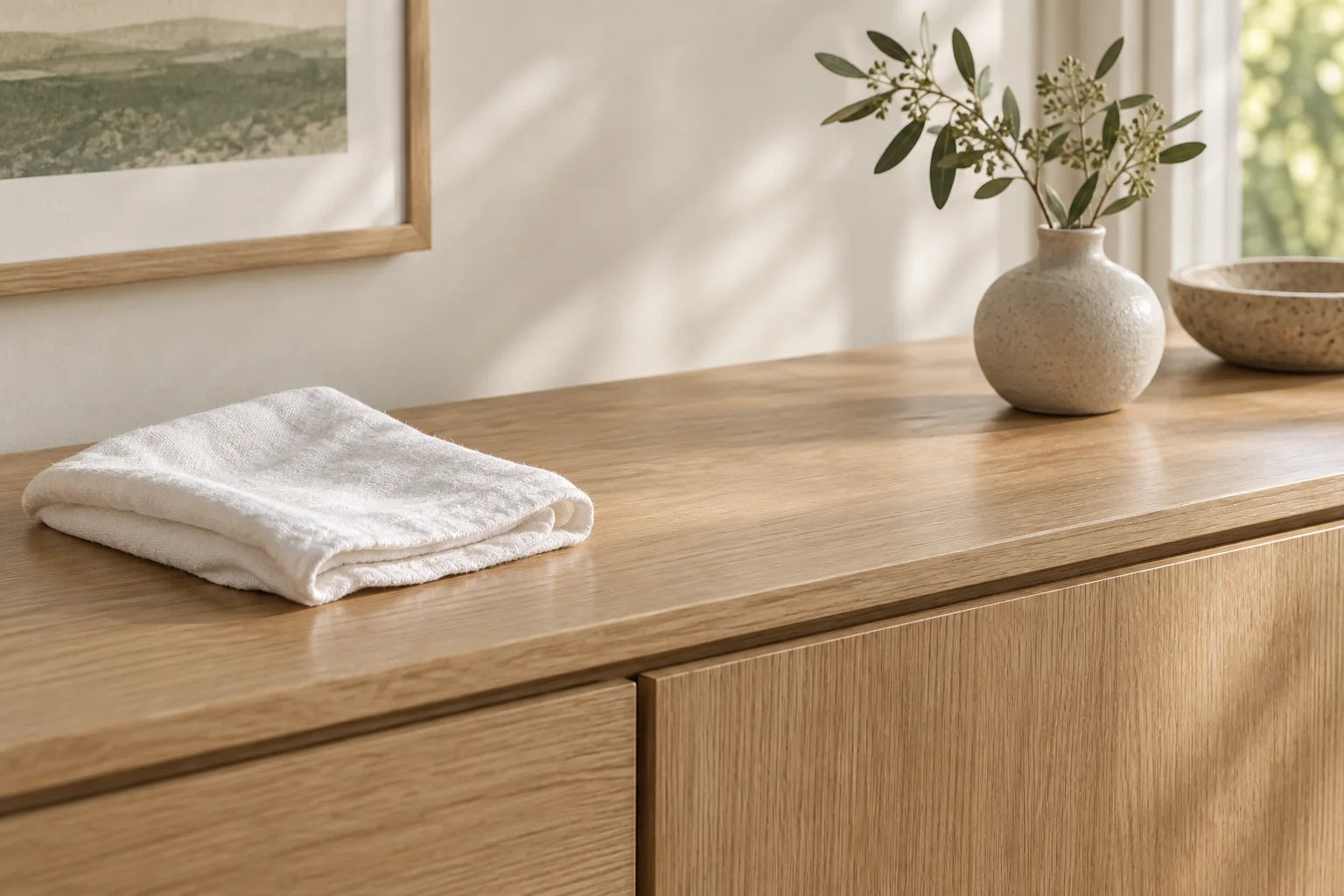
Varnished wood sideboard with a soft white cloth on the surface

Care & repair

Cleaning of lacquered wooden furniture without damaging the lacquer

Clean lacquered furniture according to the lacquer's condition and the manufacturer's instructions. Avoid abrasive agents and have surface damage assessed before wet treatment.

Read the guide
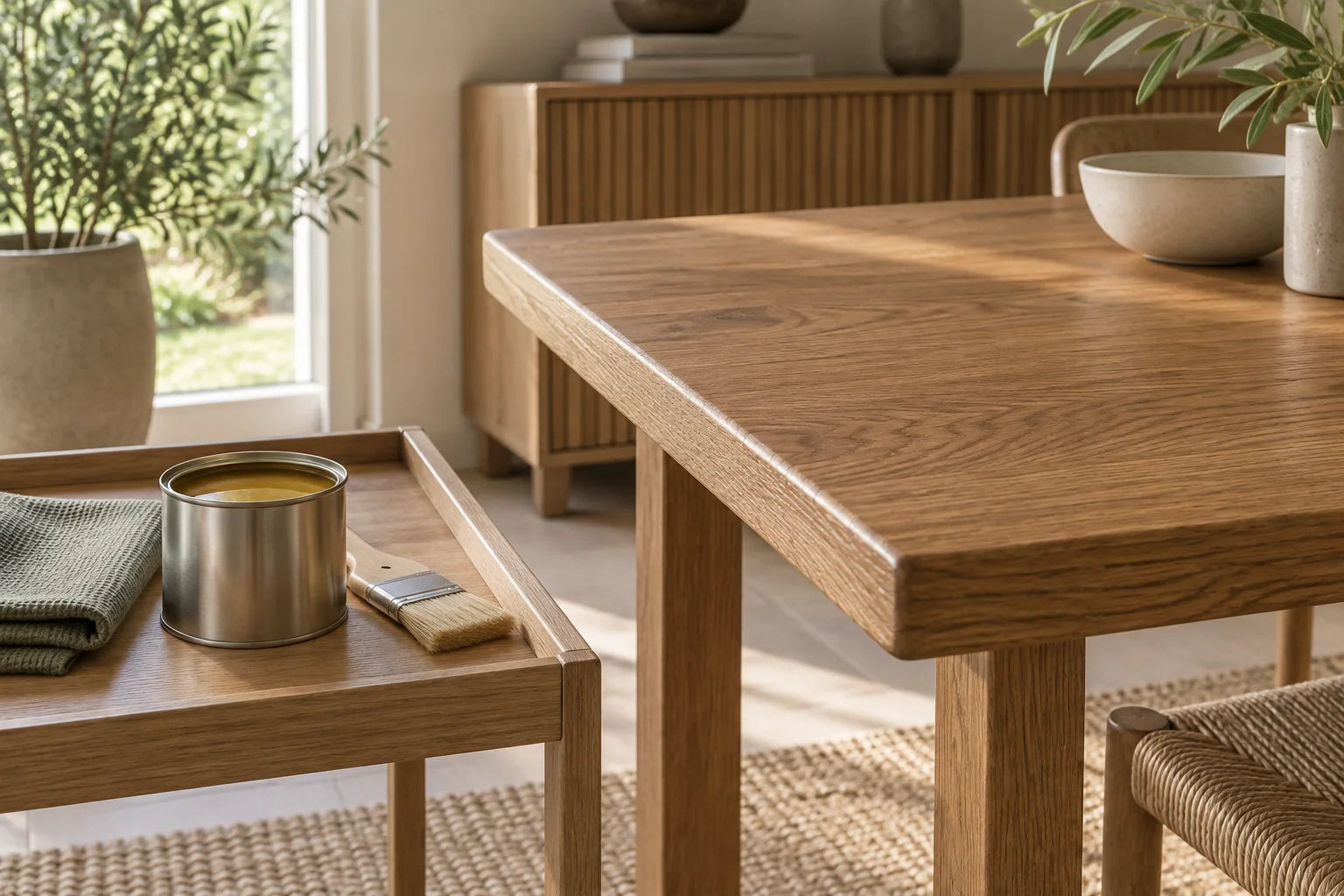
Neutral tin can with furniture oil and a brush on a tray next to an oiled table

Care & repair

Oil for indoor wooden furniture: choose based on the existing finish

Select furniture oil according to the wood's existing finish and the product's application. Clarify colour, preparation, drying time and handling of oil rags.

Read the guide
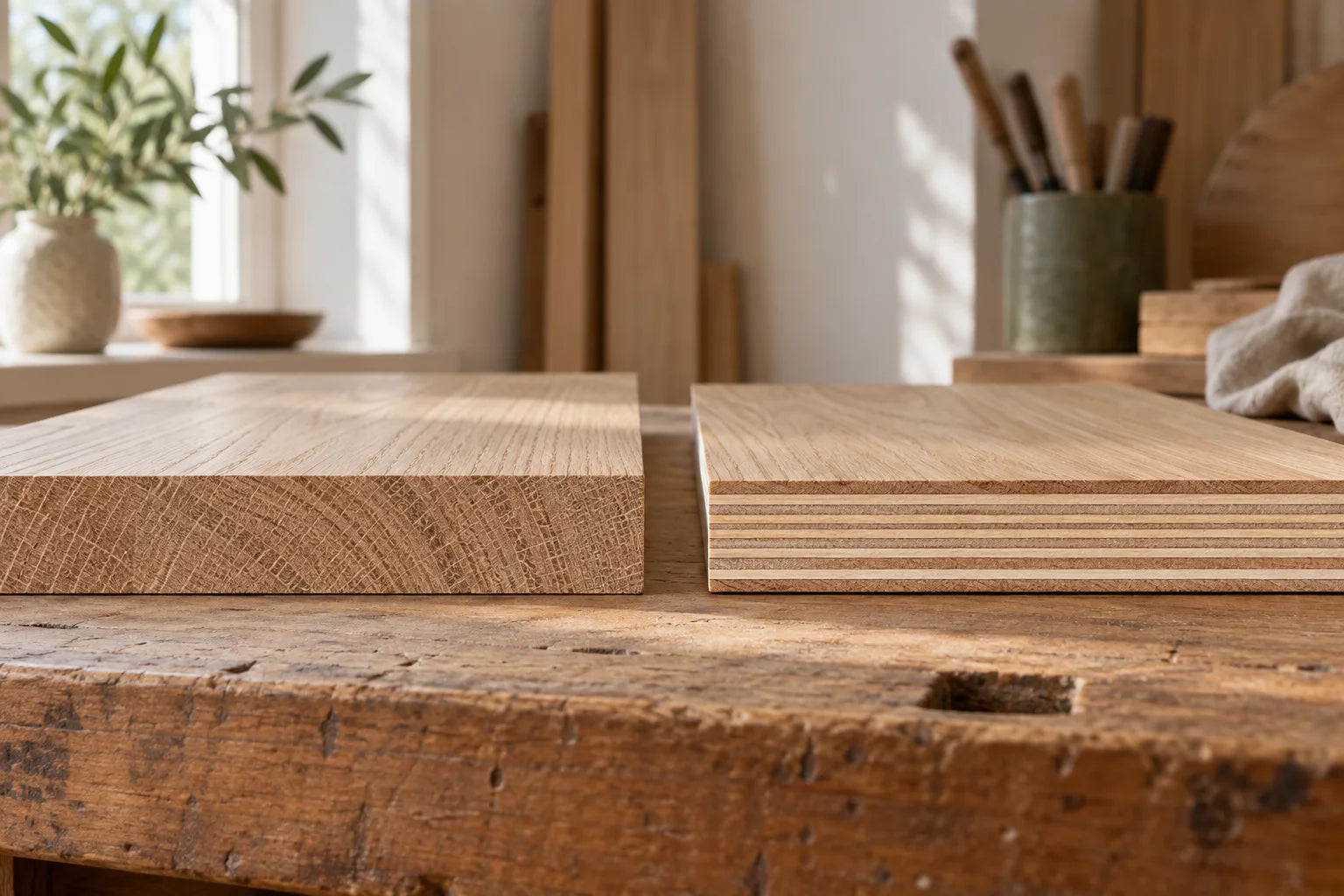
Cross-section of a solid wood panel and a veneered panel with laminated core

Care & repair

Veneer or solid wood? The difference matters for repairs

Veneer is a thin layer of wood on an underlying structure. The difference from solid wood is important when assessing edges, damage and possibilities for sanding.

Read the guide
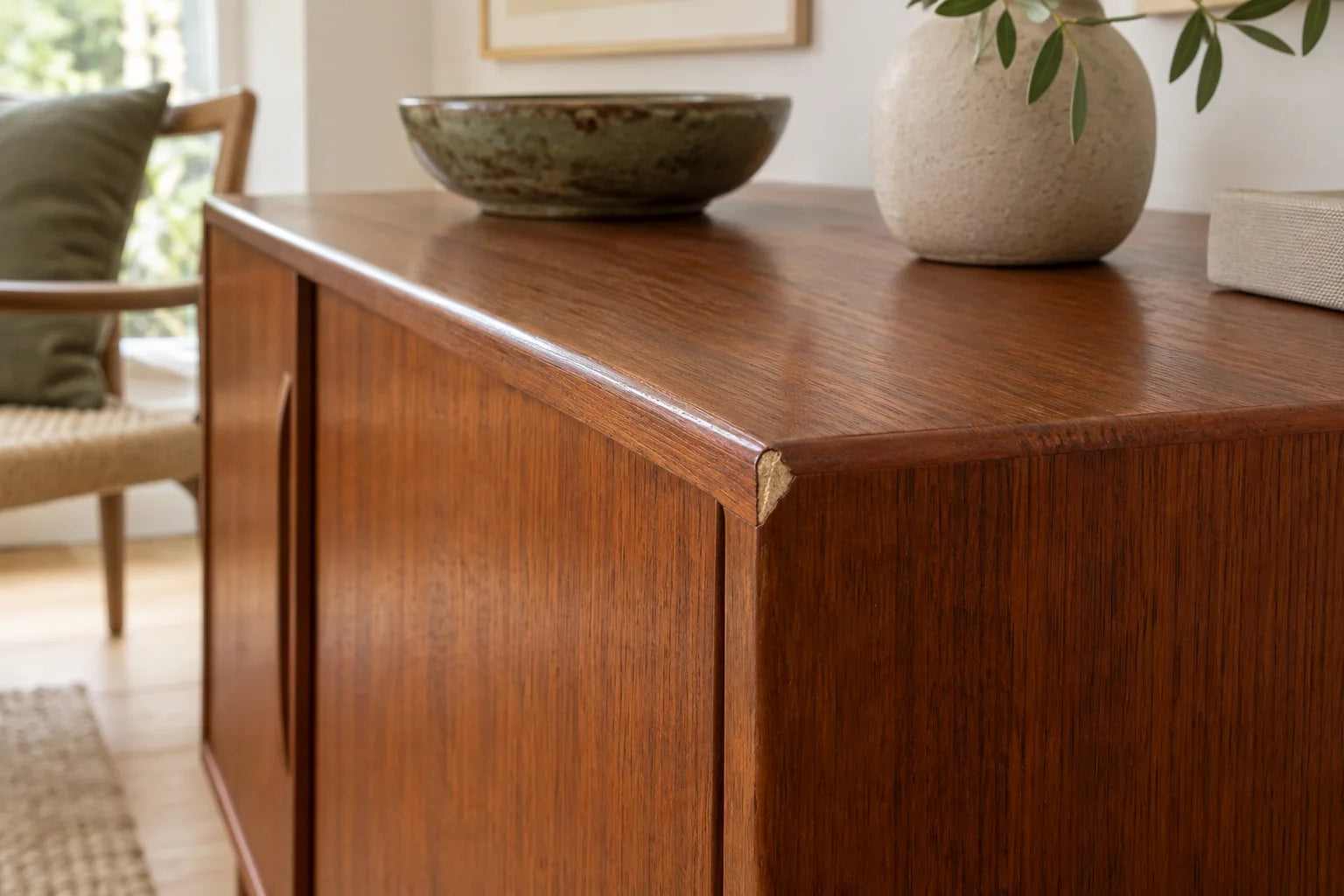
A small chip in the veneer on the corner of an older teak sideboard

Care & repair

Teak veneer damage: when should you put the sandpaper aside?

Teak veneer must be assessed before sanding. Distinguish between a surface stain, missing veneer and loose layers, and document the damage before making any changes.

Read the guide
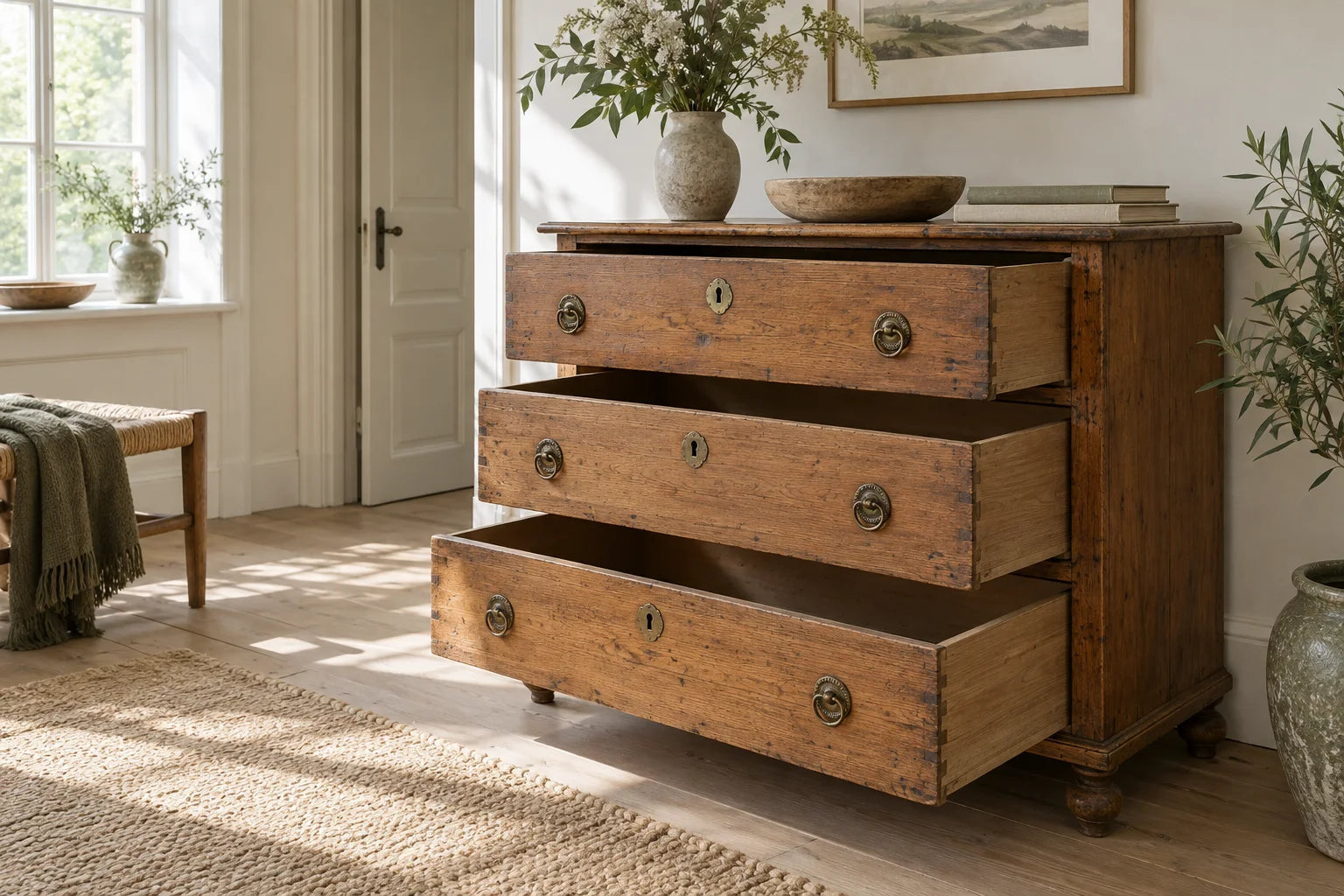
An older wooden chest of drawers with open drawers in a bright room

Care & repair

Old smell in wooden furniture: find the cause before treatment

Old odour in a wooden furniture piece must be investigated before using cleaning agents. Locate the area, check for moisture and document previous treatments.

Read the guide
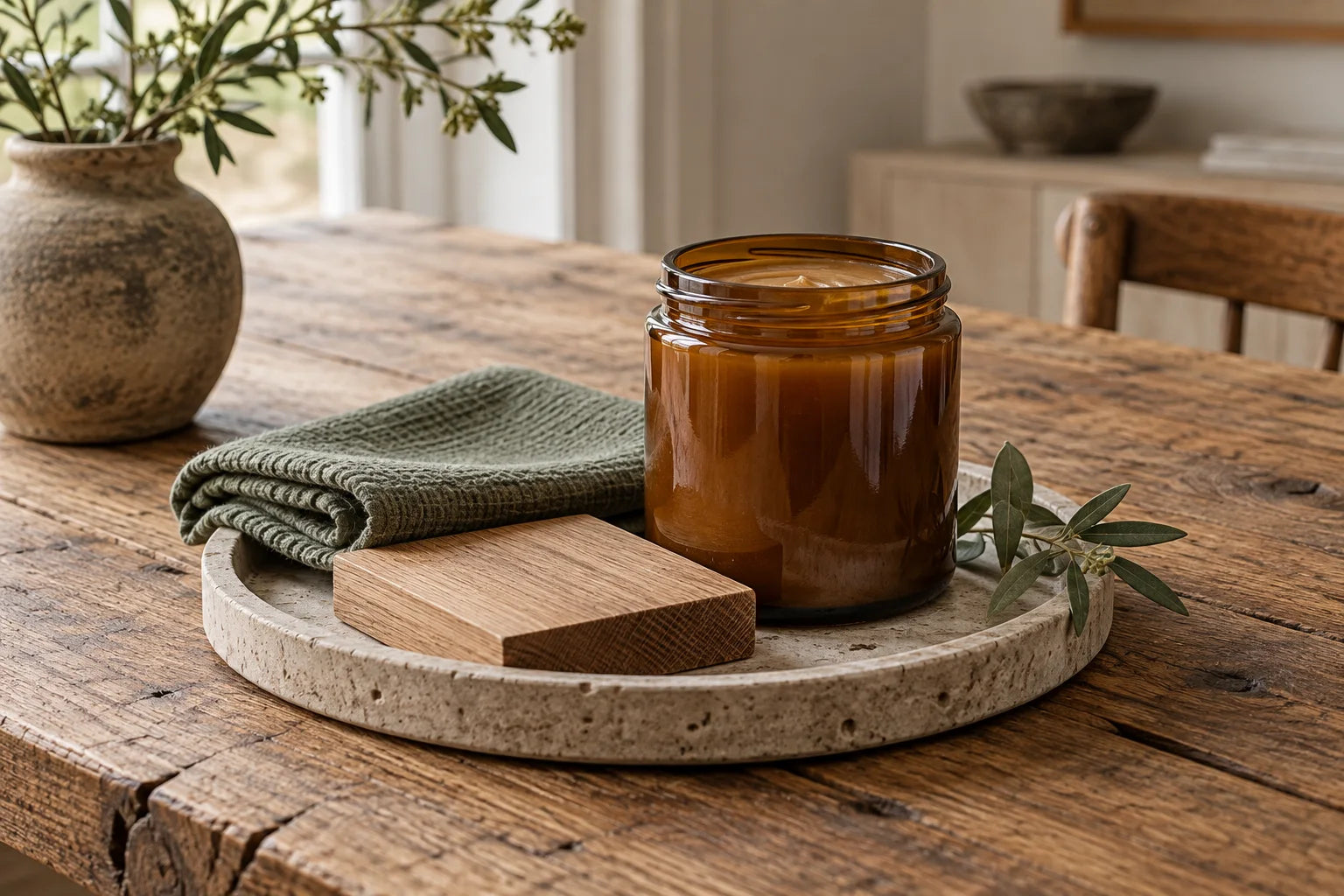
A jar of soft soap on a protective tray beside a wood sample

Care & repair

Soft soap on wooden furniture: why the surface determines the choice

Brown soap is not a universal remedy for wooden furniture. Identify varnish, oil, soap or other finish before choosing a cleaning product and method.

Read the guide
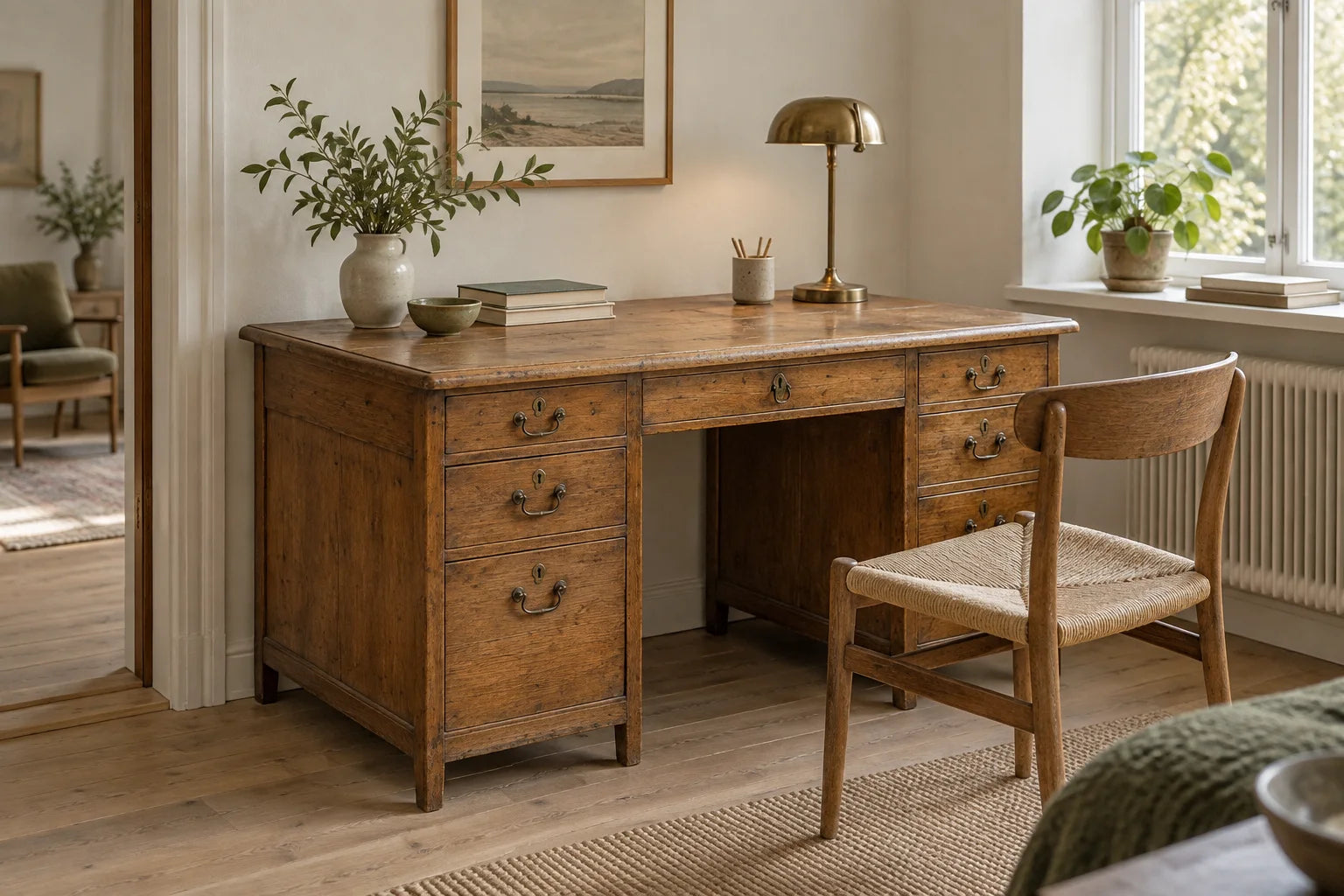
An older wooden desk with preserved patina and a simple chair

Care & repair

Restoration of wooden furniture: what will you preserve?

Restoration begins with a choice of what should be preserved. Distinguish between wear marks, damage, function and change of finish, before the work is ordered.

Read the guide
Empty restaurant with green bench cushions in separate sections and wooden tables

Cushions & foam

Cushions for restaurant benches: plan wear, cleaning and replacement

Restaurant benches require a plan for wear, cleaning and replacement. Clarify material data, division, fit and spare parts before ordering cushions.

Read the guide