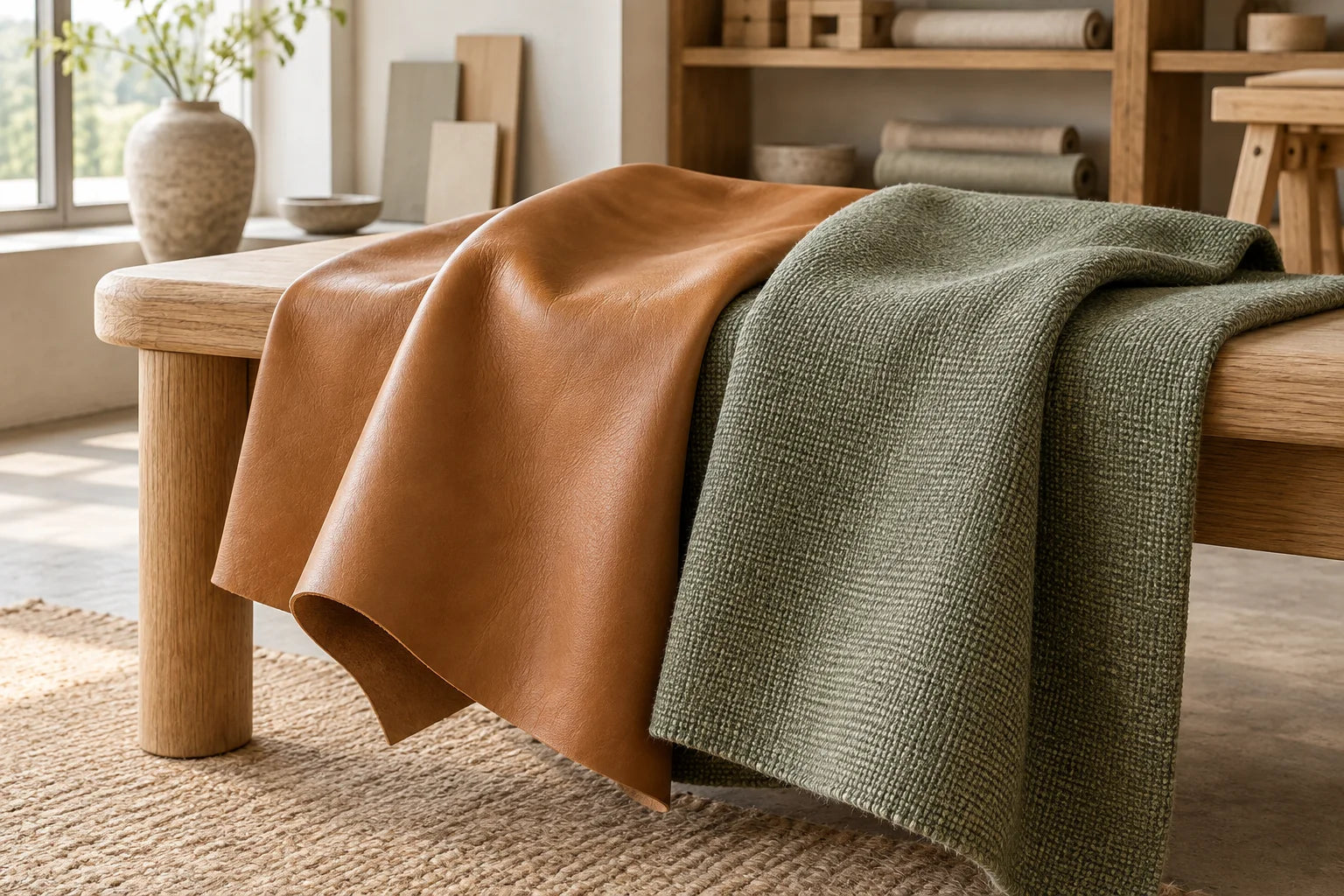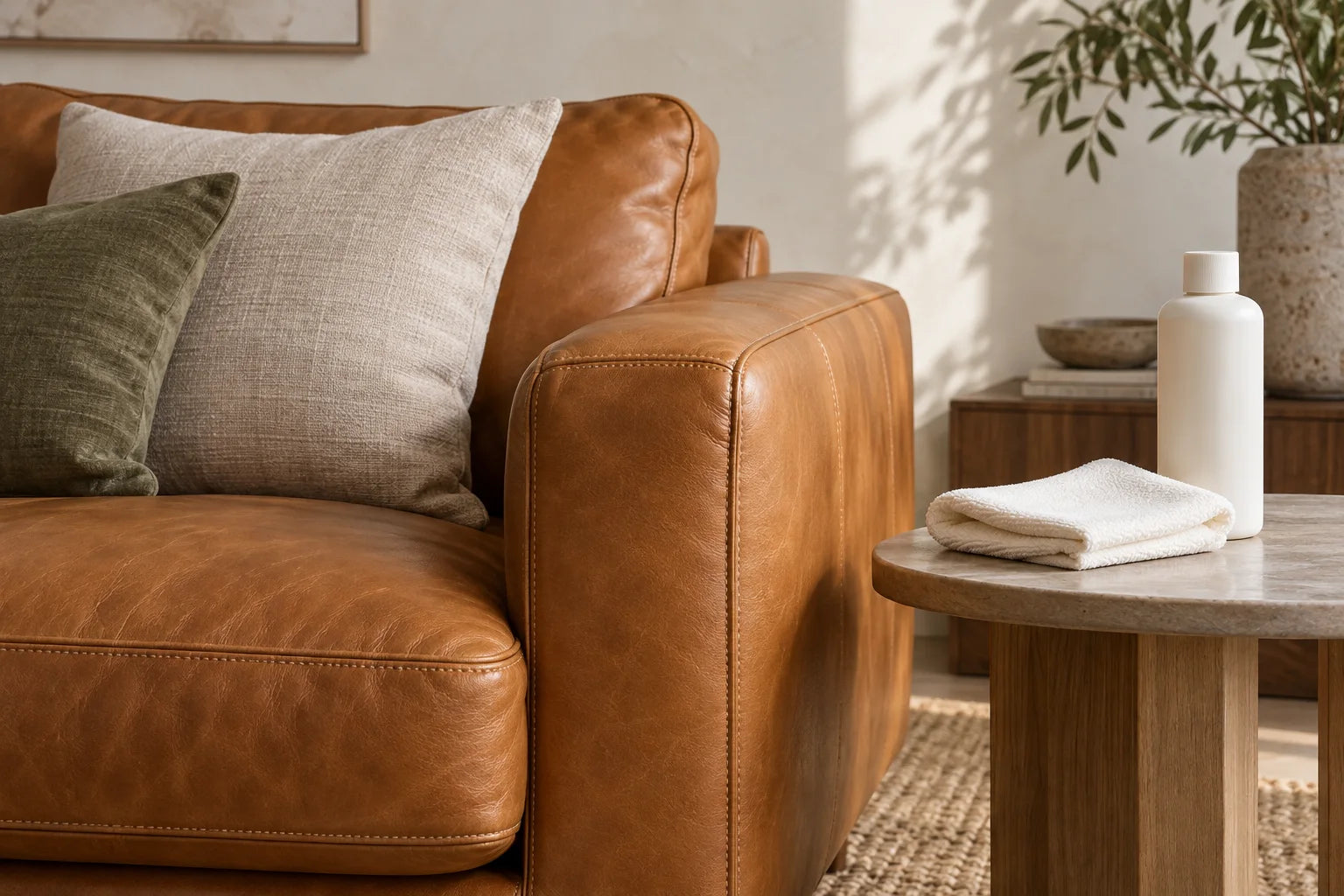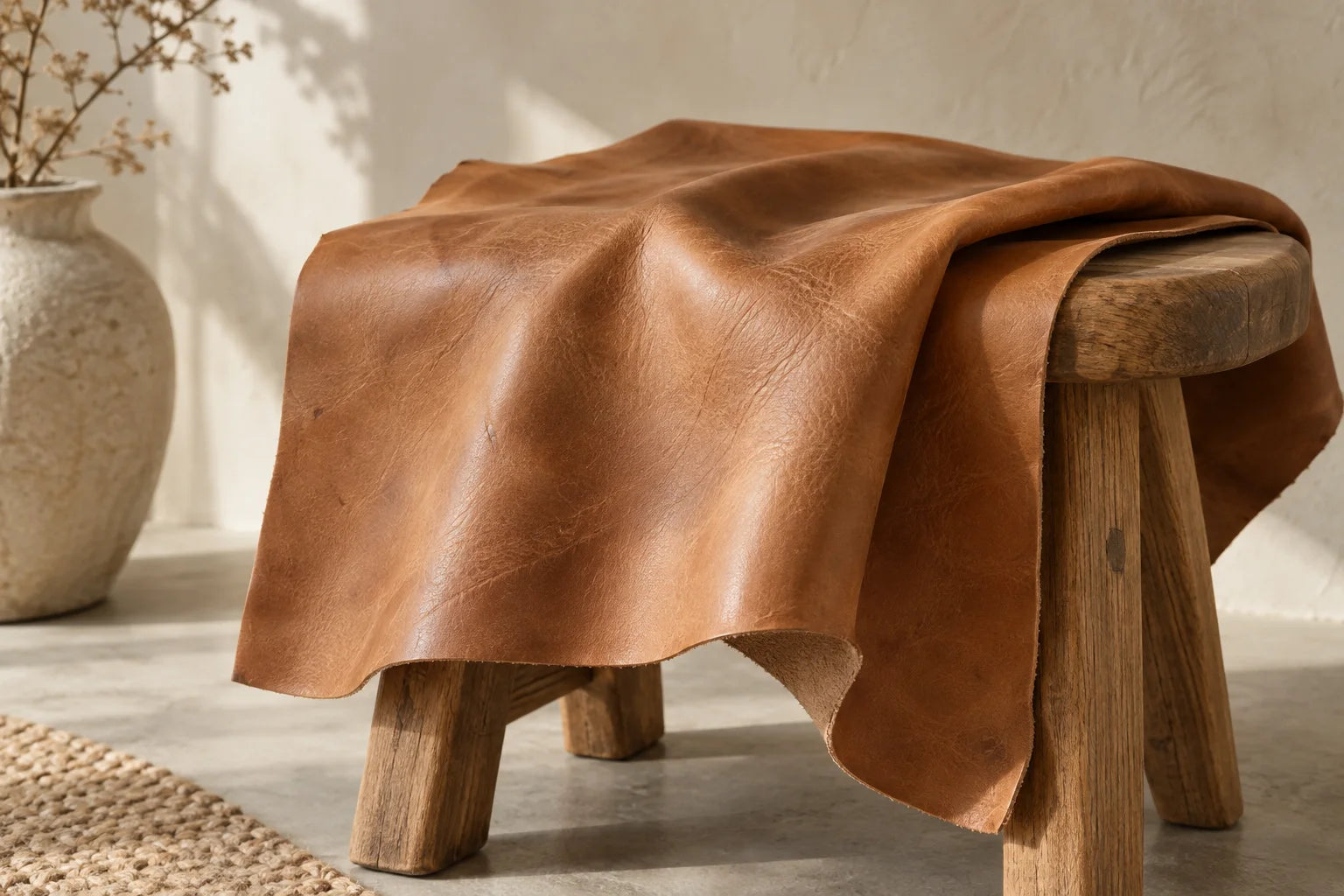
Aniline leather is often chosen for the natural expression and the visible variation in the surface. It is a material choice where the expectation of patina is important. If you wish for a piece of furniture to retain a completely uniform appearance, you should compare several leather types before deciding.
For reupholstery the particular leather grade must also suit the furniture’s shape and finishing details.
A natural appearance requires clear expectations
Aniline leather does not have the same covering finish as more heavily pigmented leather. Natural marks and colour differences may therefore be visible. Their prominence depends on the particular grade and hide.
Ask to see a larger sample or examples of the variation, and ask how the material is expected to change appearance in use. A single-colour screen image is a weak basis for choosing a natural material.
Talk about patina before ordering
Patina is part of the visual progression, but the word should not be used to dismiss any concerns. Describe what you accept yourself: darker contact surfaces, variation between surfaces, or a more uniform expression.
Damage and patina require different assessments. A split seam or a hole is not simply colour variation. The guide to what to preserve during restoration helps to formulate the wish for a piece of furniture with age and character.
Do not guess when choosing care products
Carl Hansen & Søn's leather guide shows that treatment depends on the leather type. A product that works on a protected surface is not necessarily suitable for aniline leather. Therefore, avoid testing random oils or creams on a visible area.
Find product name and care instructions. If these cannot be obtained, you should have the surface assessed before applying anything. Read leather care for sofas, where the order is described.
Assess location and everyday use
Think about the space the furniture must stand on, and the situations it is involved in. Is there a lot of light? Are the same armrests used all the time? Is uniformity more important to you than the natural character? The answers make the comparison with other qualities more concrete.
Aniline leather is neither automatically the right nor the wrong choice. It is a choice that becomes better when the material's character matches your expectations. See leather for chairs for a broader checklist covering samples, shape and finishing details.