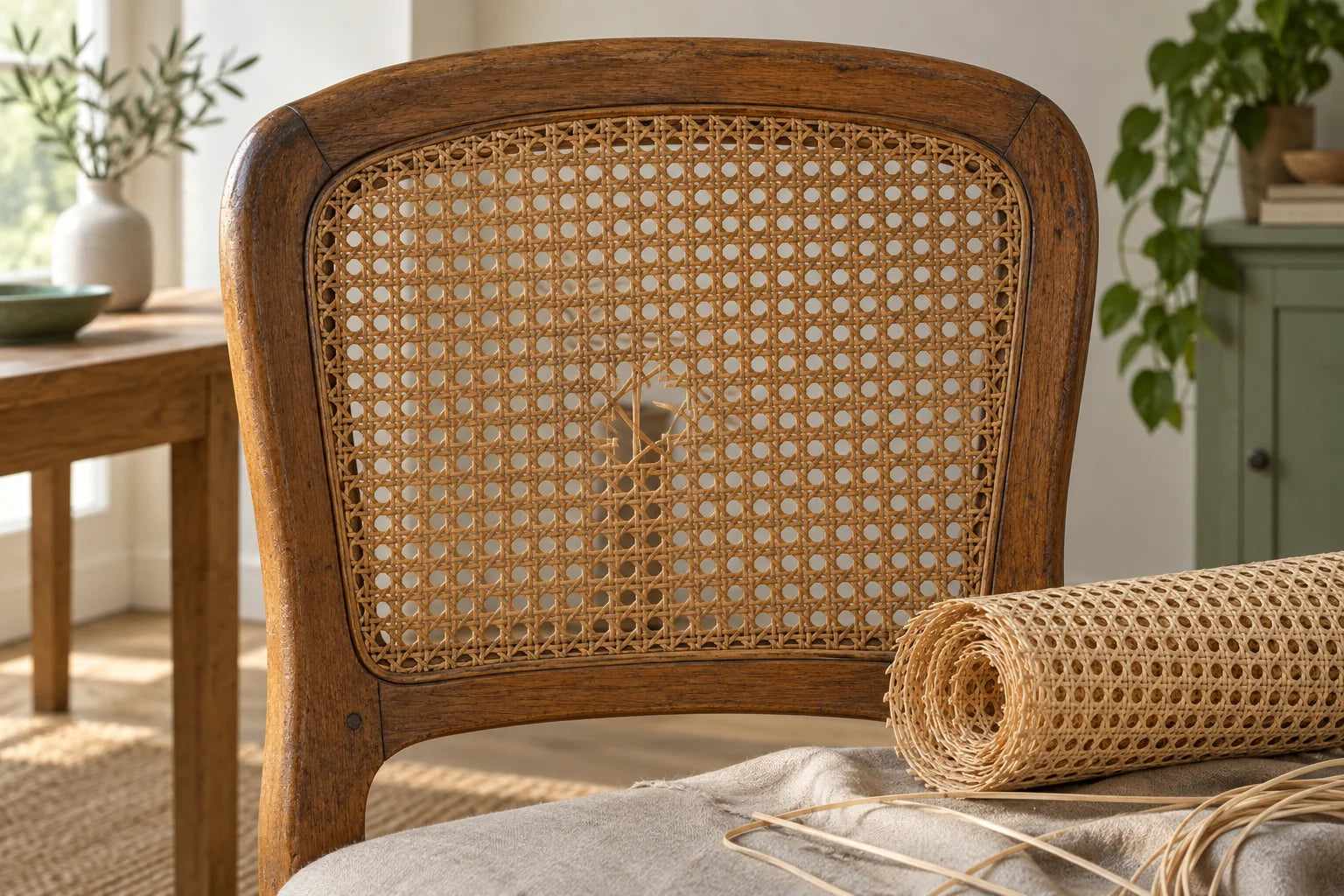
When French caning develops a hole, the size of the hole is only part of the assessment. The remaining material, fastening and wooden frame must also be examined. A small defect in an otherwise brittle seat is a different job from a single broken strand in otherwise sound weaving.
Ask about repair of French caning with photos of both the damage and the whole frame.
Stop using the seat if it breaks
Avoid using a load-bearing seat while its strands are broken. A cushion on top does not establish that it can support weight again. Loads on a backrest or decorative surface may differ, but the material still needs assessment.
Mark the damage on a photo rather than putting tape directly on the weaving. This shows the problem without leaving adhesive residue.
Find the fastening
Look along the frame's edge and at the back. Does the chair have a continuous groove with a finishing spline, or holes through which individual strips pass? This determines the method to use.
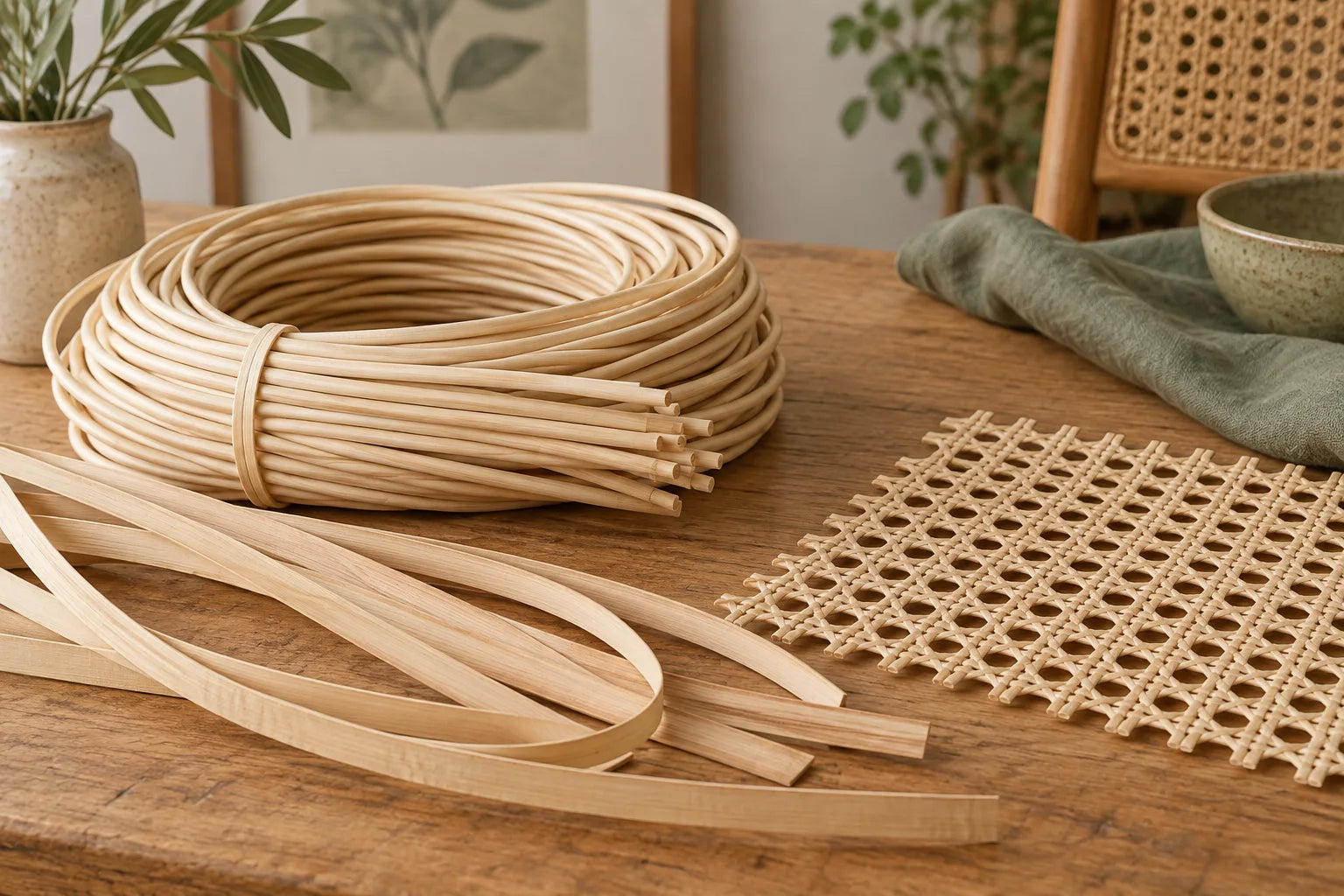
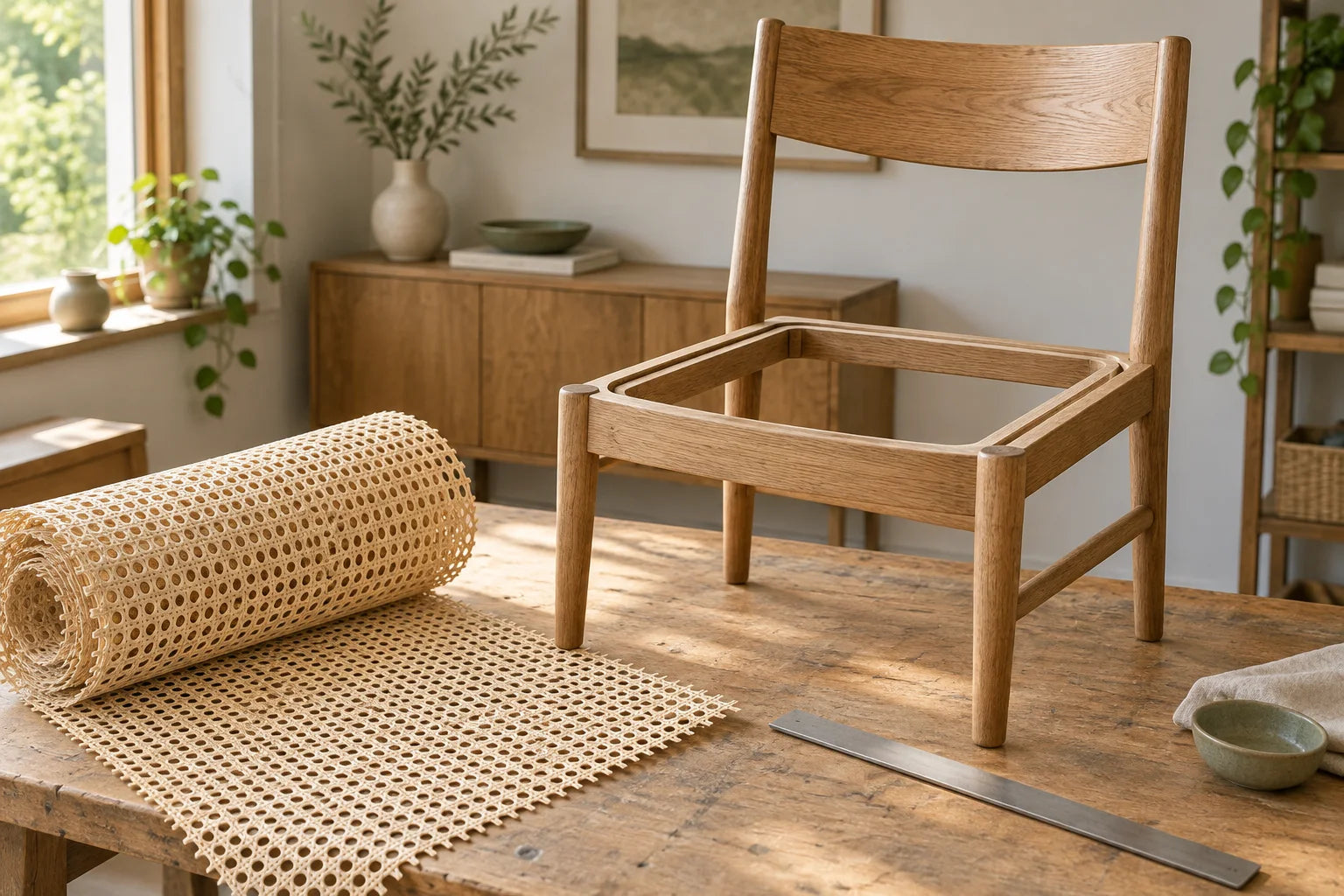
Prewoven sheets sold by the metre do not suit every construction. The guide to French caning by the metre explains what you need to check before purchasing materials.
Assess the whole surface
Look for further damage, discoloration, previous patches, and areas where the material has slipped from the frame. Avoid pressing hard around an old seat to test it. Photos and a careful visual inspection are a better starting point.
The wooden frame may also have cracks or loose joints. If it needs repair, this should be coordinated with the work on the woven seat, so new material is not mounted on an unresolved substrate.
Agree on the appearance of the repair
A local repair may be visible because new and old material have different colours. Therefore ask for both a durable solution and expected appearance. An almost invisible result cannot be promised solely based on a small close-up photo.
If the entire surface needs to be replaced, the pattern, material, and finishing must be described. Read about rattan cane, if you are unsure about the terminology.
Avoid quick patches without a plan
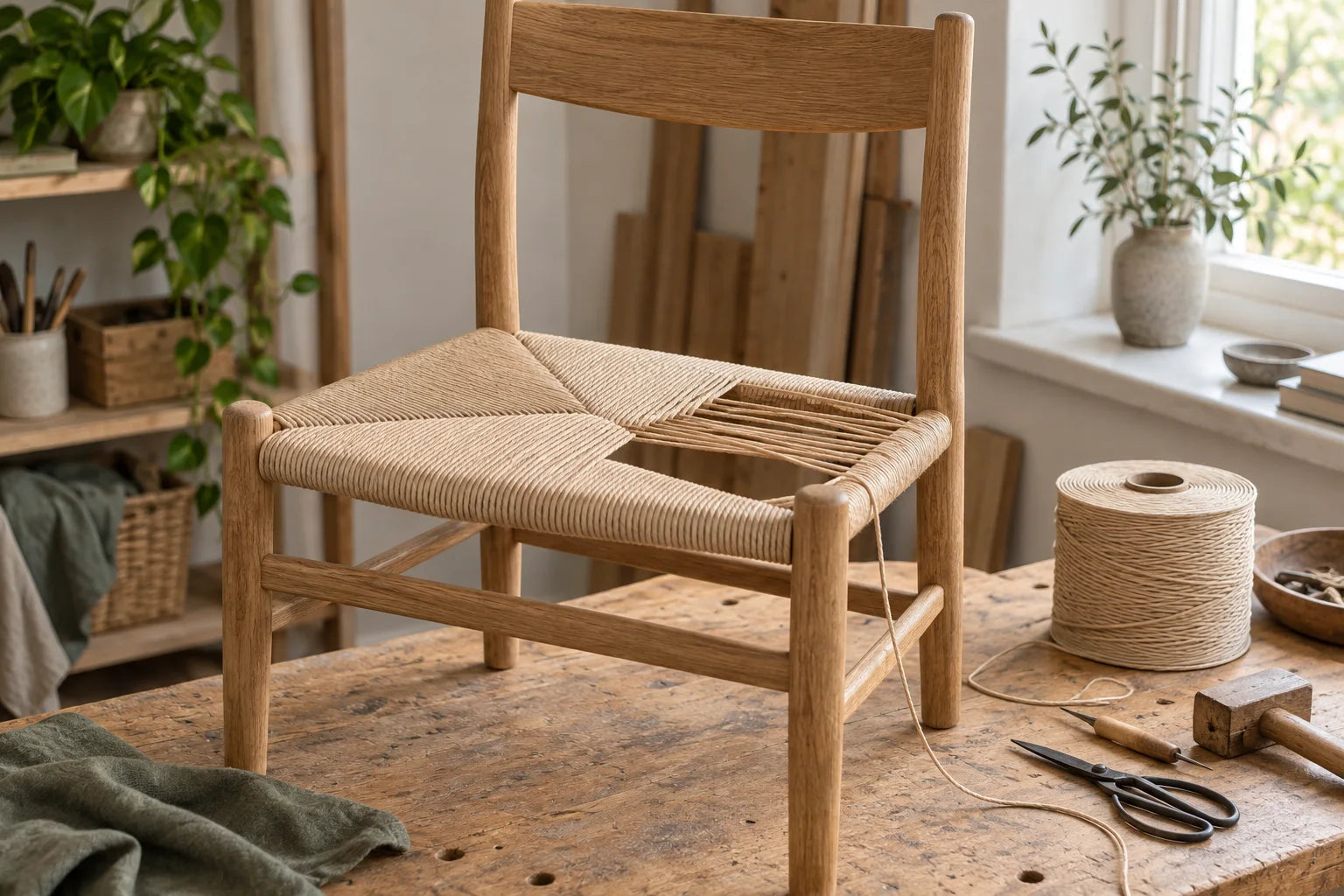
Glue, tape or an additional net can alter the surface and make subsequent work more difficult. If you are considering doing the work yourself, then start with the guide to chair weaving as a DIY project. The first task is to correctly identify the construction.