A durable furniture fabric must suit the load it receives. Therefore, use a specific piece of furniture and a specific daily routine as a starting point. A fabric for a private armchair should not be assessed in exactly the same way as cover for a busy restaurant bench.
When you plan reupholstery, the aim is a material that works throughout its use: as fabric, as a sewn cover and as part of the furniture.
Create a short load profile
Describe how often the furniture is used, what typically happens around it, and how it is cleaned. If you have a very sunny room, frequent meals by the sofa, or pets, please mention this specifically.
No fabric designation makes a piece of furniture resistant to everything. Ask about the property you actually need, rather than just whether the fabric is 'extra strong'.
Compare two material grades using the same questions
| Questions | Why the answer is useful |
|---|---|
| Is the fabric suitable for this furniture type? | Clarifies the intended use |
| Which test results are available? | Provides a documented basis for comparison |
| Which cleaning methods are permitted? | Shows whether the care suits everyday use |
| How are corners and seams handled? | Links the fabric to the finished cover |
| Can the same quality be obtained later? | Helps with partial replacement |
Use the Martindale guide to understand the abrasion test. The figure should be part of the comparison, not the whole decision.
See the structure in practice
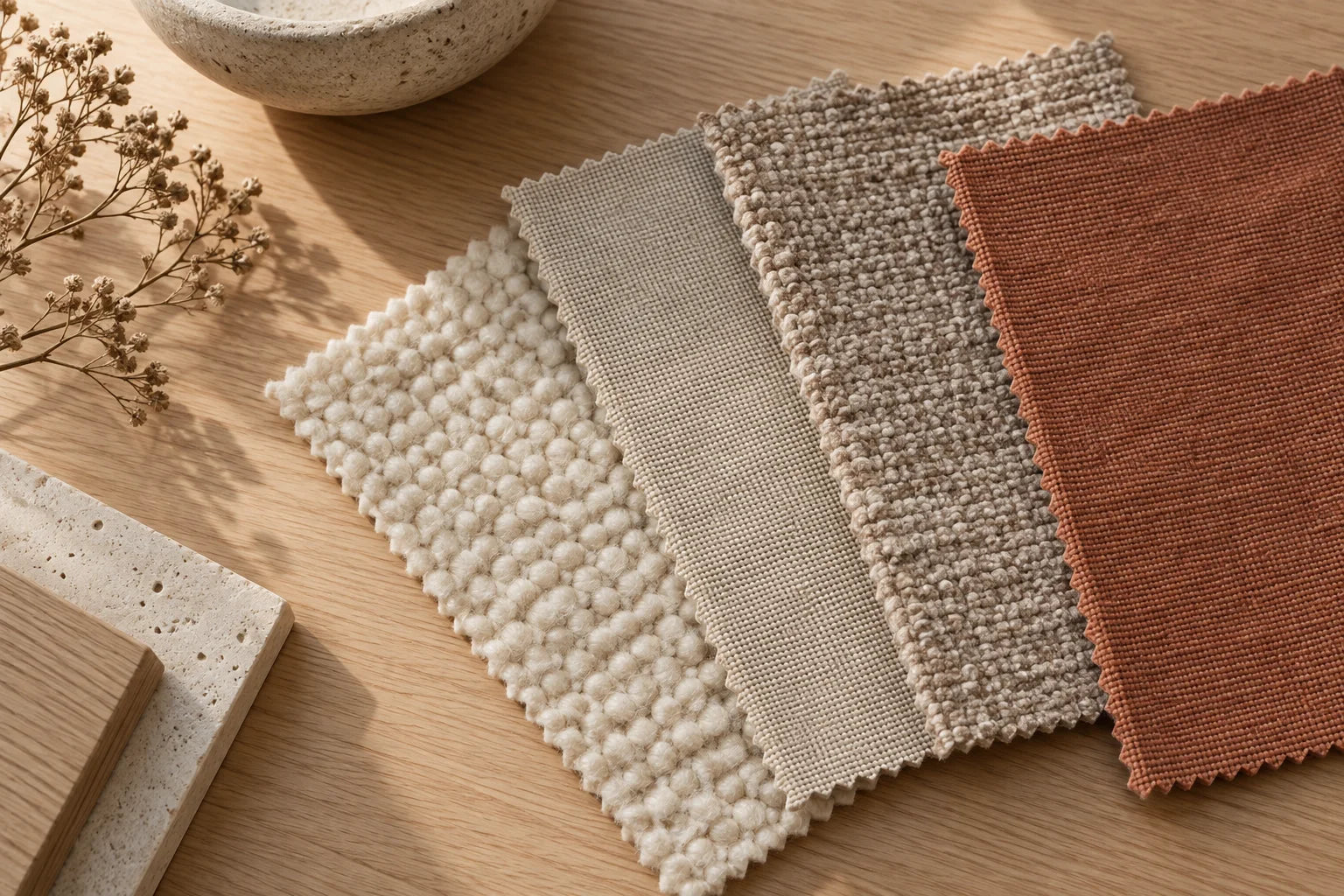
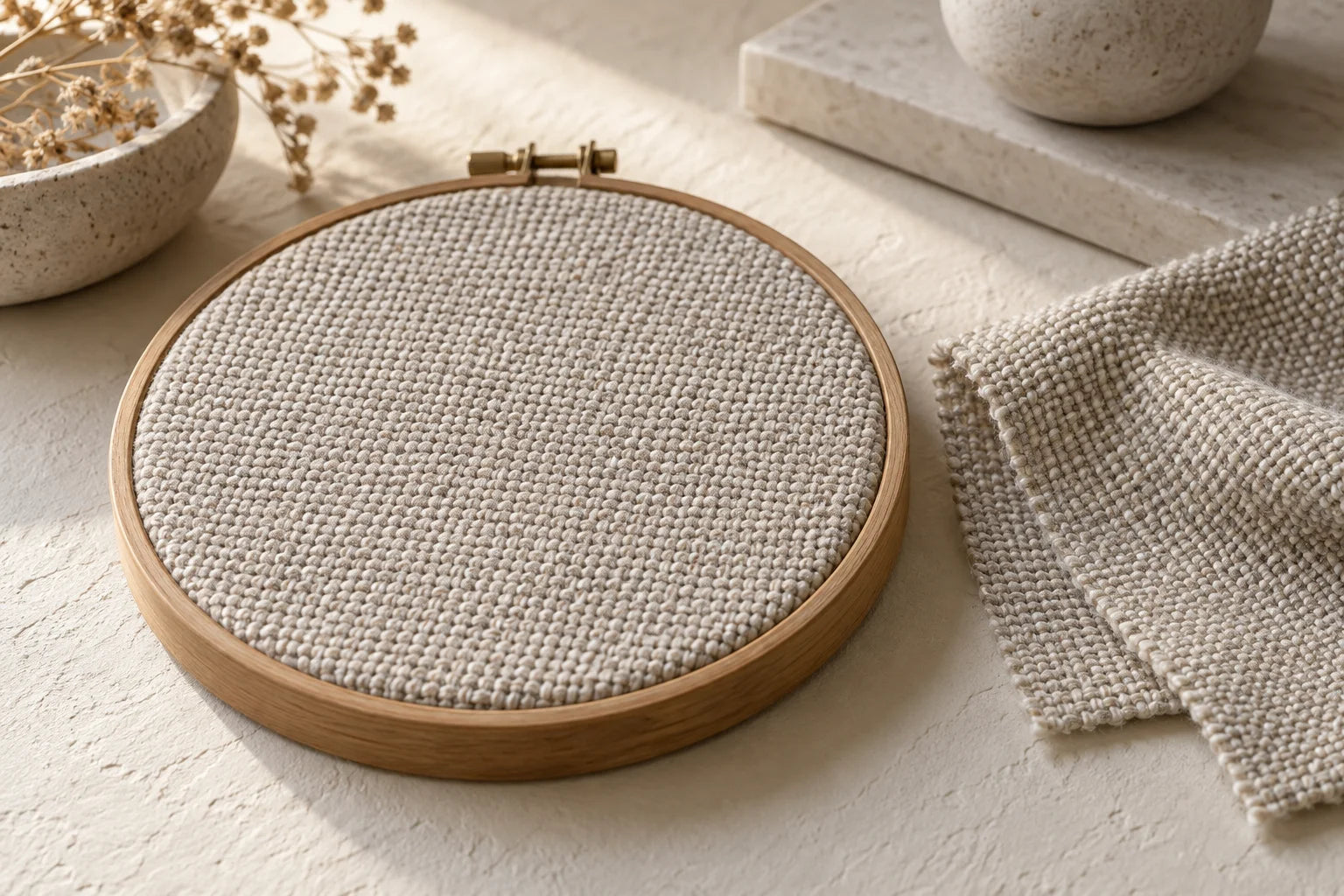
Examine the sample closely and at normal usage distance. A clear structure can give a beautiful expression, but ask how it functions on your specific edges and finishes. Also check if pattern or direction must be followed during cutting.
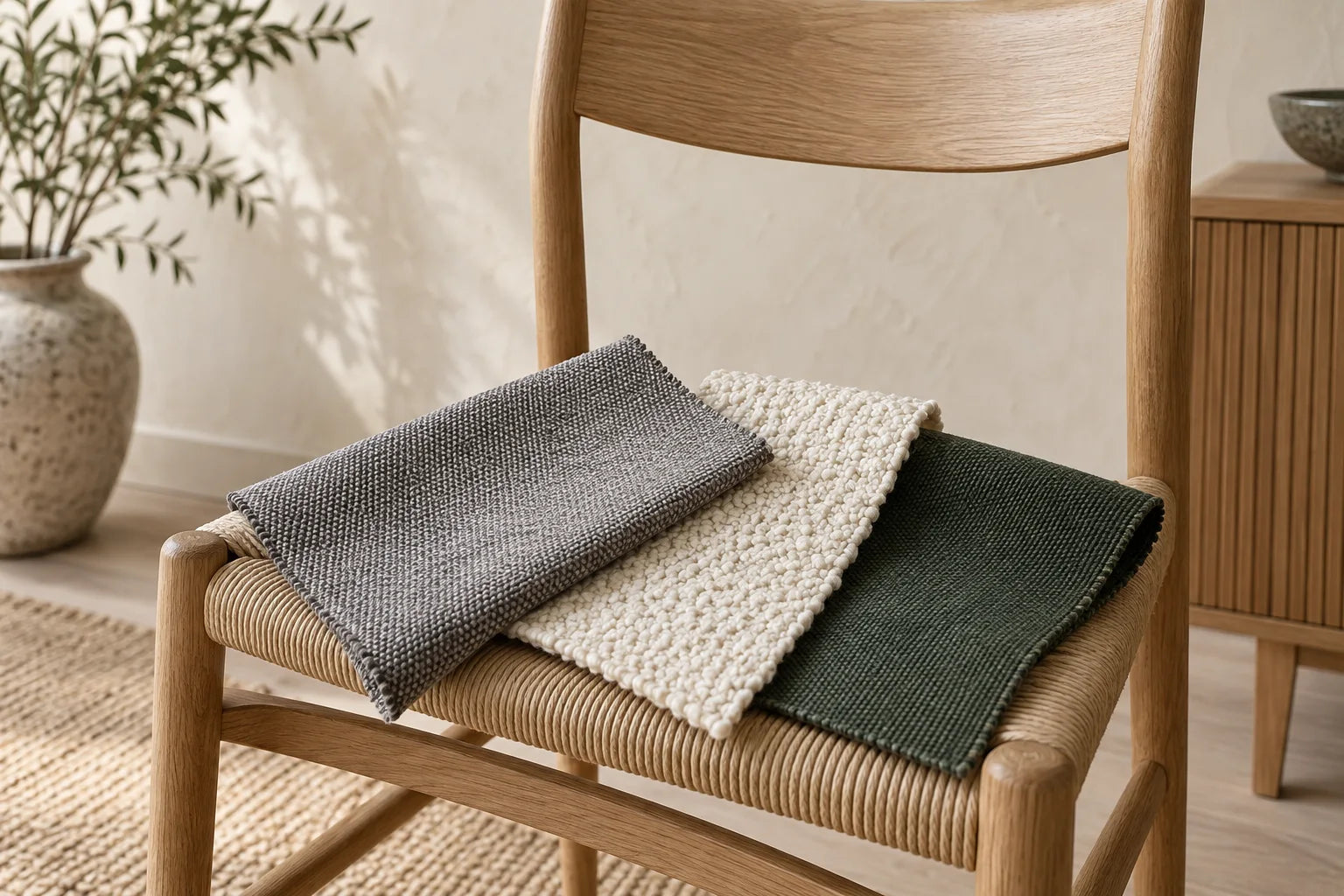
If the fabric is to be used on several pieces of furniture, it may be relevant to have a reference made or view a larger sample. The visual result is easier to assess when the surface is not just available as a small excerpt.
Make maintenance part of the choice
A fabric requiring treatment that you would not realistically be able to perform yourself is a poor match for your needs. Obtain the written care instructions, clarify what can be done locally, and what requires professional cleaning.
For commercial use, the decision should also cover replaceable parts and documentation. The guide to cushions for restaurant benches shows how to plan operations around the upholstery. For private chairs, you can start with the complete fabric guide.