Leather for reupholstering chairs must be chosen as a specific quality, not just as a colour. The surface treatment has significance for both appearance and maintenance. Two brown leather samples may therefore require different expectations regarding use and patina.
Get the material assessed along with the chair when you plan chair reupholstery.
Find out which surface you prefer
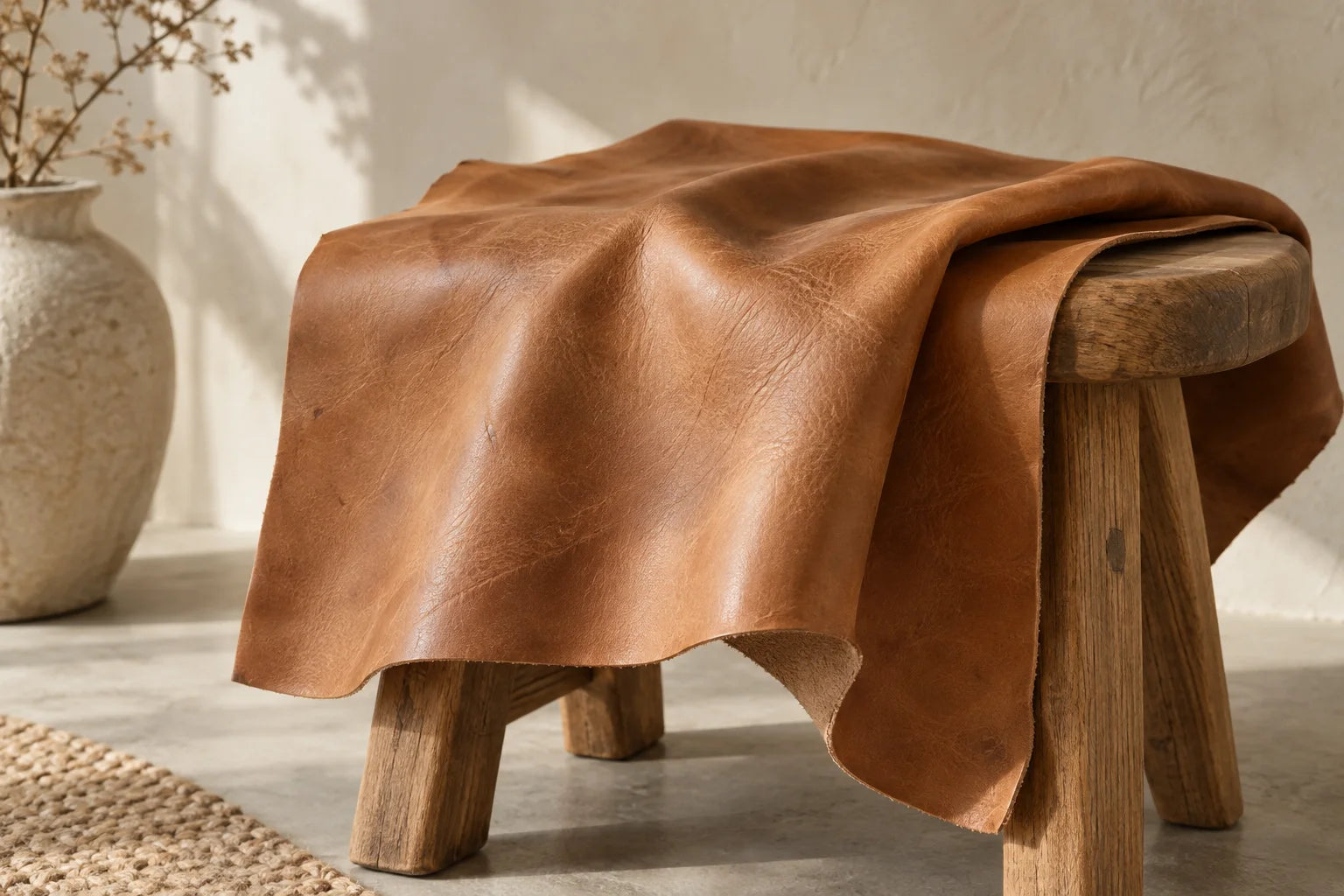
Aniline leather leaves much of the hide's natural character visible. More opaque pigmentation gives a different appearance and surface protection. Names alone are insufficient: ask for the supplier's description of the specific grade.
Carl Hansen & Søn's leather guide distinguishes between different treatments and care instructions. Do not automatically apply a recommendation for one leather product to another. Also read the aniline leather guide, if natural colour variation matters to your choice.
Look for what you want to live with
Ask how natural marks and variations may occur in the chosen quality. A small sample does not necessarily show the variation on a whole seat. This is particularly relevant if you wish a set of chairs with a very uniform expression.
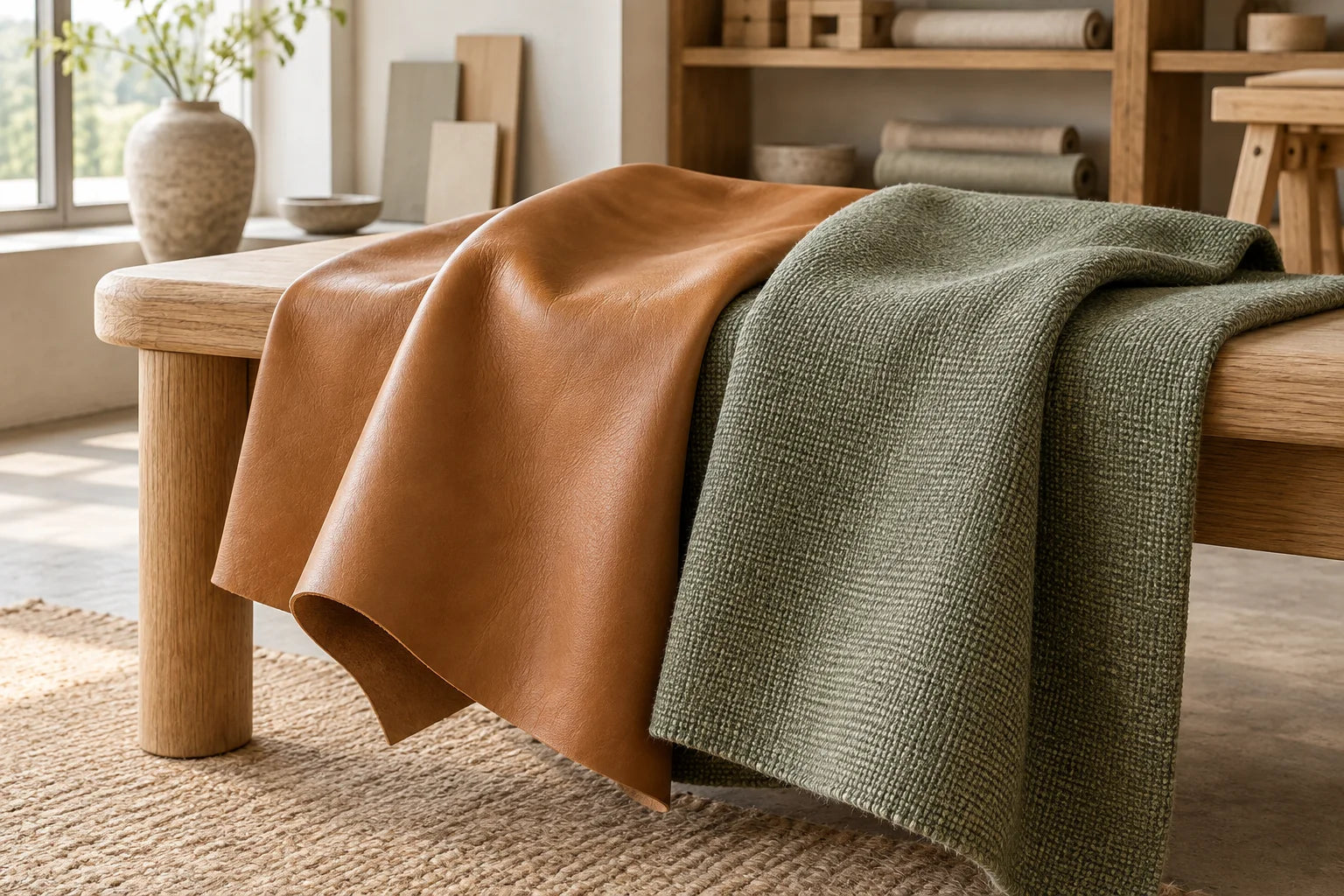
Compare the sample with the wood, metal and the other furniture. View it in daylight and in the room's normal lighting. A very smooth or glossy finish may look different on a large surface than in the sample folder.
The chair also determines the material choice
Curved backs, narrow edges, and small details place demands on how the material can be shaped and finished. Ask whether the desired leather quality suits the construction, and whether changing from fabric to leather alters the stitching or expression.
Ask for a description of visible joins. It is better to agree on a necessary seam beforehand than to expect an uninterrupted surface that is unsuitable for the furniture.
Choose care products alongside the leather
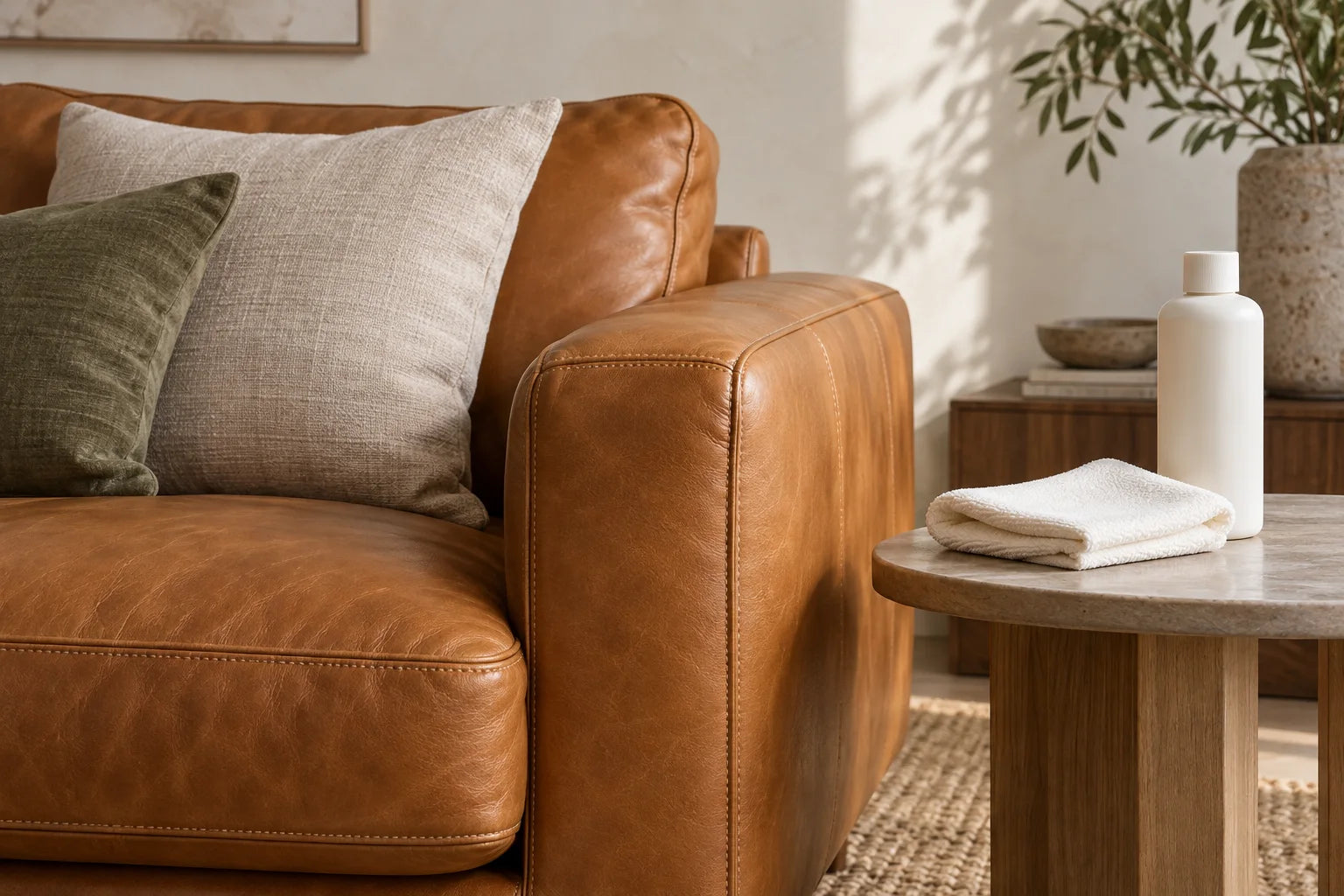
Include the precise care instructions and possibly the recommended product name in the material selection. A bottle labelled "leather care" is not proof that the product suits all surfaces. The guide on leather care for sofa and upholstered furniture explains which information you should find first.
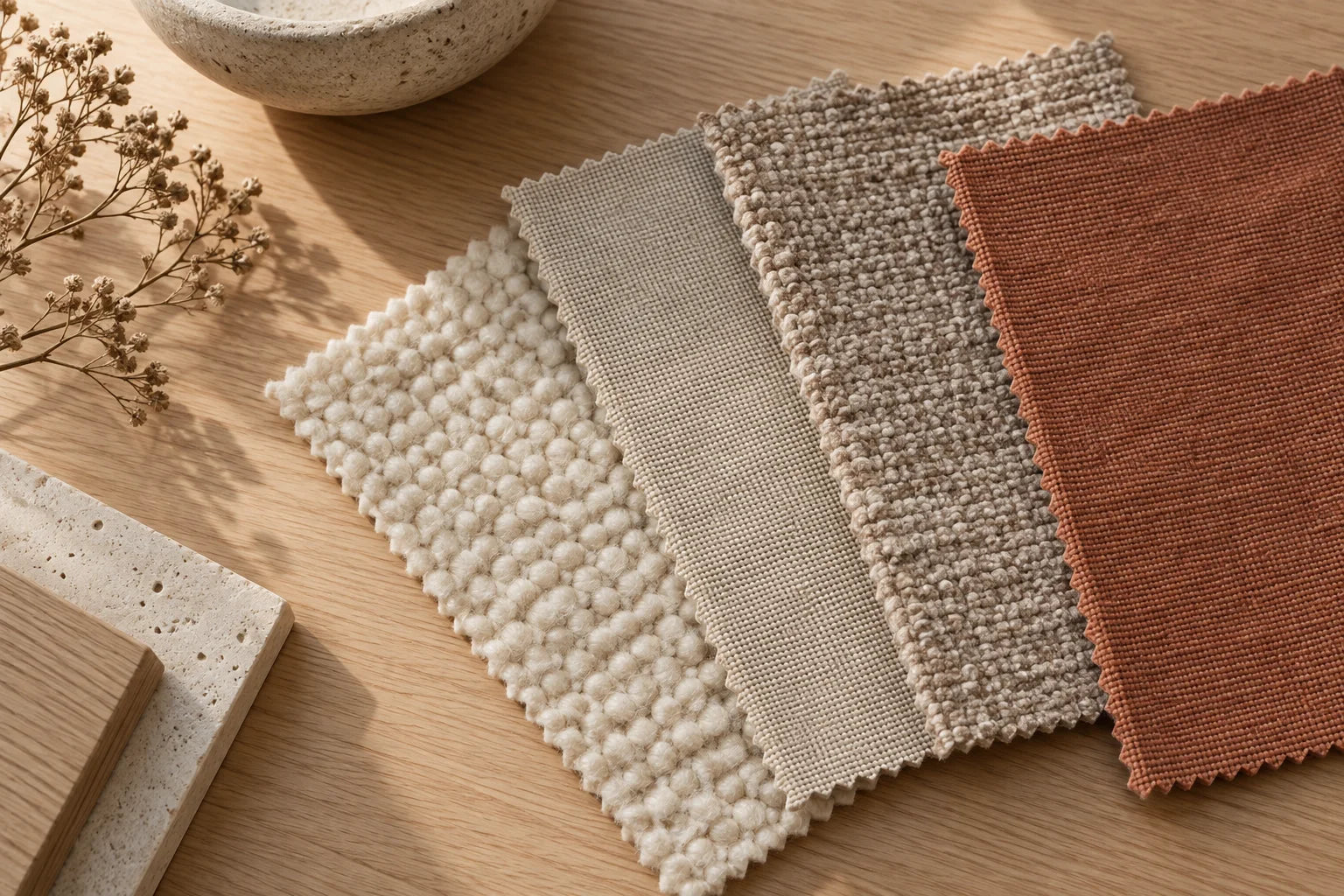
If your main wish is a particular colour and a soft surface, it is also worth comparing with upholstery fabric for chairs. The decision should be based on the everyday use the furniture is to be part of.