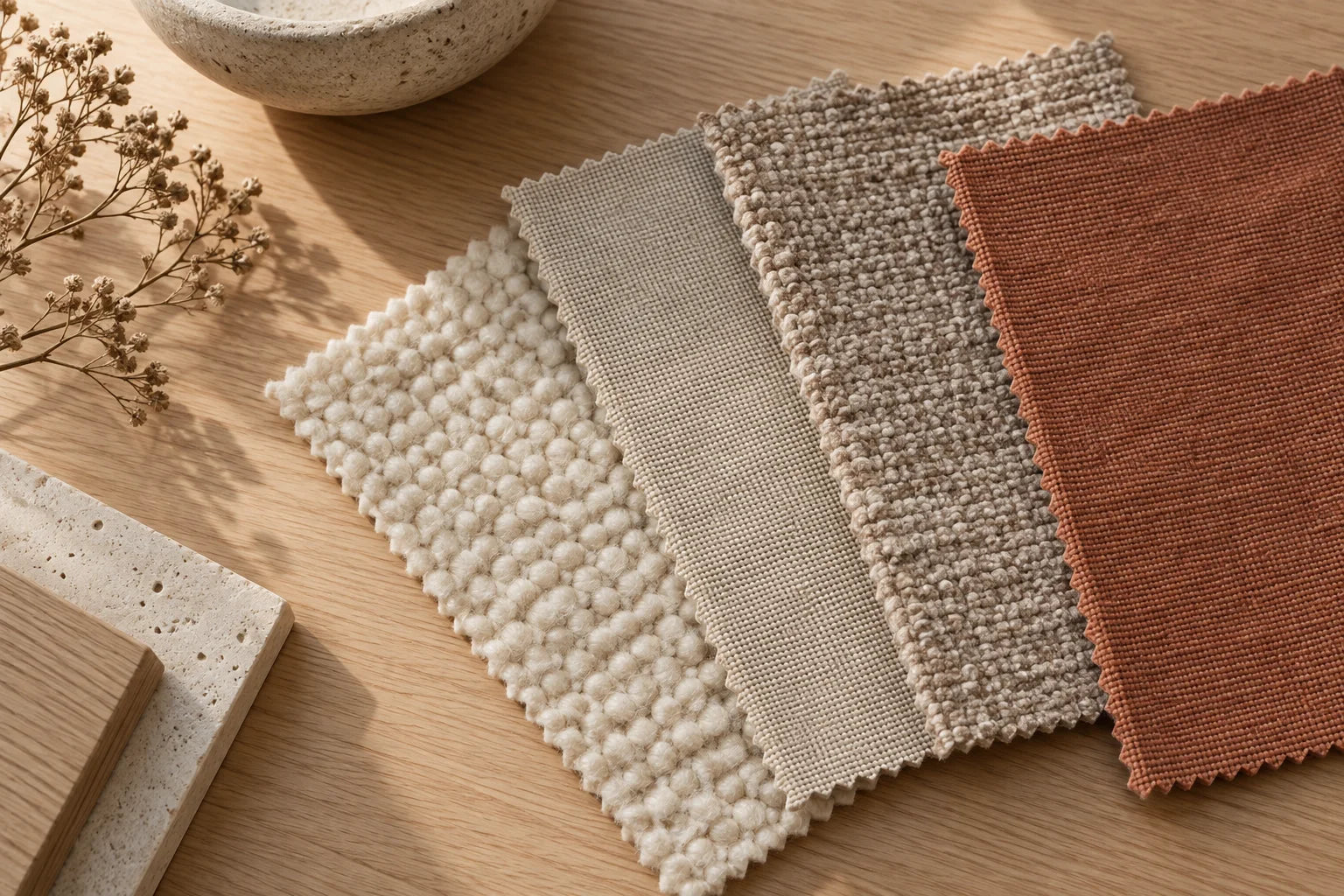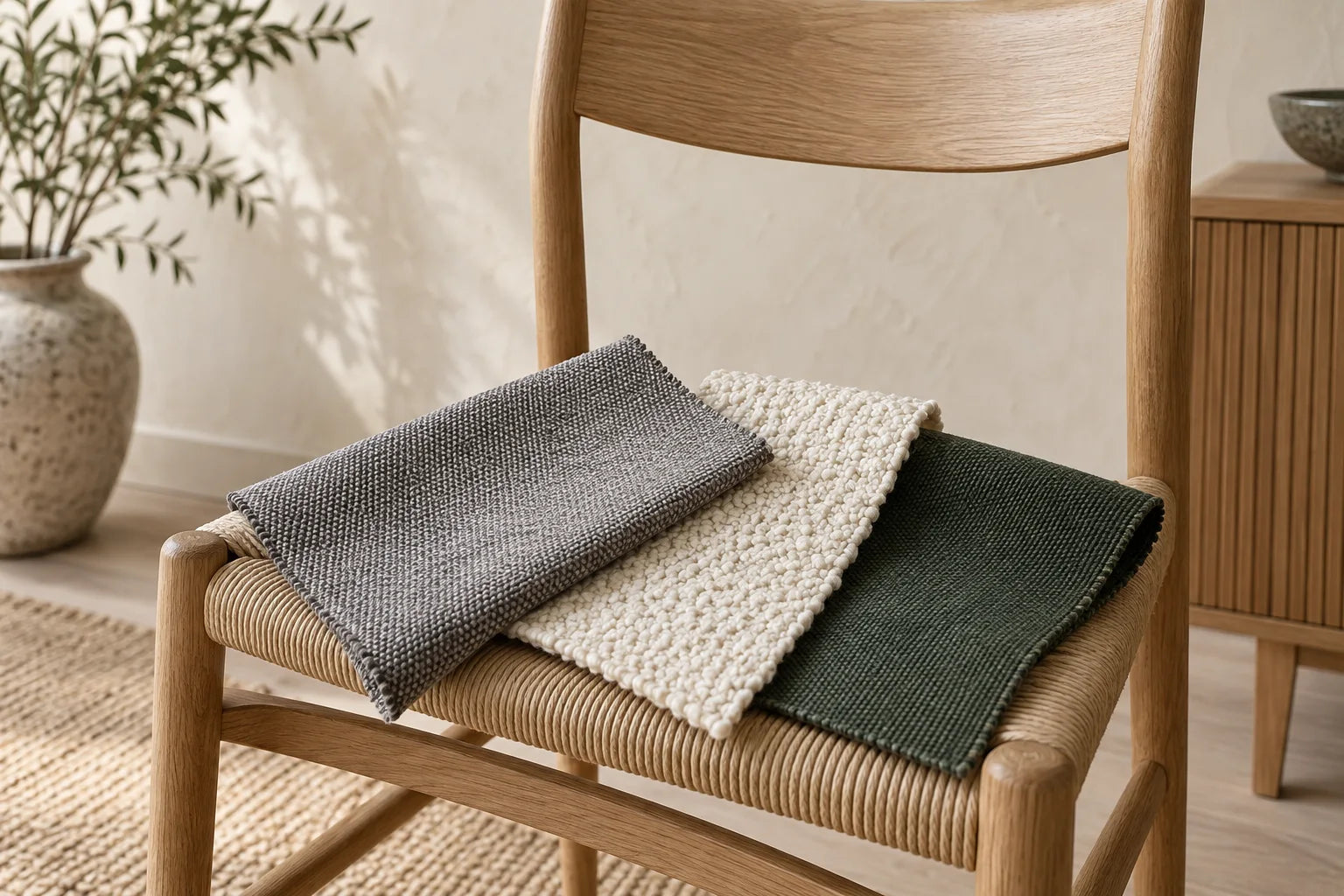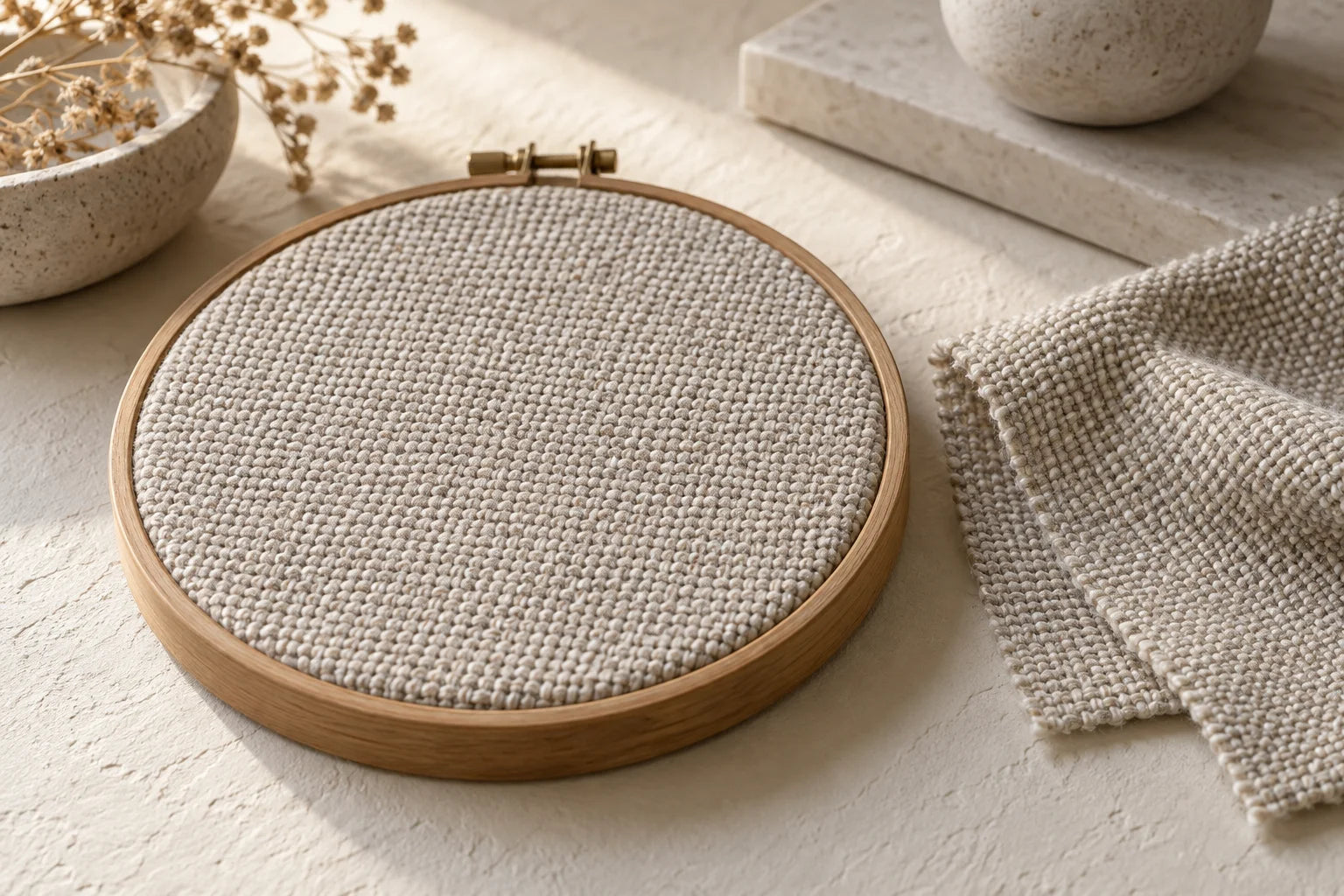
Martindale is a test of a textile's resistance to repeated abrasion. The figure is useful when comparing furniture fabrics, but it cannot be converted directly into years of use in your sofa or chair.
A fabric choice for reupholstery should therefore be based on both test data, the furniture's construction and the way the furniture is used.
What is measured?
In the Martindale test, the fabric is subjected to a standardised rubbing motion under controlled conditions. The result describes the resistance in that specific test. Kvadrat's product information refers to EN ISO 12947 and emphasises that high test results are not an indicator of the product's lifespan.
The difference is between uniform laboratory loading and furniture exposed to many types of use. The test is comparable; your daily life is more varied.
Why is the highest number not always the best choice?
Imagine two fabrics, both assessed as suitable for your dining chair. One has a higher abrasion resistance, while the other has a surface and care instructions that suit your home better. Martindale alone does not determine which you will be most satisfied with.
Sharp objects, sunlight, liquid and cleaning are also not the same as the wear load the figure describes. A fabric must be chosen for the overall task.
Read the figures separately
| Information | It helps you investigate |
|---|---|
| Martindale | Abrasion resistance |
| Pilling | Tendency to develop visible pills |
| Lightfastness | The colour’s resistance to light exposure |
| Care instructions | Which treatments does the manufacturer allow |
| Recommended use | Whether the material is intended for your purpose |
The figures do not necessarily use the same scale. Therefore, compare the same property and test basis, not just the highest value in the product sheet.
Ask specifically rather than looking for one limit
Describe the furniture and the load: daily dining area, private armchair or restaurant bench. Then ask the supplier to confirm suitability for exactly that use. Avoid turning a loose rule of thumb into a guarantee.
The guide to durable upholstery fabric covers the remaining questions. If you are still starting to choose materials, begin with fabric for chairs.
Keep the documentation
Note the manufacturer, quality, colour number and product sheet with the order. A trade name without a variant or supplier may be difficult to find again. Documentation makes it easier to choose the correct care and compare with a new fabric if the furniture is later to be altered.