Restoring wooden furniture should begin with a goal, not sandpaper. Do you want to preserve age and signs of use, repair damage or give the furniture a completely new look? These aims may lead to different choices.
For furniture repair it is therefore important to describe both what needs changing and what you want to keep.
Distinguish between patina and a functional fault
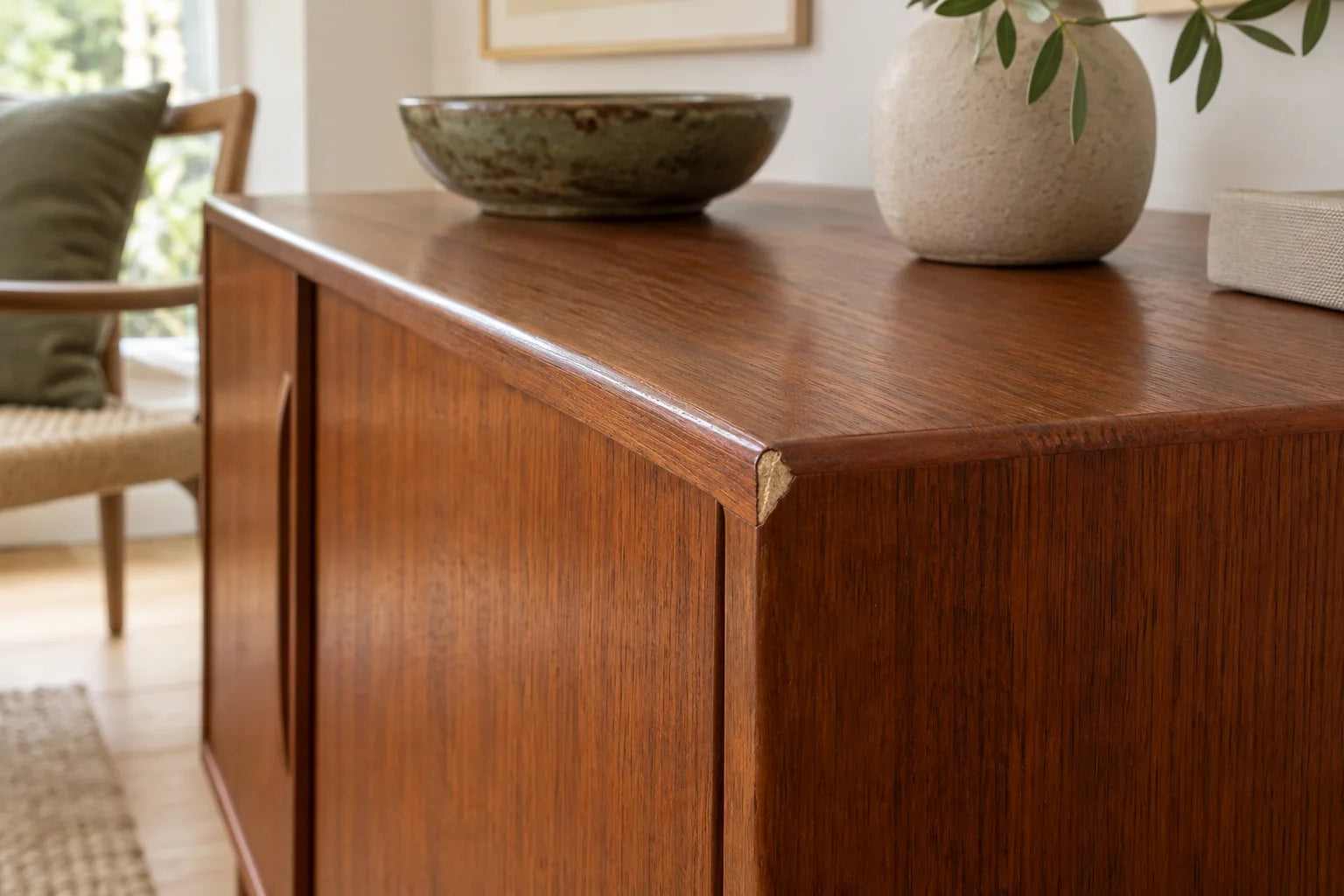
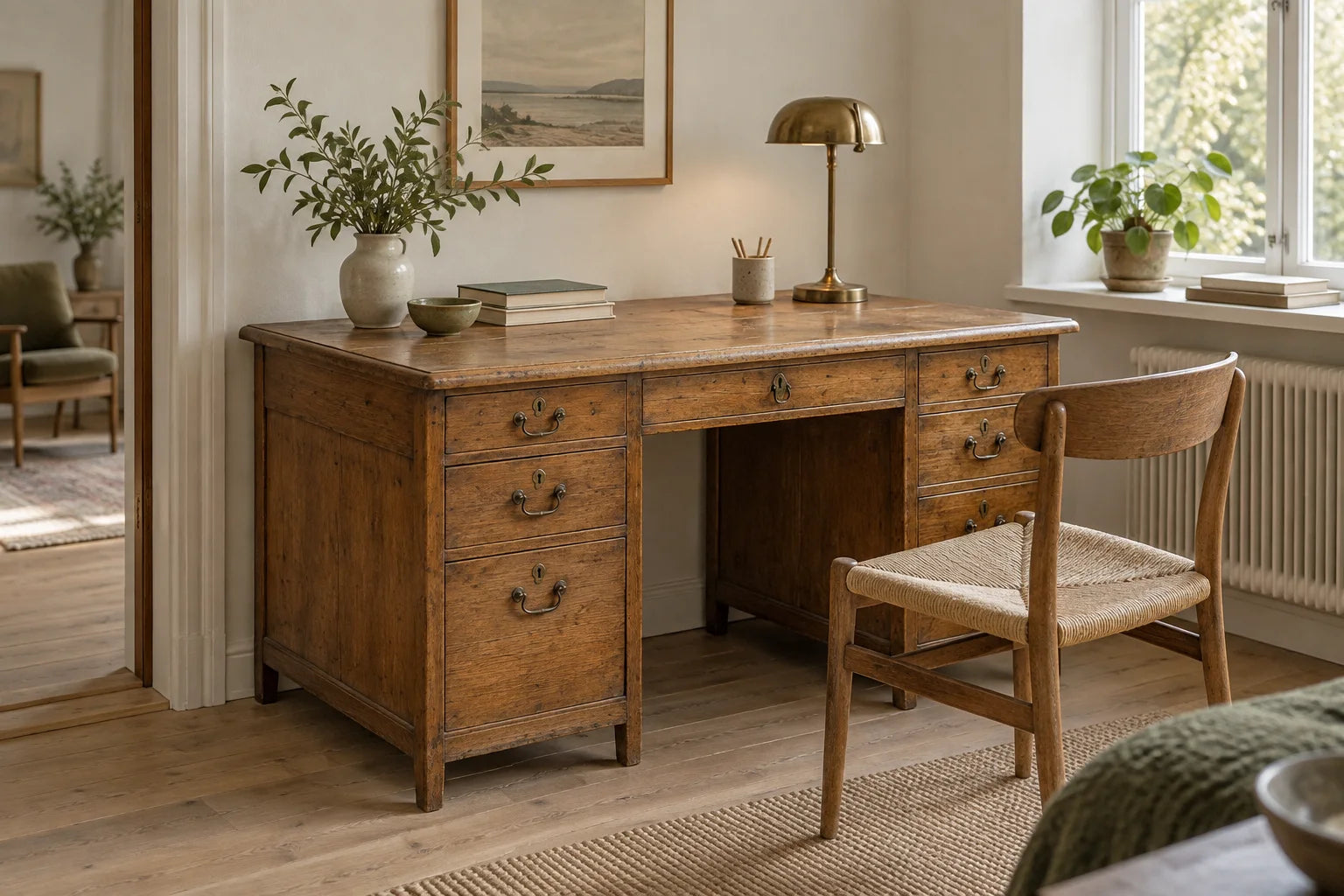
A darker edge or small signs of use may be part of the furniture's character. A loose joint, a broken part, or a drawer that does not function is a different type of problem.
Create two lists: 'must function' and 'must look like this'. This makes it easier to avoid a necessary repair turning into a larger visual change you did not wish for.
Document the furniture before work
Take photos of the whole piece of furniture, details, labels and damage. Keep loose original parts if they have already fallen off. Note known previous treatments and repairs.
For furniture of particular historical or financial significance, a specialist assessment may be appropriate before intervention. A quick cosmetic refresh can be difficult to undo.
Know the construction
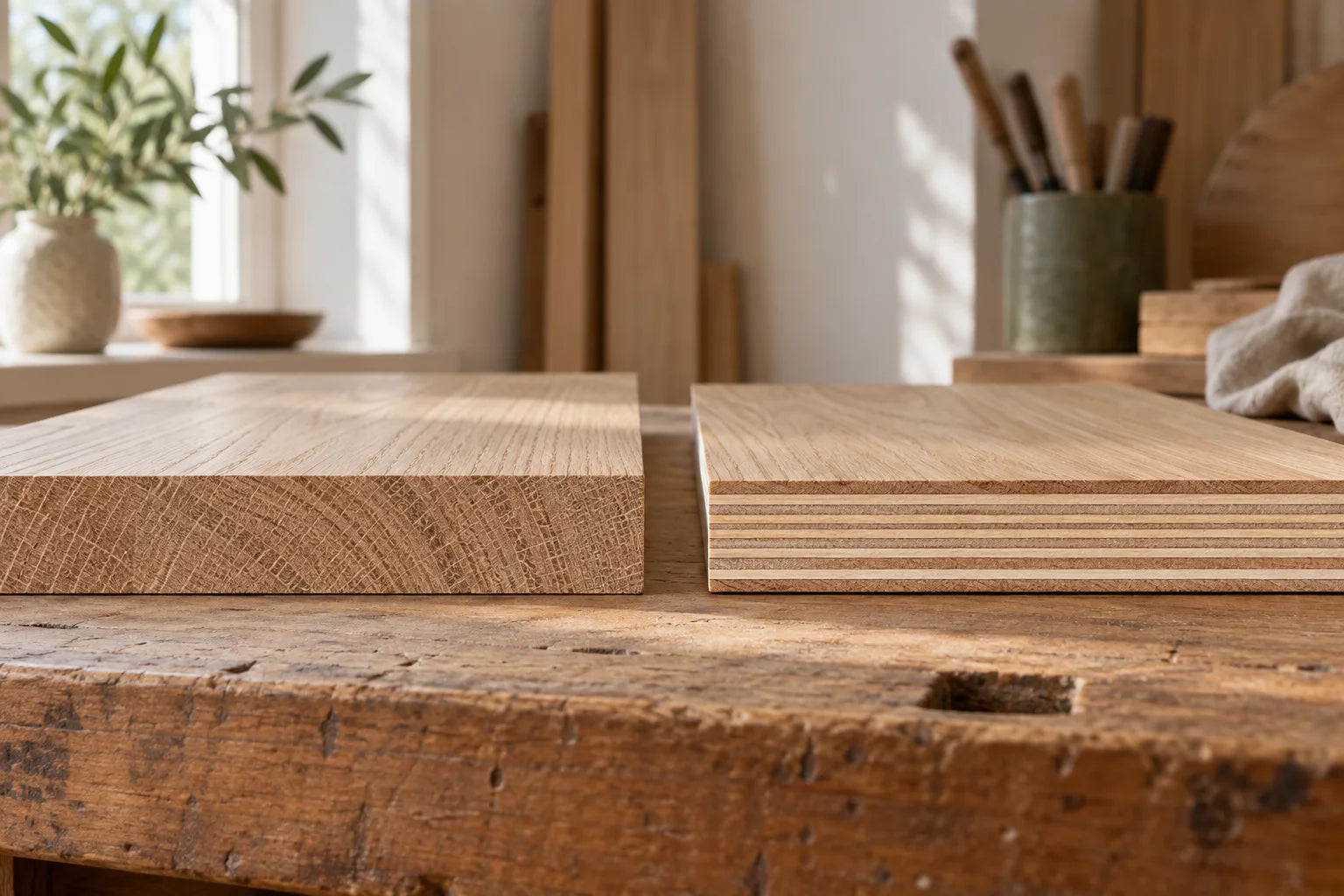
Veneer, solid wood, and various panel materials offer different possibilities. A solid edge can hide a veneered surface, and previous work may have altered the layer thickness.
Read veneer or solid wood. If a veneered piece of furniture is damaged, the guide to teak veneer shows why the method must suit the construction.
Agree on the degree of change
Describe whether colour, gloss and signs of wear should be preserved. Ask whether a local repair can provide a visible transition, and whether a larger treatment changes the rest of the furniture.
'As new' is imprecise. An agreement such as 'stable joints and repaired corner, but preserved surface on the rest' is easier to assess. The concrete option must of course be evaluated on the furniture.
Coordinate woodwork and upholstery
If the furniture also has fabric, leather or weaving, the sequence should be planned as a whole. New upholstery and work on the wood should not get in each other's way.
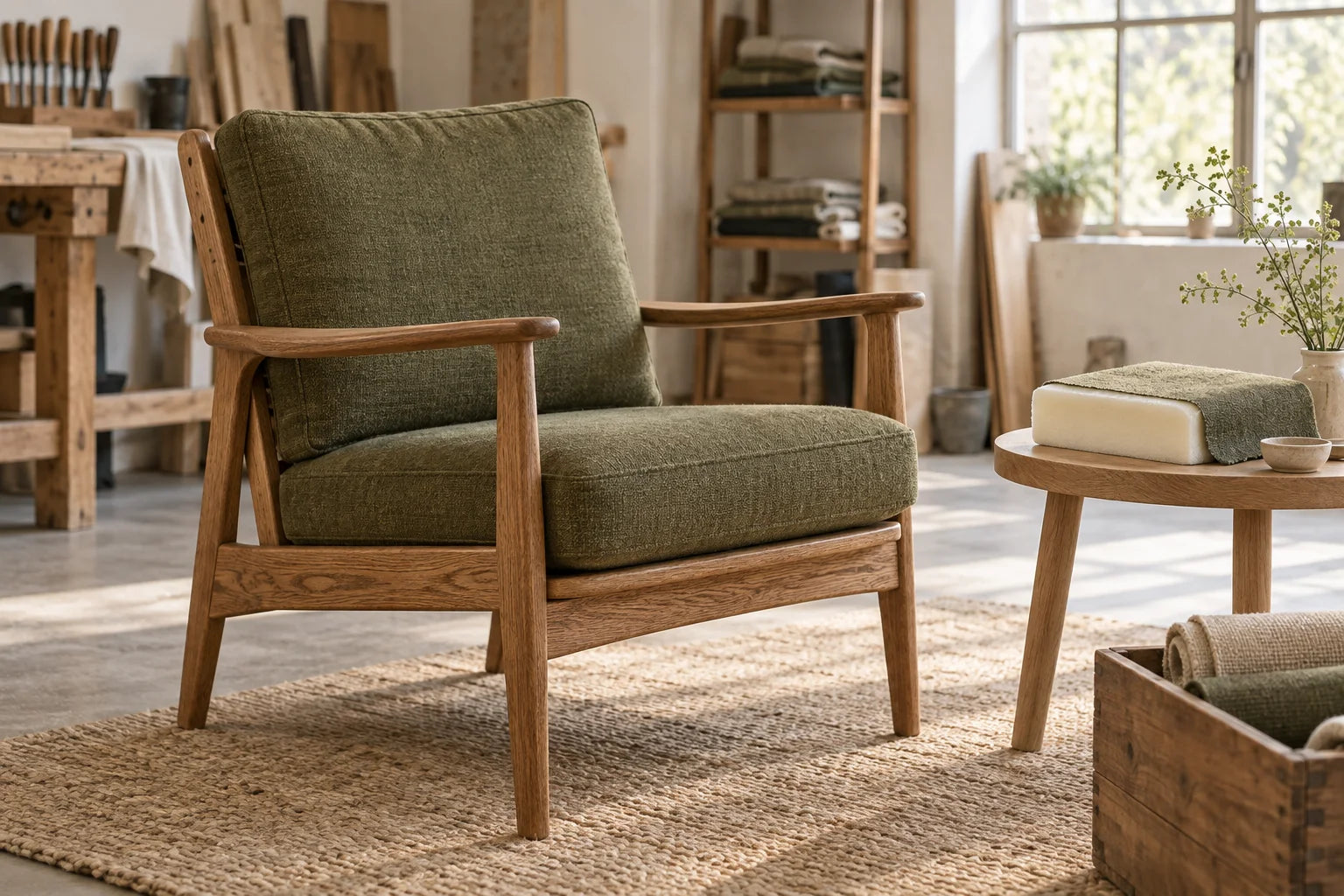
The guide to an old armchair helps to describe proportions and comfort. Use the same approach for the overall result: what already functions, what needs to be changed, and how is the agreement documented?
Finally, keep a record of the materials and methods used. This is useful when the furniture next needs care or repairs.