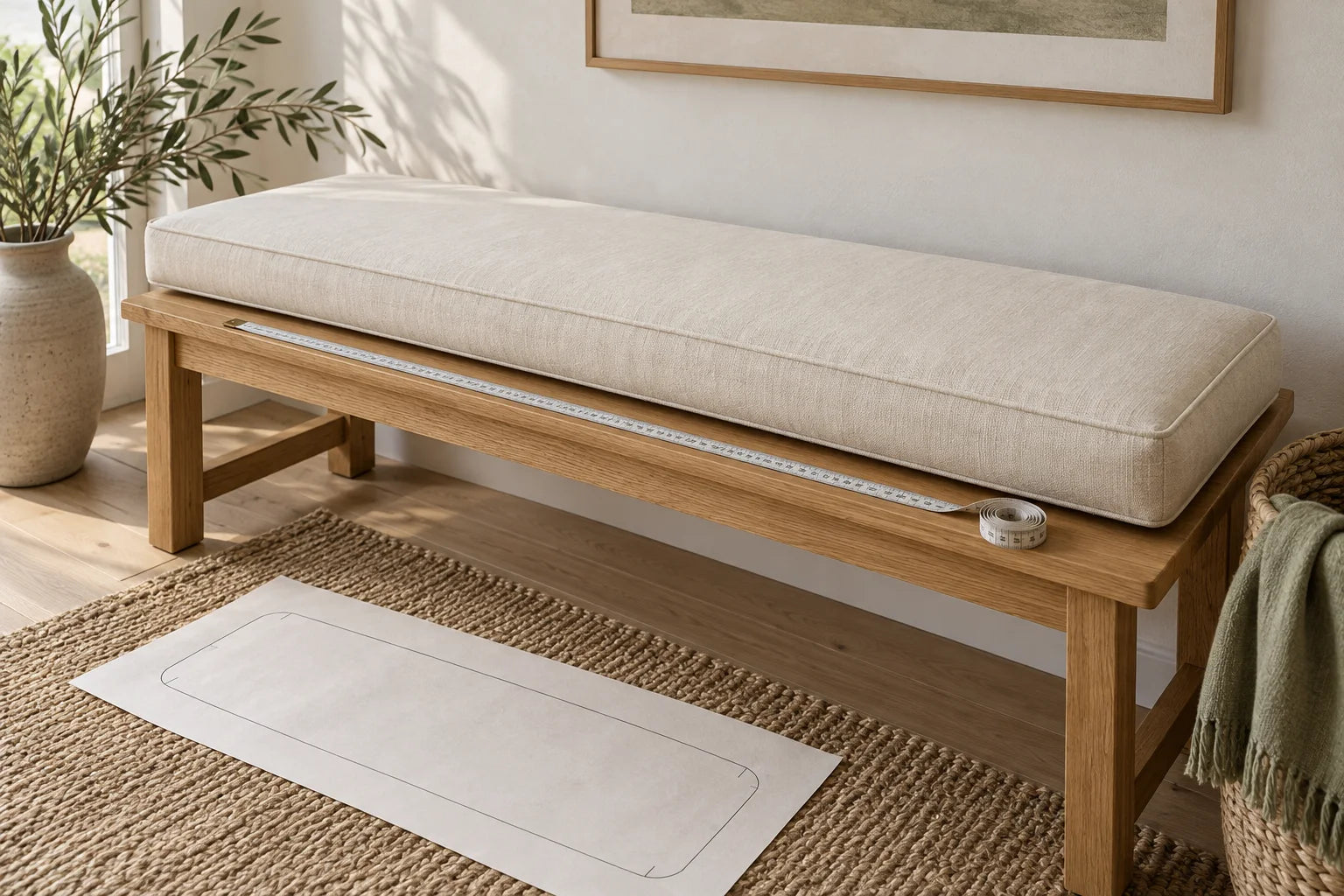
A good bench cushion fits more than just the bench's length. It should also function at the table, be movable as needed, and provide access to any lids. Therefore, start with the entire seating area before deciding on the fabric.
On the page about bench cushions you can prepare an enquiry based on both dimensions and intended use.
Check the finished seat height
Measure the bench height without the cushion and describe how the space is used. For a dining table, the distance to the underside of the tabletop is important. A thicker cushion can change both legroom and how you sit at the table.
A back cushion simultaneously takes up space from the seat depth. Therefore, draw the seat and back together if both are to be included. The guide to measuring cushions helps keep measurements clear.
Choose between one long and several short cushions
A long cushion provides a continuous surface. Multiple parts may be easier to lift and move, especially when the bench has storage underneath. The division should follow the furniture's function.
Mark the lids on the drawing. If the cushion divisions do not align with the lids, everyday access may be harder than expected. Check whether a section needs to be removable without moving the table.
Clarify how the cushion will stay in place
Does the bench have sides, a back edge, or a completely open surface? Describe whether the current cushion slides. Fixation should be chosen in relation to both fabric and furniture surface.
Binding straps, non-slip underlays or other solutions have different practical implications. Confirm compatibility and placement so that the wood's finish is not compromised by a random solution.
Choose comfort in the right construction
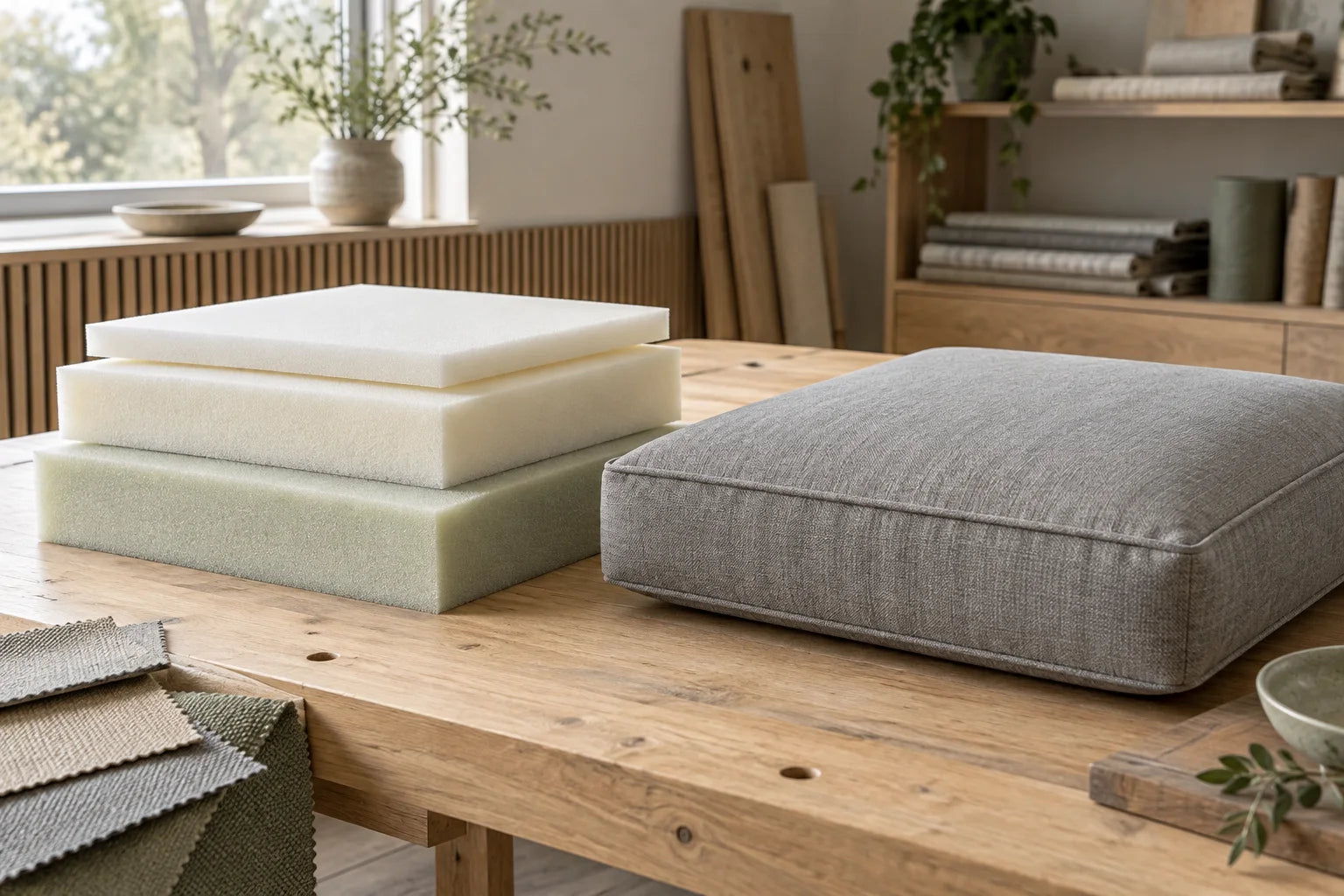
A bench with a fixed base presents different requirements than a sofa with a yielding underlay. Request an assessment of the foam, thickness, and intermediate layer specifically for your bench. See foam for cushions for questions you can bring along.
Describe whether the bench is used for short meals, many hours of work, or as a relaxed window seat. It is more concrete than just 'medium firm'.
Plan the cover and care
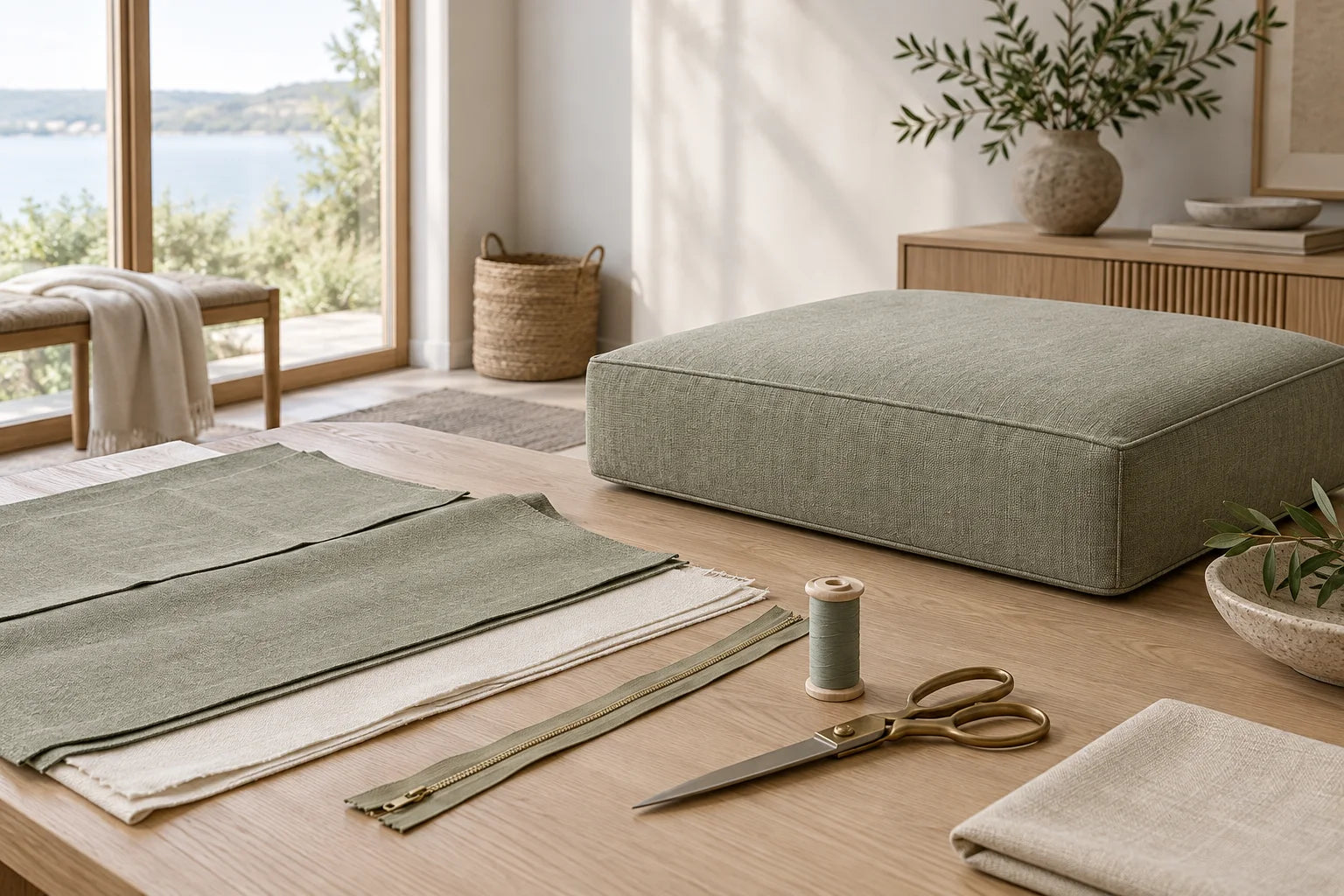
Agree on zipper placement and the possibility of removing the upholstery. Washability must be confirmed for the material and the finished upholstery. If you handle the sewing yourself, then read the cushion cover guide and clarify the construction before cutting.