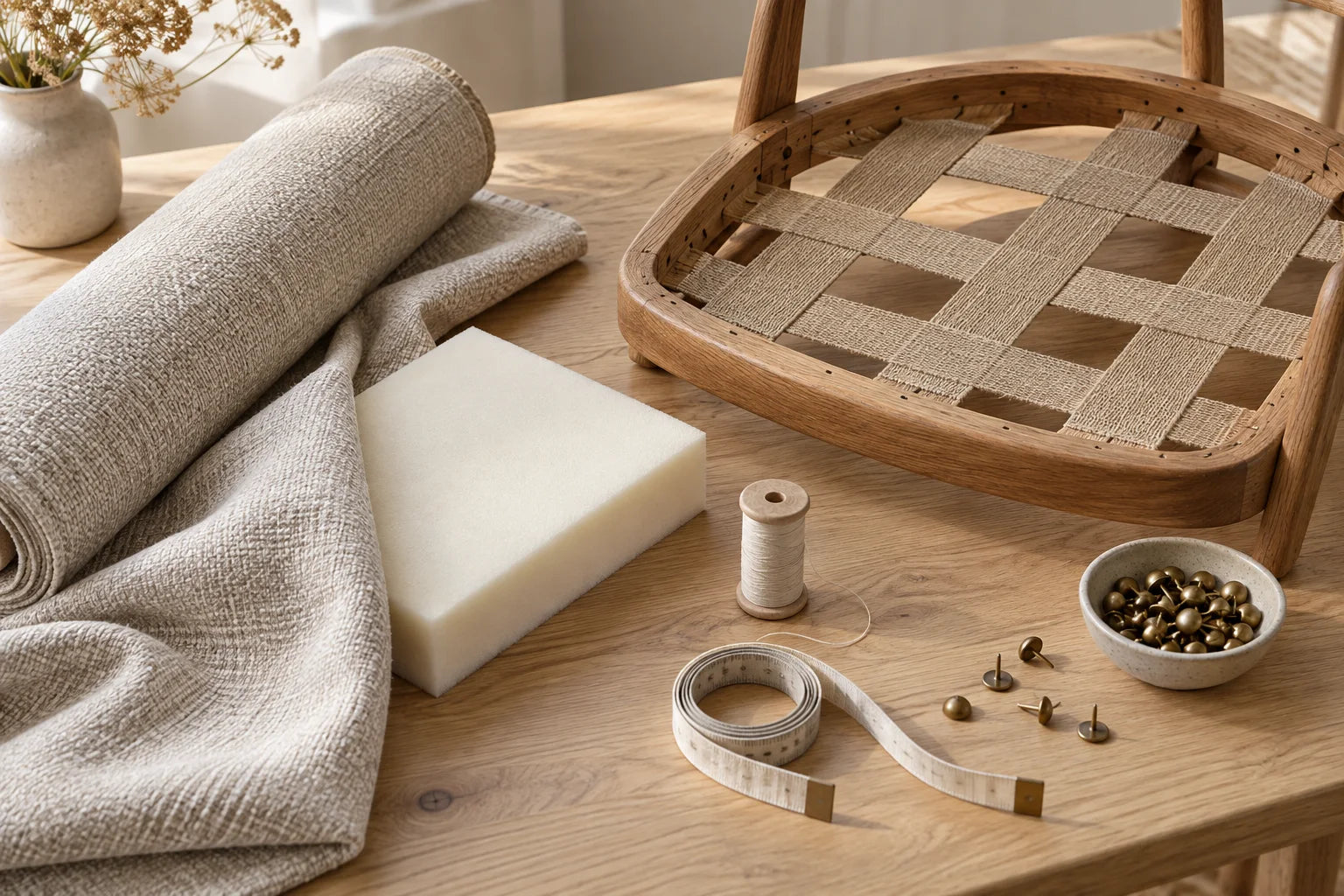
A sofa project's scope cannot be judged by size alone. Loose square cushions can be relatively simple to work on, while fixed armrests, curved backs and many connected cover pieces require precise planning.
The first question is therefore: do you want to change the cushion covers, the sofa’s entire upholstery, or its construction too? Reupholstery may include several of these tasks, but they should be described individually.
Break down the sofa into specific tasks
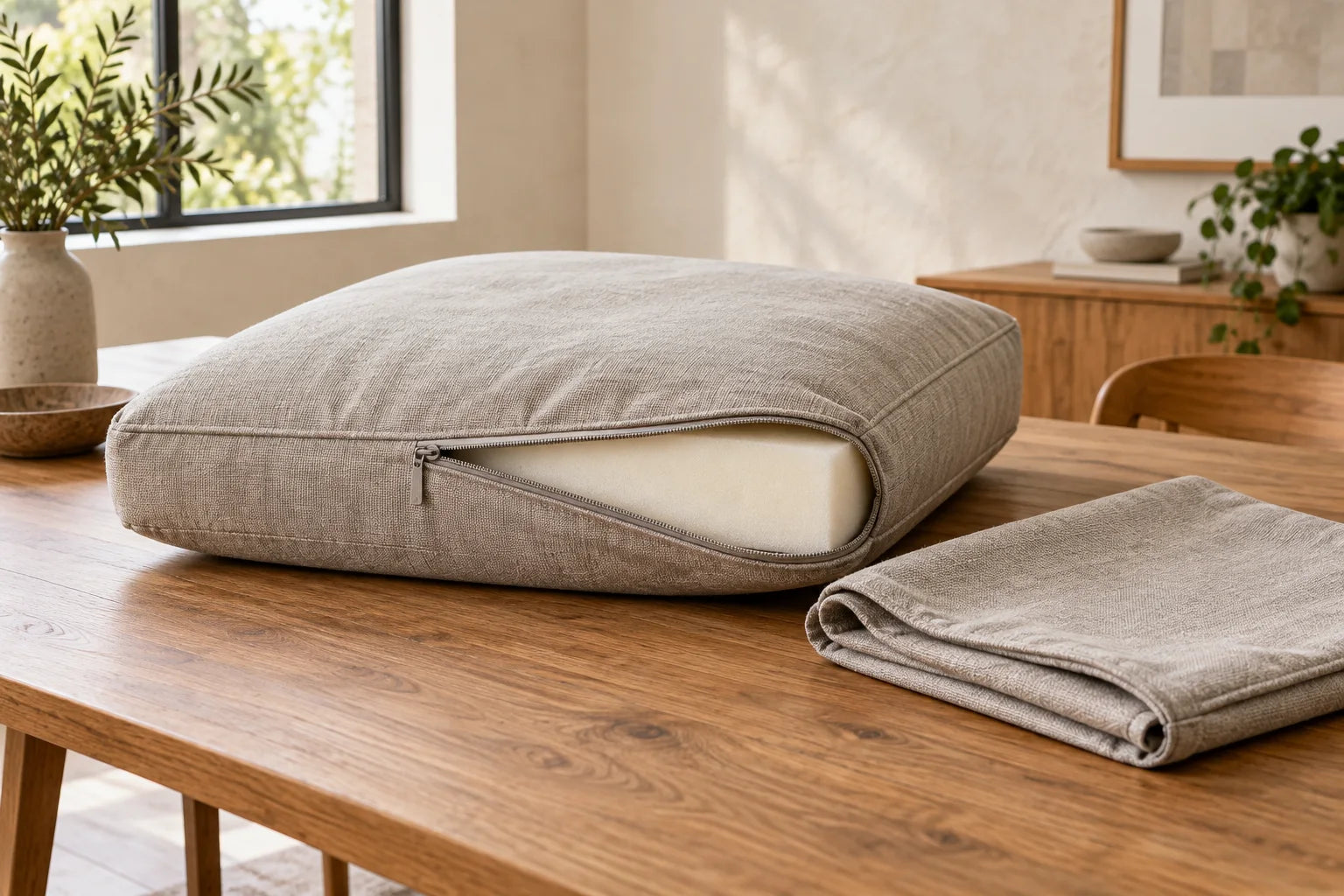
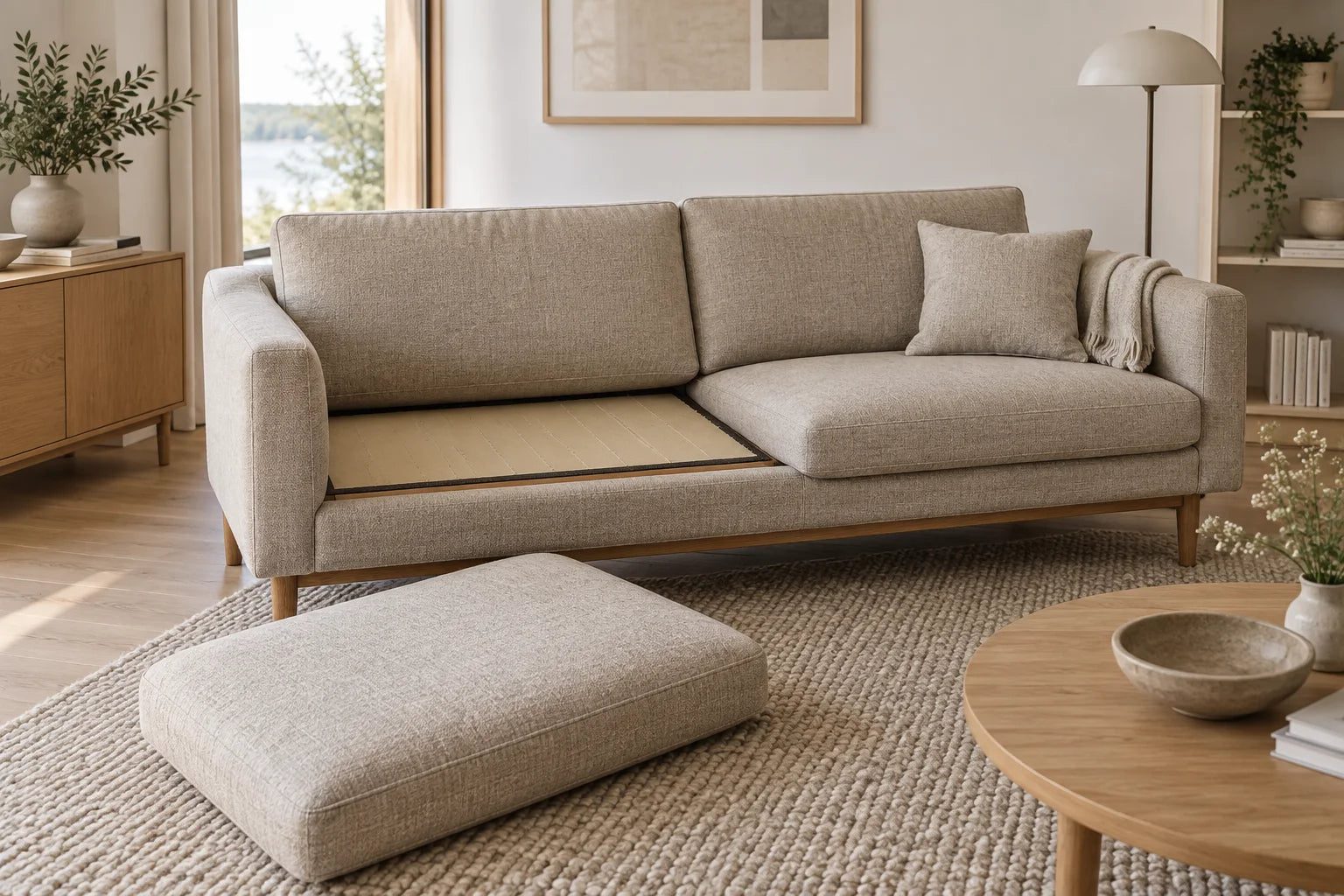
Make a list of seat cushions, back cushions, armrests, front edge, back side and underside. Note what can be removed and what is fixed in place. A zip means that the cover can be opened; it does not by itself tell that the cover is washable.
If the problem is only worn cushion covers, there may be no need to remove the fabric from the frame. The guide to new cover or new cushions helps you narrow it down.
Assess comfort before colour
A sagging seat may be caused by the cushion, but also by the support underneath it. Check whether the problem follows a specific cushion, or if it is linked to a specific location in the sofa. Move only loose, identical cushions if the sofa's construction allows it.
Take images of the underside and the construction of the cushions without taking anything apart. Creaking, visible breaks or unevenness should be assessed before you spend time on new fabric. A nice cover may otherwise end up hiding a problem that still affects use.
Allow for the sewing work
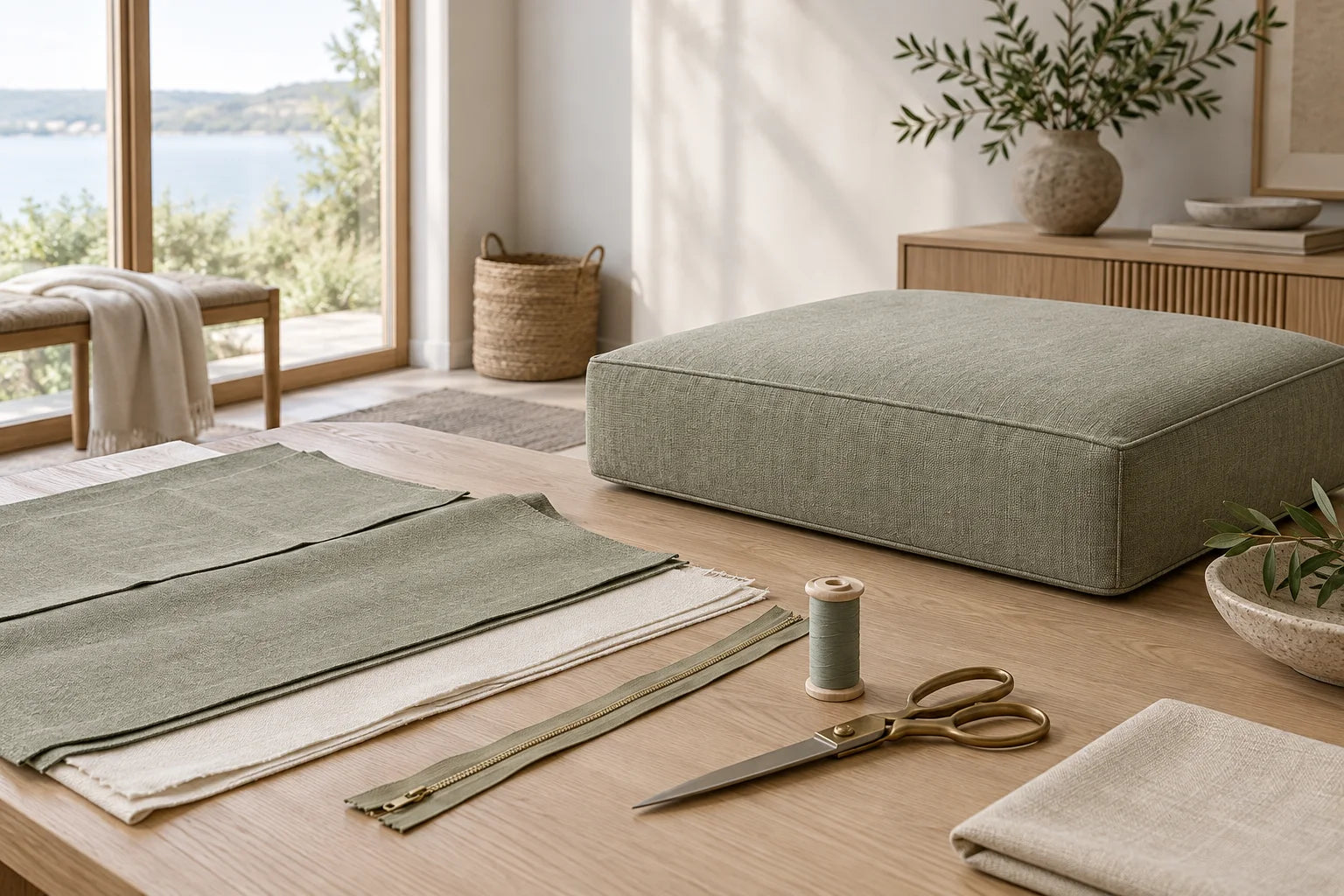
A sofa cushion often consists of several panels, edge pieces and an opening. Piping, pattern adaptation and rounded corners increase the requirements. Check whether the sewing machine can handle the layers that meet at corners and zippers.
Make a test on a sample of the selected material before cutting the main pieces. The sample must include the most difficult joint, not just a straight seam in two thin layers. See the guide to sewing cushion covers for measurements and preparation.
Have a plan for large fabric pieces
Floor space, cutting table and storage become significant when several metres of fabric must be oriented in the same direction. Mark each part while it is still on the sofa. It is easy to lose overview of a right and left part that look almost identical.
Keep reference photos and agree in advance how the sofa should look from behind. A sofa in the middle of a room has different visual requirements from one against a wall.
Choose a realistic limit
A good solution could be to sew individual loose covers yourself and get help with the fixed upholstery. The decisive factor is a combined material selection and a clear division of tasks. Describe which parts you have already made or wish to preserve when requesting an assessment. Then a quote can include precisely the remainder.