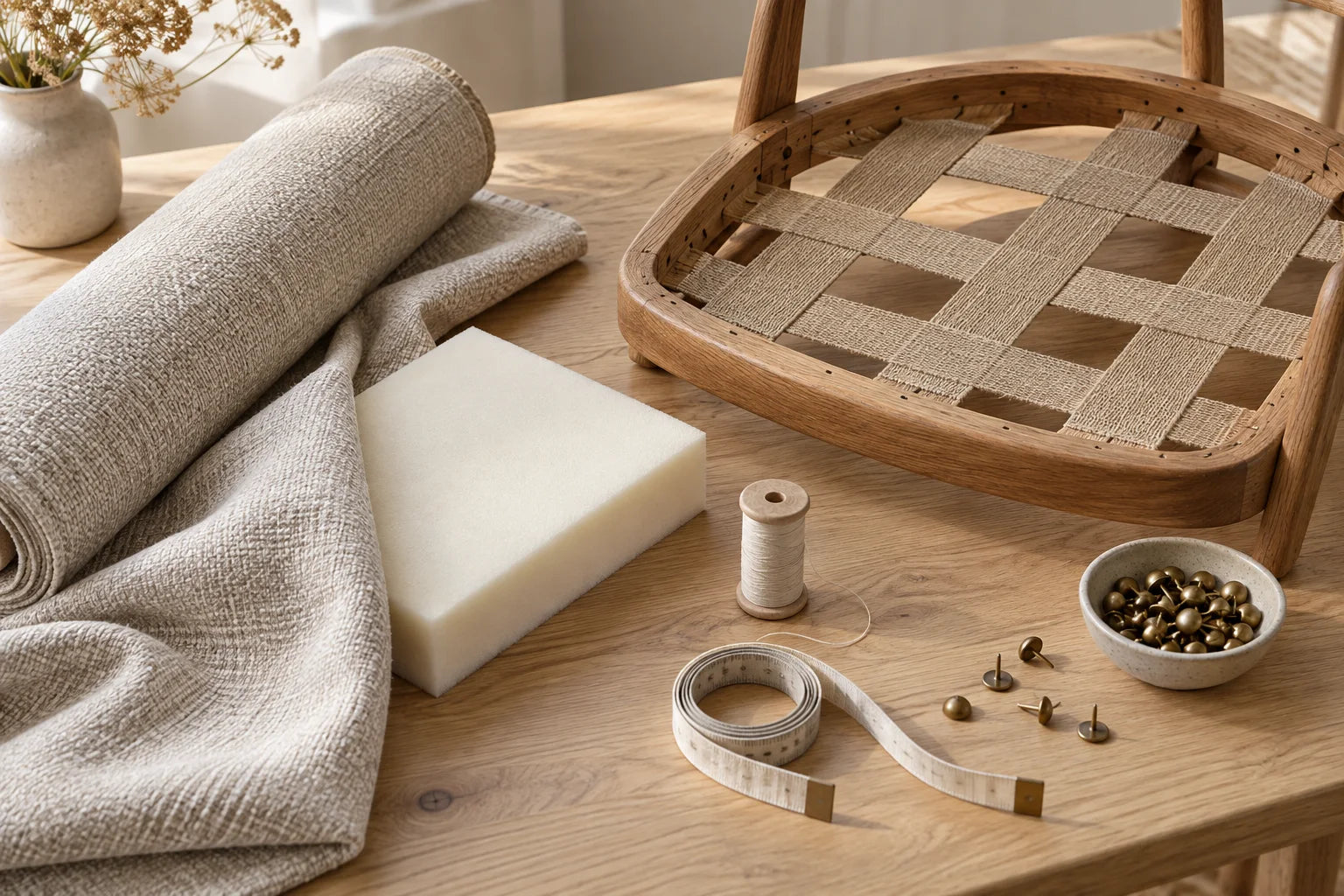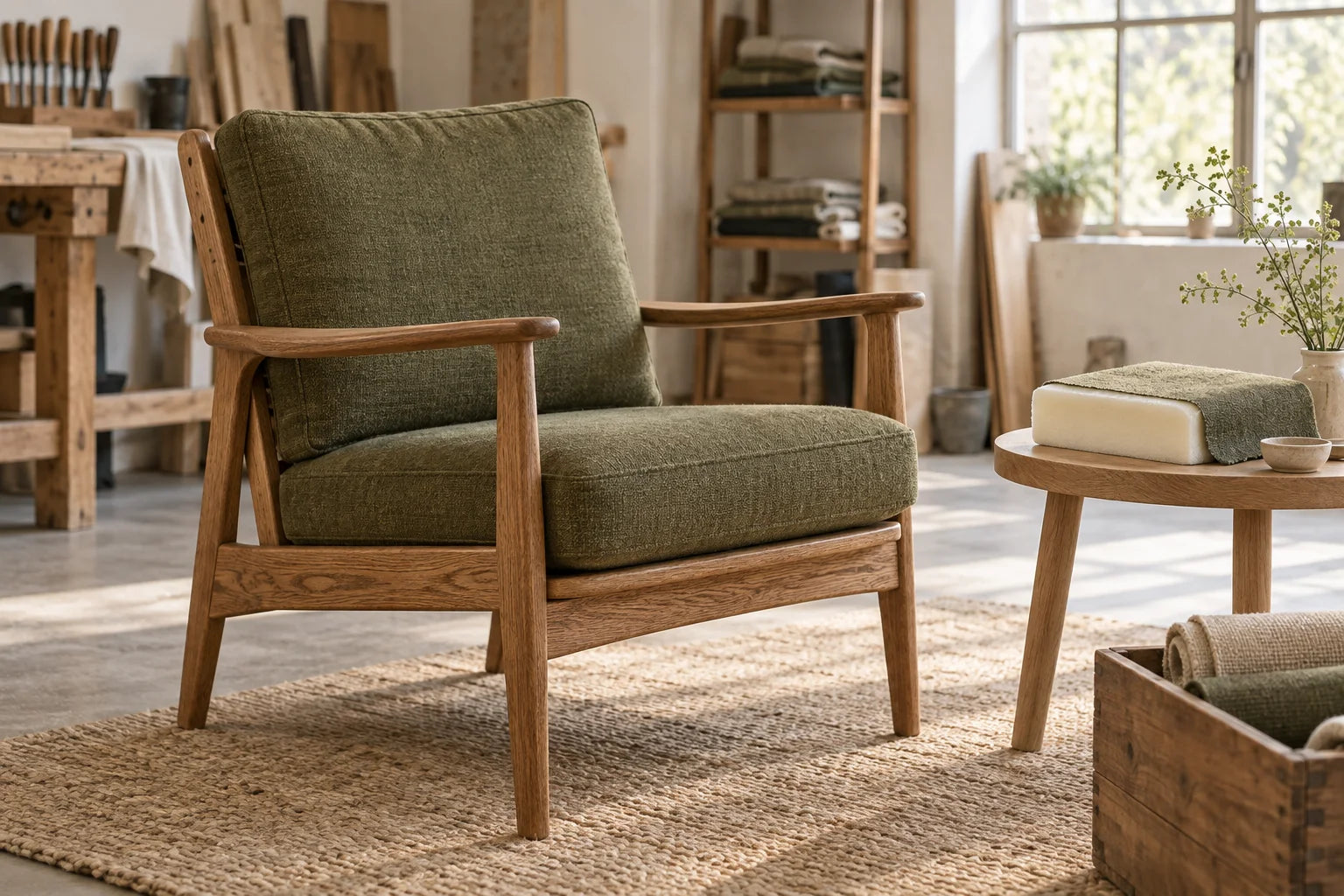
An old armchair is worth assessing as a complete piece of furniture. The upholstery may be worn, while the frame and form still function well. Or the chair may look nice, but have lost support under the seat. Start with what you wish to preserve and what you actually want changed.
For reupholstering an armchair photos of the entire chair are just as useful as close-ups of the most obvious damage.
Write down what you like
Is it the low seat height, the narrow armrests, the pronounced back, or the colour? It sounds simple, but the desire for 'more comfort' can otherwise lead to a change in exactly what makes the chair good for you.
Take a photo from the side. It shows the relationship between the back, seat, and armrest. If the upholstery is made thicker, both the sitting position and proportions can change. Therefore, describe whether the chair should feel as before, or if there is a specific problem you wish to solve.
Distinguish between age and damage
Wear on an armrest is not necessarily a sign of weak joints. Conversely, a beautiful wooden frame may be loose. Note visible cracks, moving parts, unevenness, and sounds separately. Do not stress-test a chair that feels unstable.
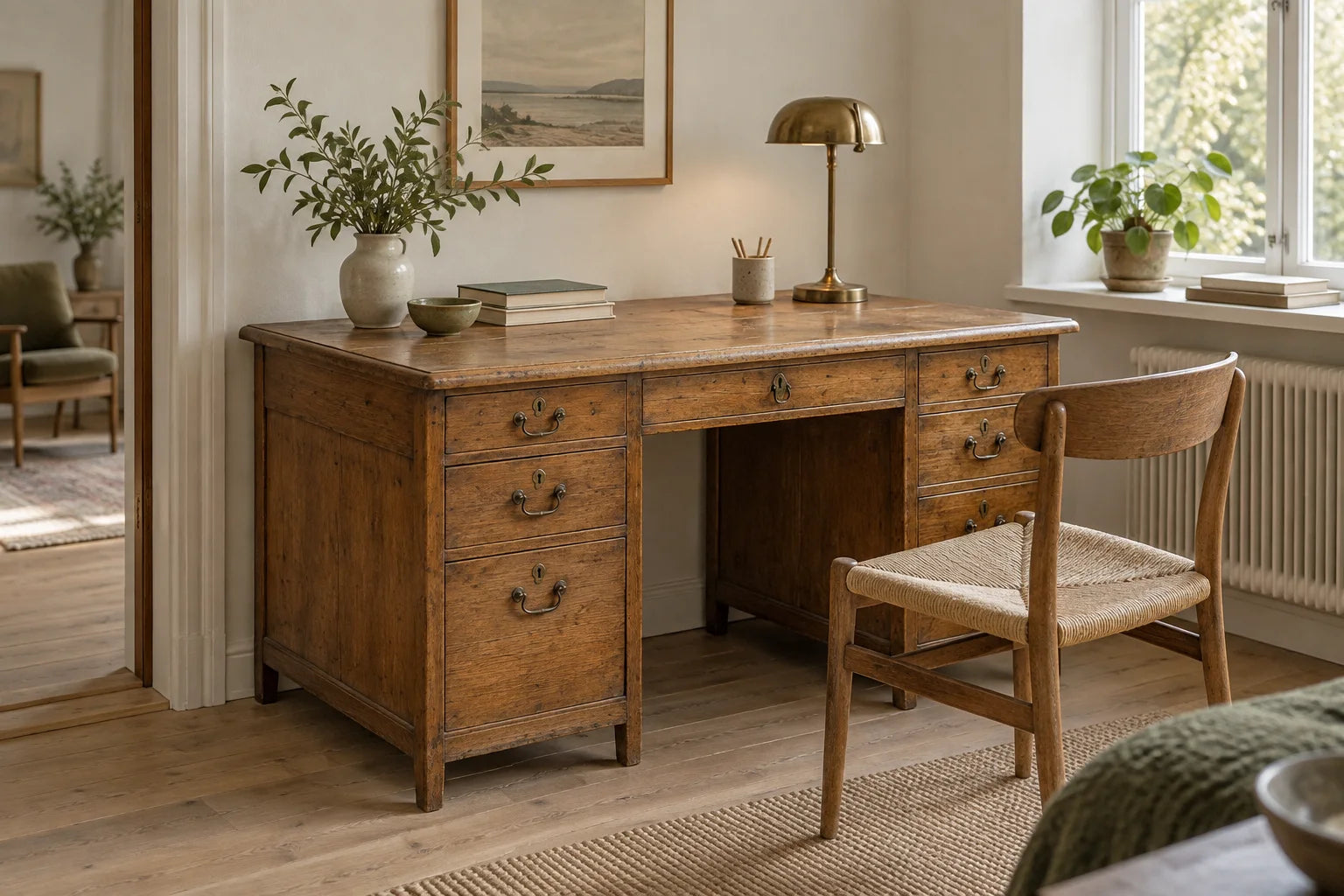
Older wooden furniture reacts to the surroundings. Carl Hansen & Søn's maintenance guide highlights among other things placement away from strong heat and large humidity fluctuations. Care of the frame and work on the upholstery must therefore be seen as related, but different tasks.
Document the special details
Photograph buttons, seams, decorative piping, fittings and any marks under the chair. Save information about previous reupholstery if you have it. An old photo from before the last change can also make it easier to understand the chair's previous expression.
It is not always possible or desirable to keep all parts. Ask for a justification of what can be reused and what should be replaced. The guide on patina and restoration helps to put words on the boundary between signs of wear and actual damage.
Choose material to suit the chair’s proportions
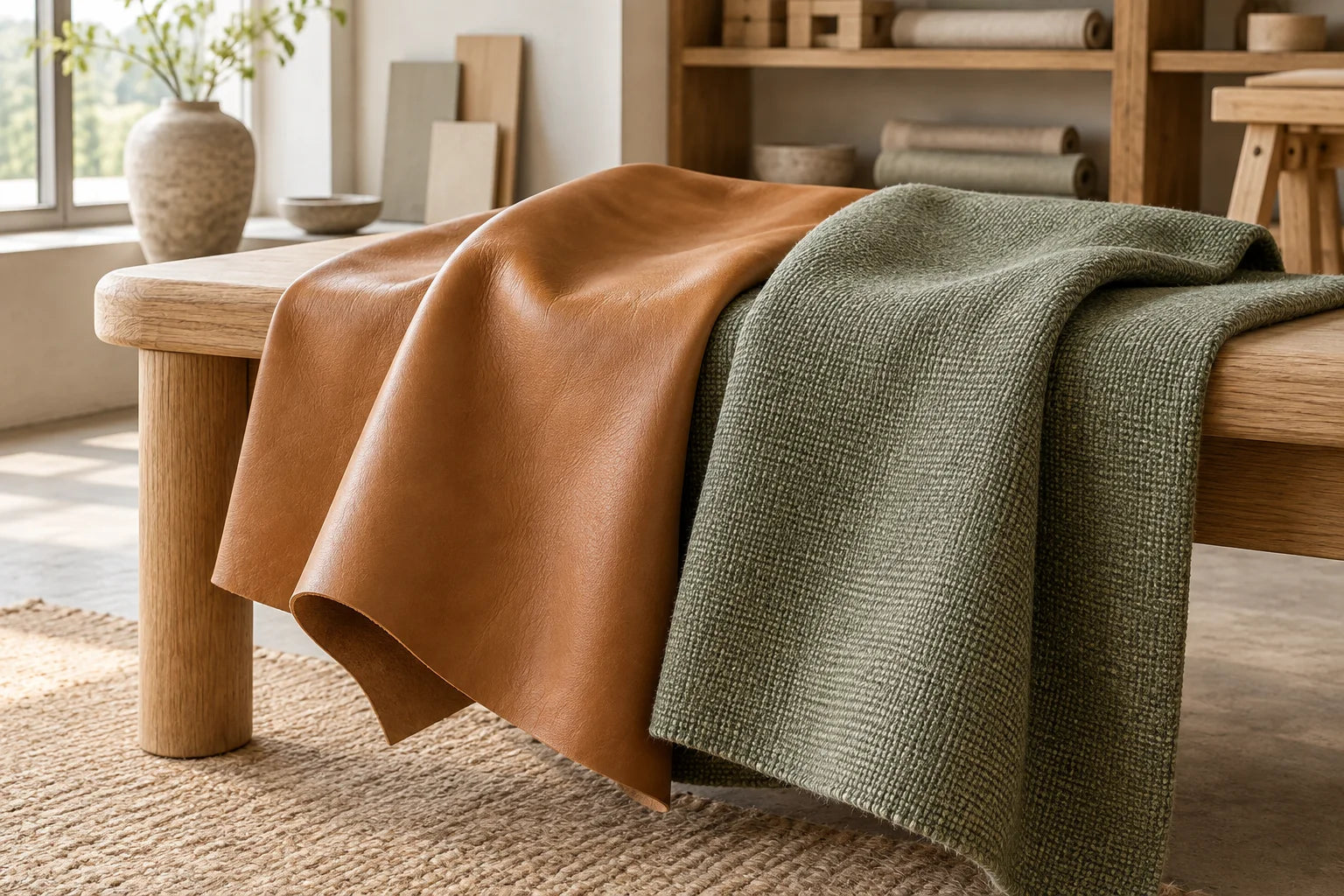
A small sample may look discreet, while the same pattern takes up a lot of space on a high back. View the sample together with the wood, and think about how the chair should stand in the room. The material's feel against the skin is also important, especially on armrests and the upper part of the back.
If you are considering switching from fabric to leather, read about leather for chairs and have the material assessed for the chair’s shape and finishing details.
Agree on the result rather than just 'as new'
'As new' can mean something different for you and the person carrying out the work. Instead, describe the wish: preserved wood patina, new seat layers, the same button arrangement and a specific fabric quality. This gives a much more usable basis for quotes and subsequent assessment of the result.