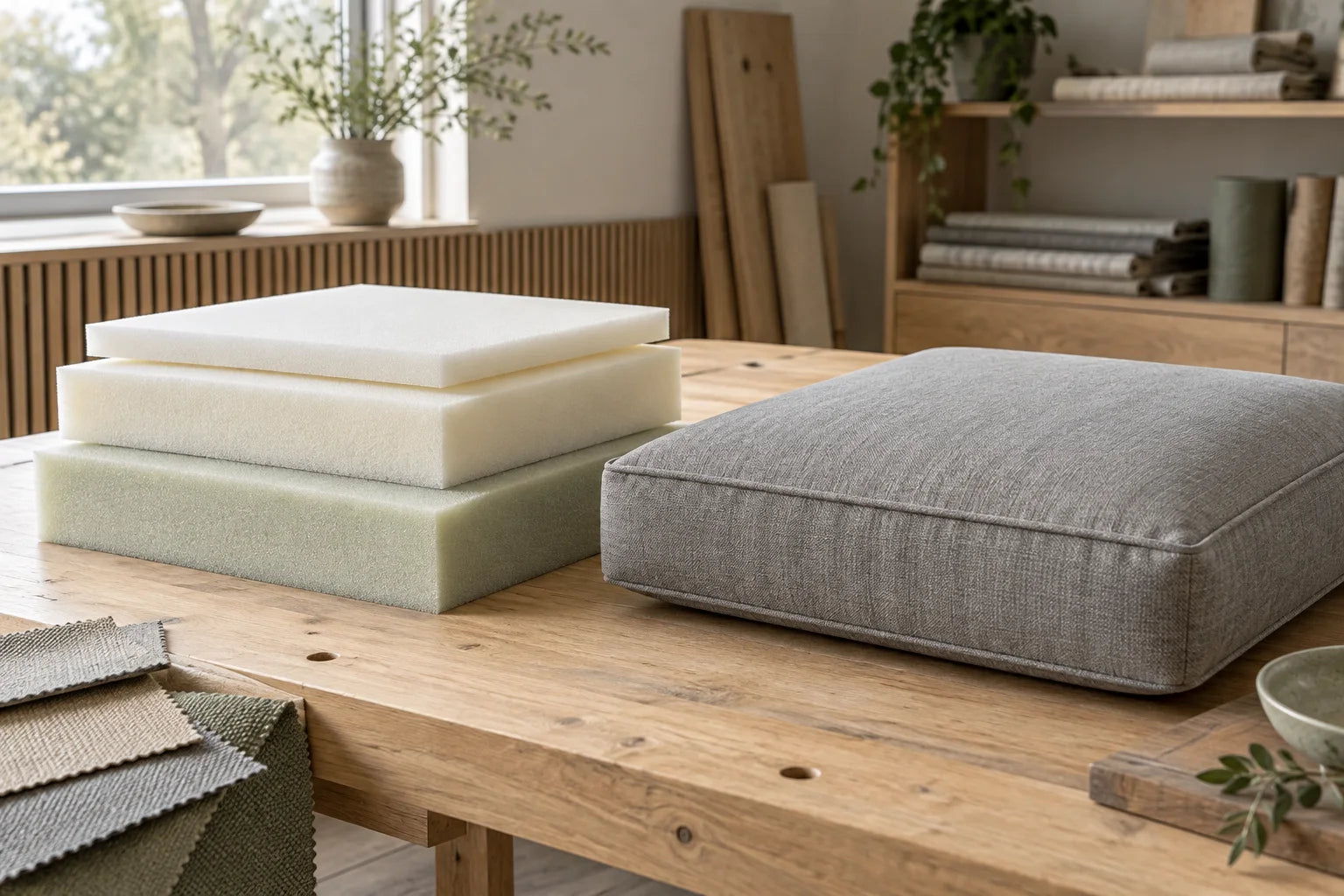
If a cushion still supports well, but the cover is worn, a new cover may be relevant. If the shape and support are gone, the contents should also be assessed. The decision becomes easier when you examine the cover, filling, and base separately.
On the page about reupholstering cushions you can have an existing cushion assessed. If the whole solution needs changing, new made-to-measure cushions offer another starting point.
Start with what doesn't work
Place the cushion in the location where it is normally used. Is the issue a stain, a cracked seam, insufficient height, or an uneven seat? Also note whether the problem changes when the cushion is moved to another suitable location.
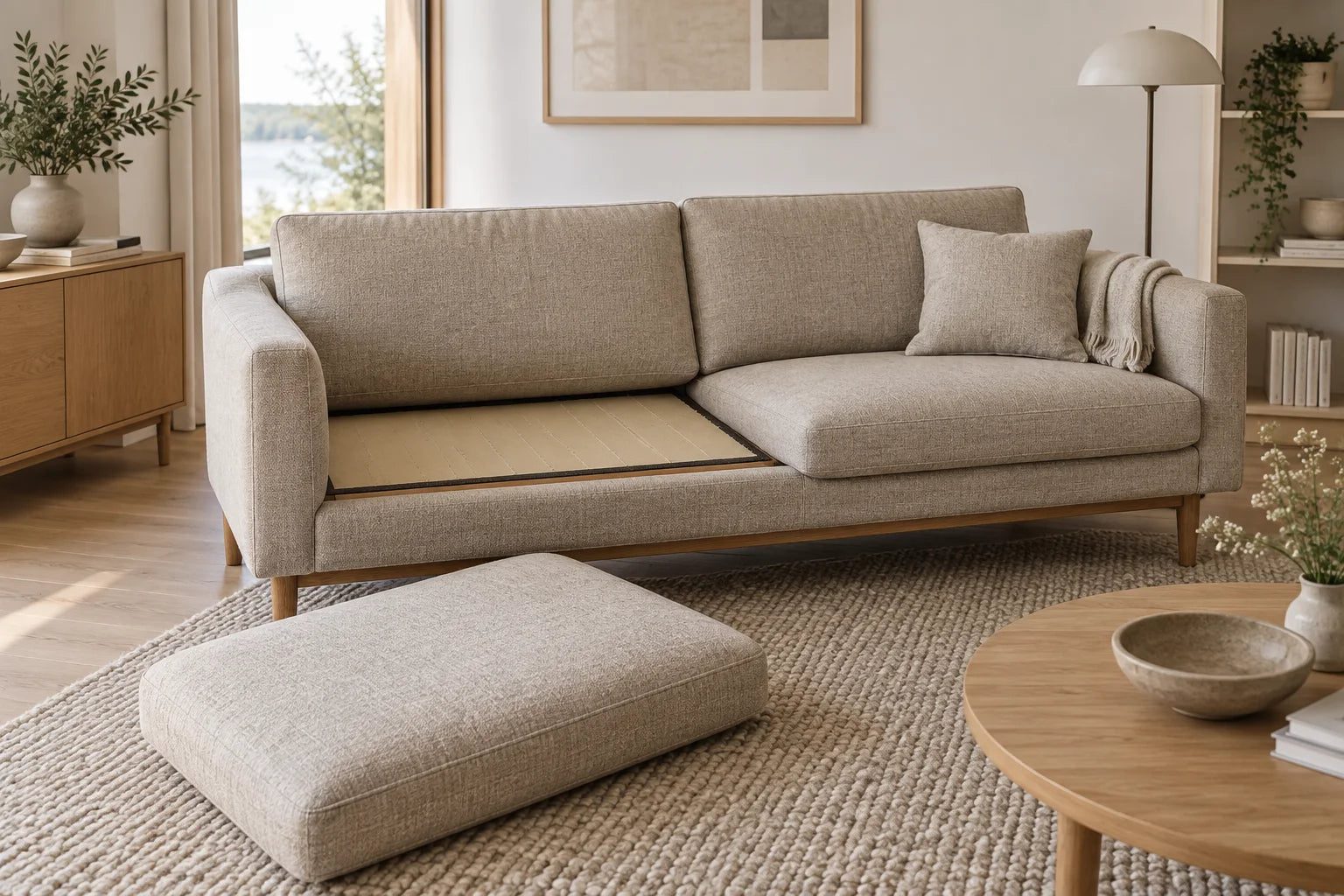
On a sofa, the base may be part of the explanation. A cushion cannot alone rectify a damaged support under the seat. Therefore, describe both the cushion and the furniture when requesting assistance.
Three possible solutions
| Condition | It is relevant to investigate |
|---|---|
| Good support, worn surface | New cover with existing filling retained |
| Good cover, tired or uneven filling | New filling if the cover can be reused |
| Poor fit or multiple issues | A complete new cushion, with dimensions changed if needed |
The table is a preliminary sort. The specific material and construction determine whether the parts can be separated and reused.
Reuse requires that parts fit together
An old cover may be stretched or shrunk. Therefore, it is not certain that new foam with the original measurements will fit it. Conversely, the old filling may have lost its original shape and be a poor basis for measurement.
Measure the space the cushion must fit into, and document the desired height. See choosing foam for cushions for questions about support and construction.
Decide on the details before sewing
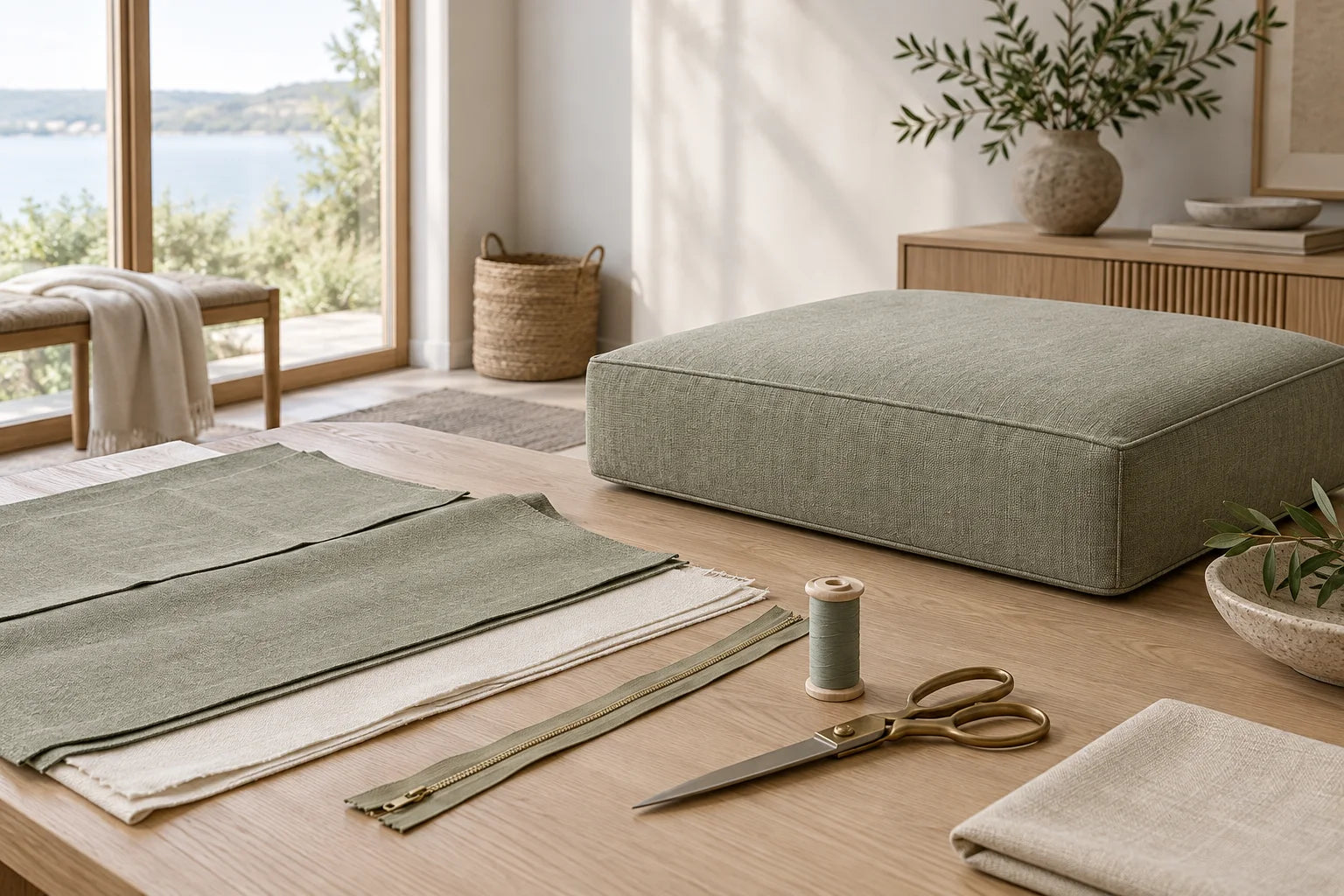
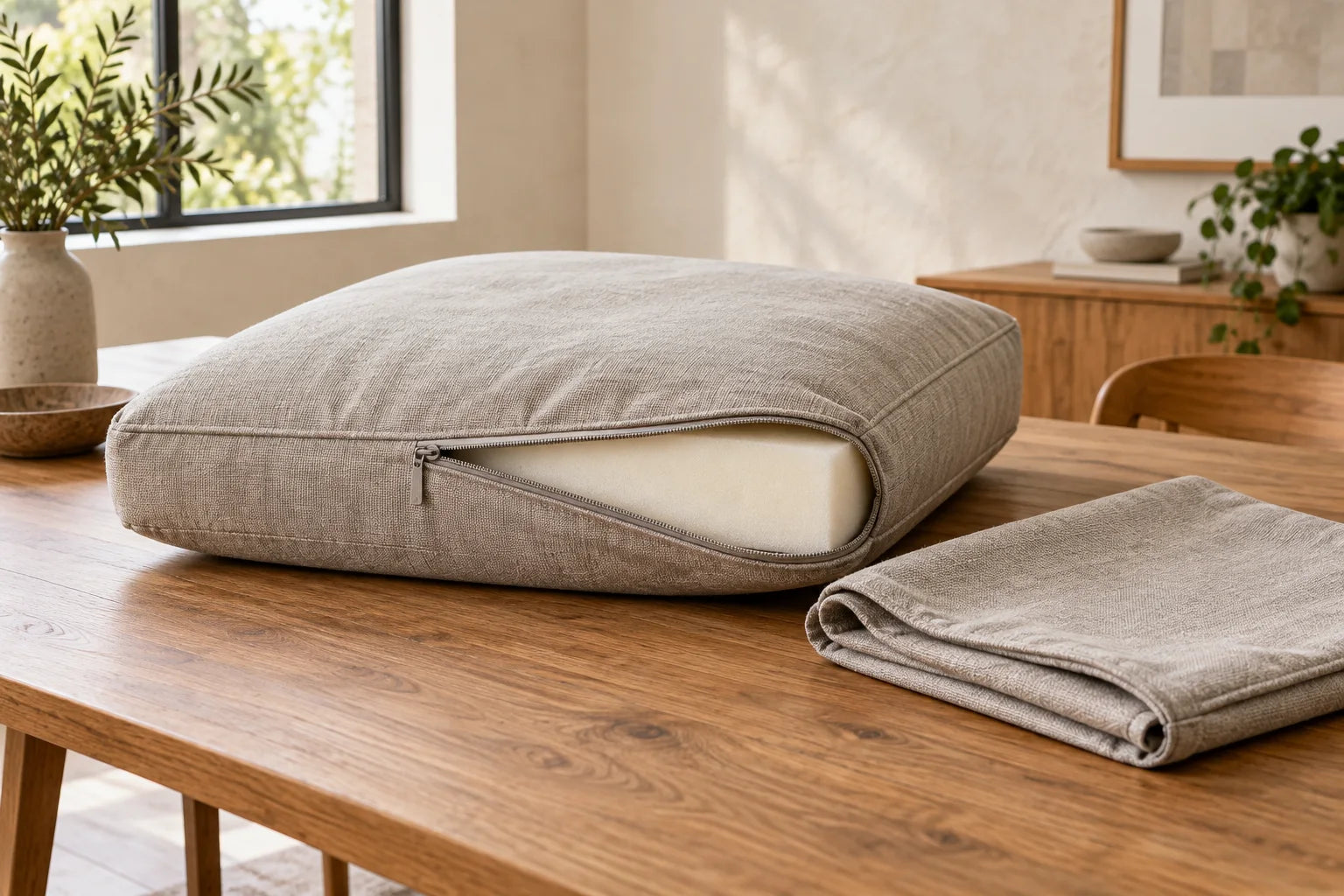
Do you want to remove the cover? Should the cushion be reversible? Do you want piping, ties or a particular zip position? These details are easiest to agree during planning.
A zip does not automatically make the upholstery washable. This must be confirmed for both fabric and construction. If you wish to sew it yourself, use the cushion cover guide.
Take photos that show the whole piece
Send a photo of the cushion on the furniture, a side view and a close-up of the problem. State the quantity and mark any differences. If the job concerns part of a sofa, the guide to reupholstering a sofa can help define which parts actually need changing.