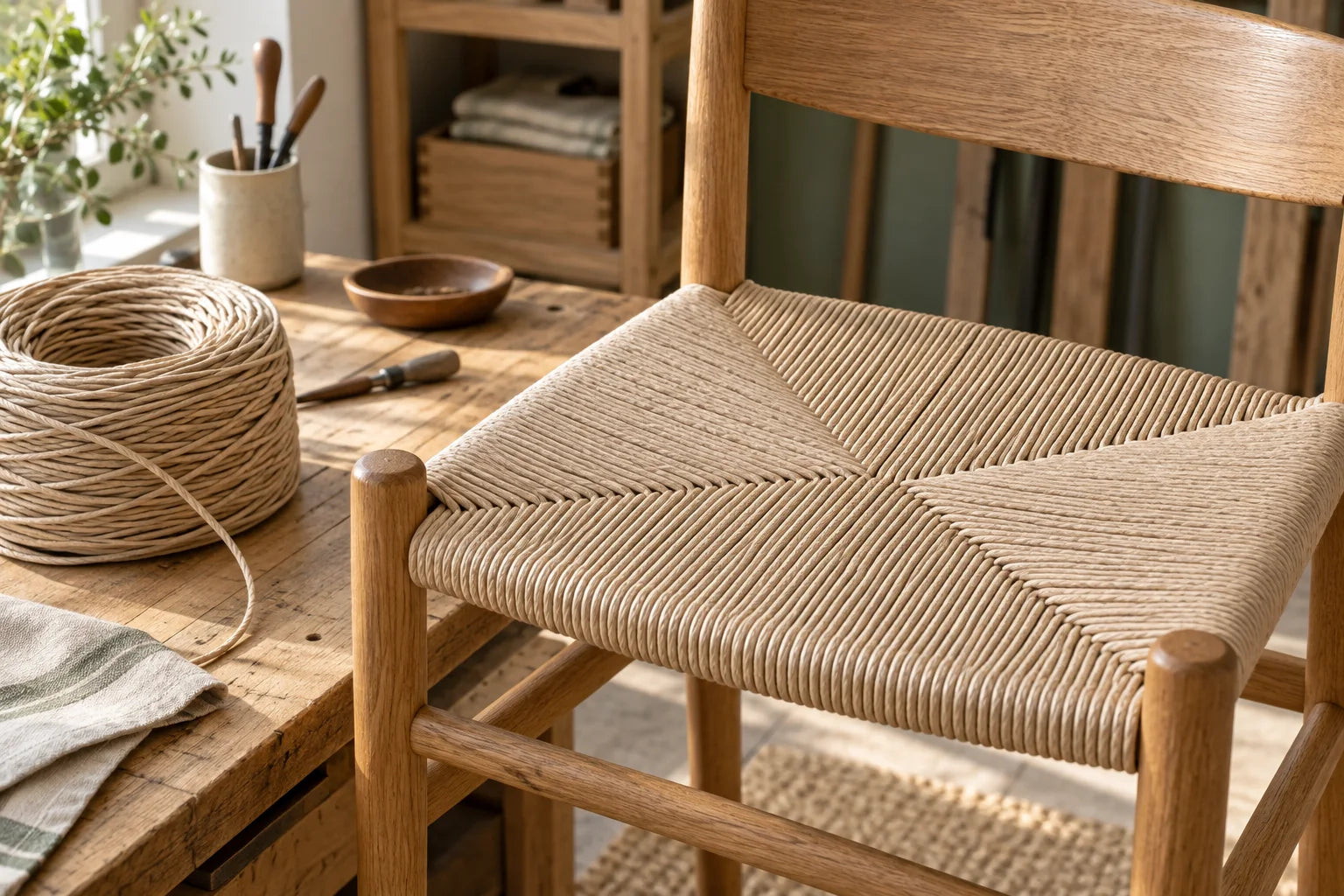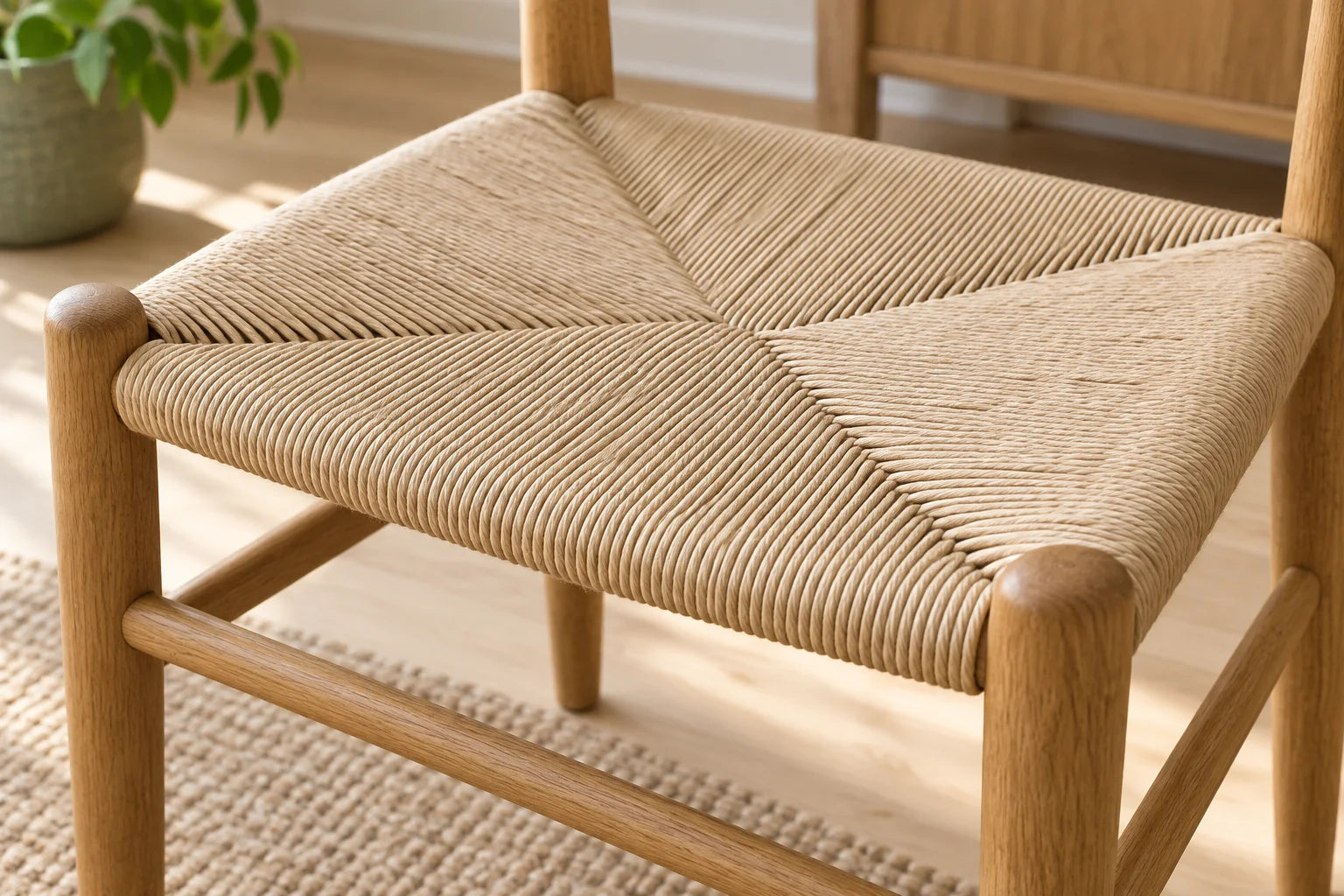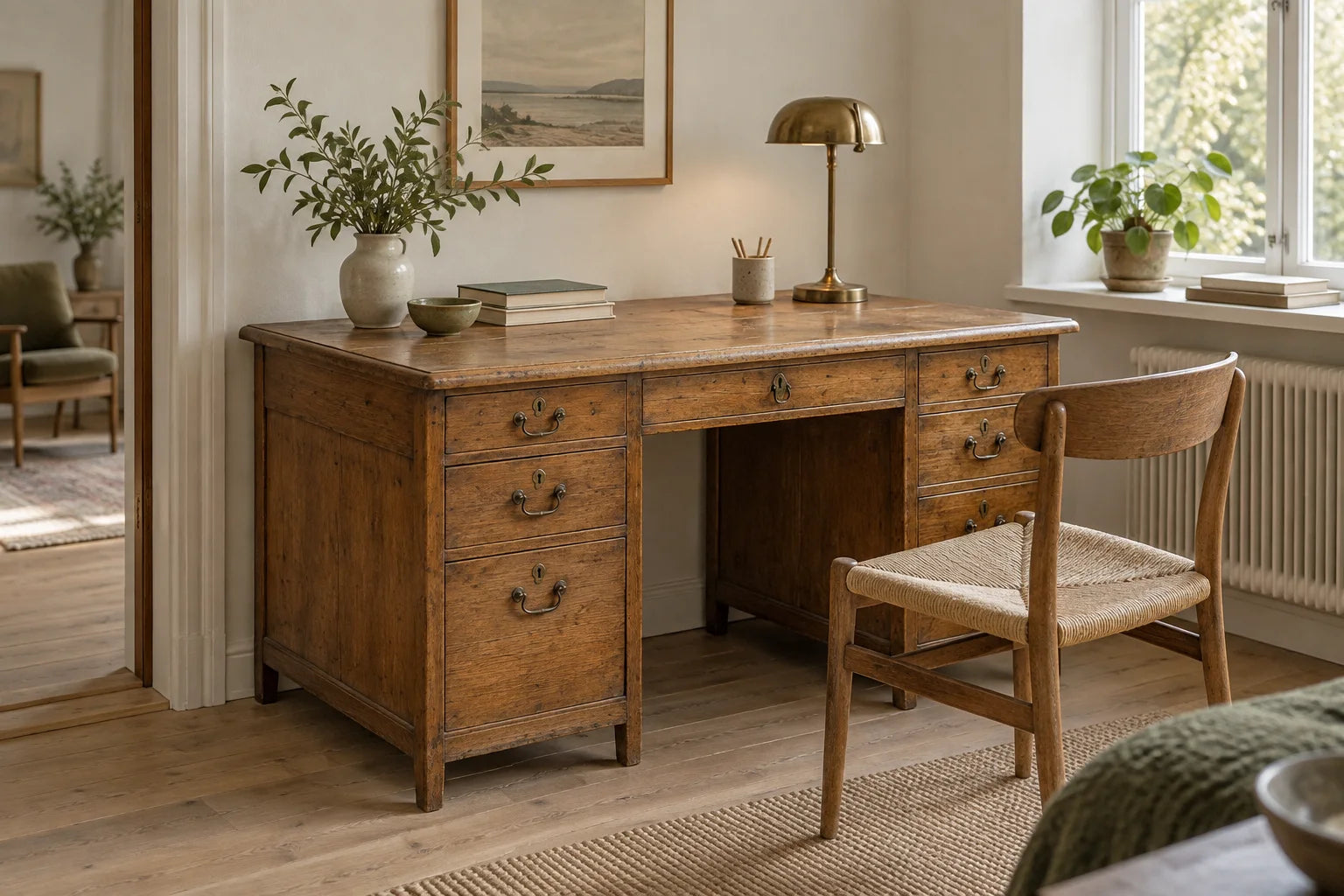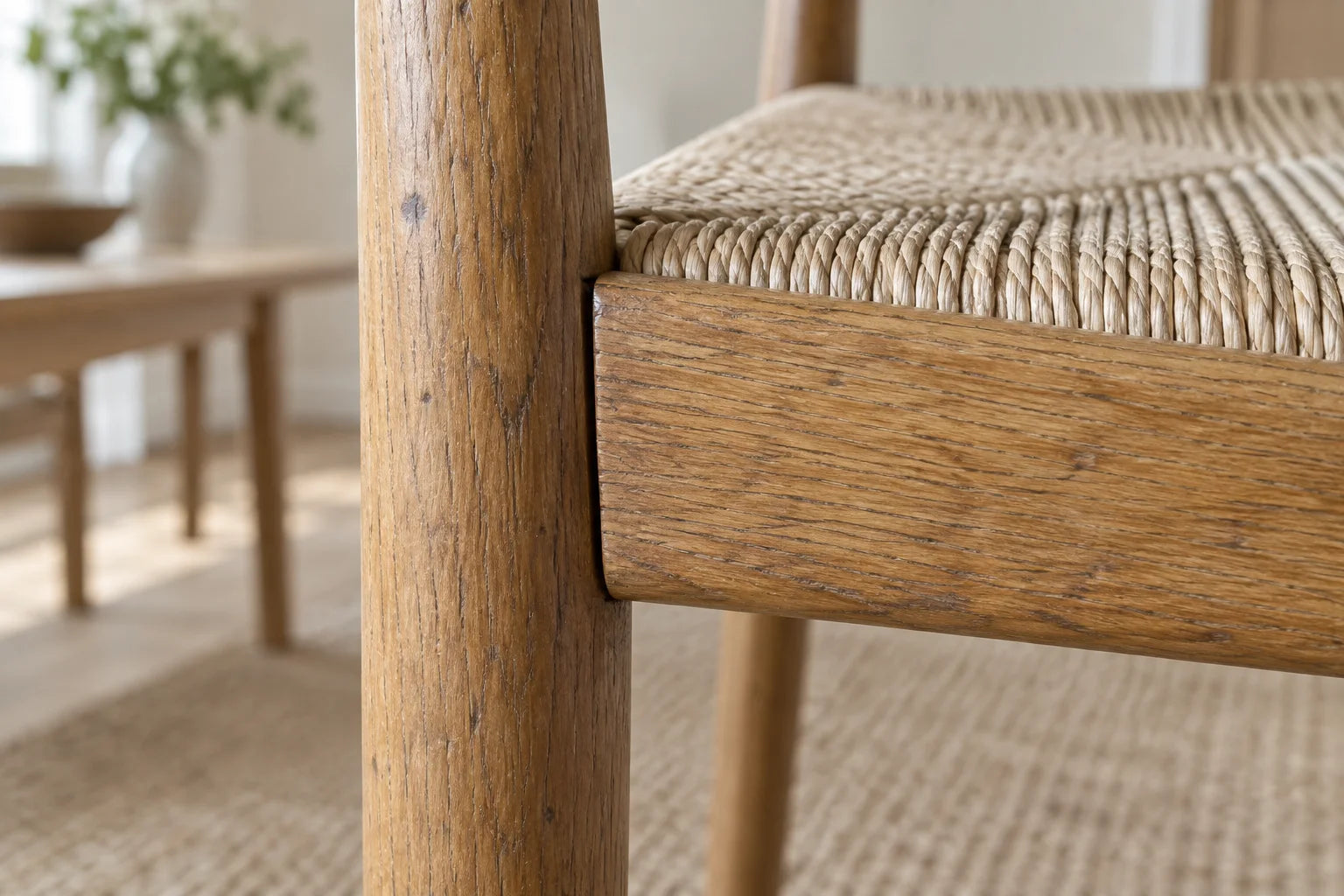
If a Y-chair rocks or has a joint that moves, the frame should be assessed before fitting a new seat. Weaving and wood are parts of the same piece, but serve different purposes. New paper cord is not a documented repair of a loose joint.
You can describe both conditions through an assessment of the Y-chair.
Describe where the movement comes from
Note whether the chair stands unevenly on the floor, or if a specific part moves relative to the rest. These are two different observations. Look for visible gaps, cracks, and signs of previous gluing or screws.
Do not twist the chair to create more movement. If it is clearly unstable, remove it from use until it has been assessed. A still image of the joint and an overview photo provide a good initial basis.
Preserve the chair’s history
Has the chair been taken apart, glued or stored in damp conditions? Has a loose joint appeared suddenly or gradually? State what you know and separate it from what you guess.
Previous repairs may have significance for the next method. Therefore, random glue or an extra screw should not be the first attempt. It can alter the wood and make a subsequent professional assessment more complicated.
Agree on the order of work
If both joints and weaving need to be treated, a single plan for the work should be made. Clarify which parts need to be separated, what can be preserved, and whether the surface will be affected.
The guide to new weaving for the Y-chair helps with choosing cord and appearance. Choose the material after establishing the frame’s condition.
Preserve the surface you want
A structural repair does not automatically mean the entire chair must be sanded or have its colour changed. Describe whether patina and existing finish should be preserved as much as possible.
Read patina or restoration, if you want to put words to the desired result. Ask for an explanation of which traces a repair can leave. Invisibility or a specific lifespan cannot be guaranteed based on the model name.
Get a complete description of the work
The quote should distinguish between frame work, possible surface treatment and weaving. Save reference photos, and choose paper cord and finishing in specific terms. Once the chair is finished, it is easier to assess the result if the job was clearly divided into parts from the start.