A cushion cover is easier to sew when finished and cutting dimensions are kept separate. Start with the cushion that should fit the furniture, then draw the fabric pieces with separate seam allowances and markings.
If you want a finished solution, start with made-to-measure cushions. If you sew the covers yourself, this preparation helps avoid the most common misunderstandings.
Define the cushion shape first
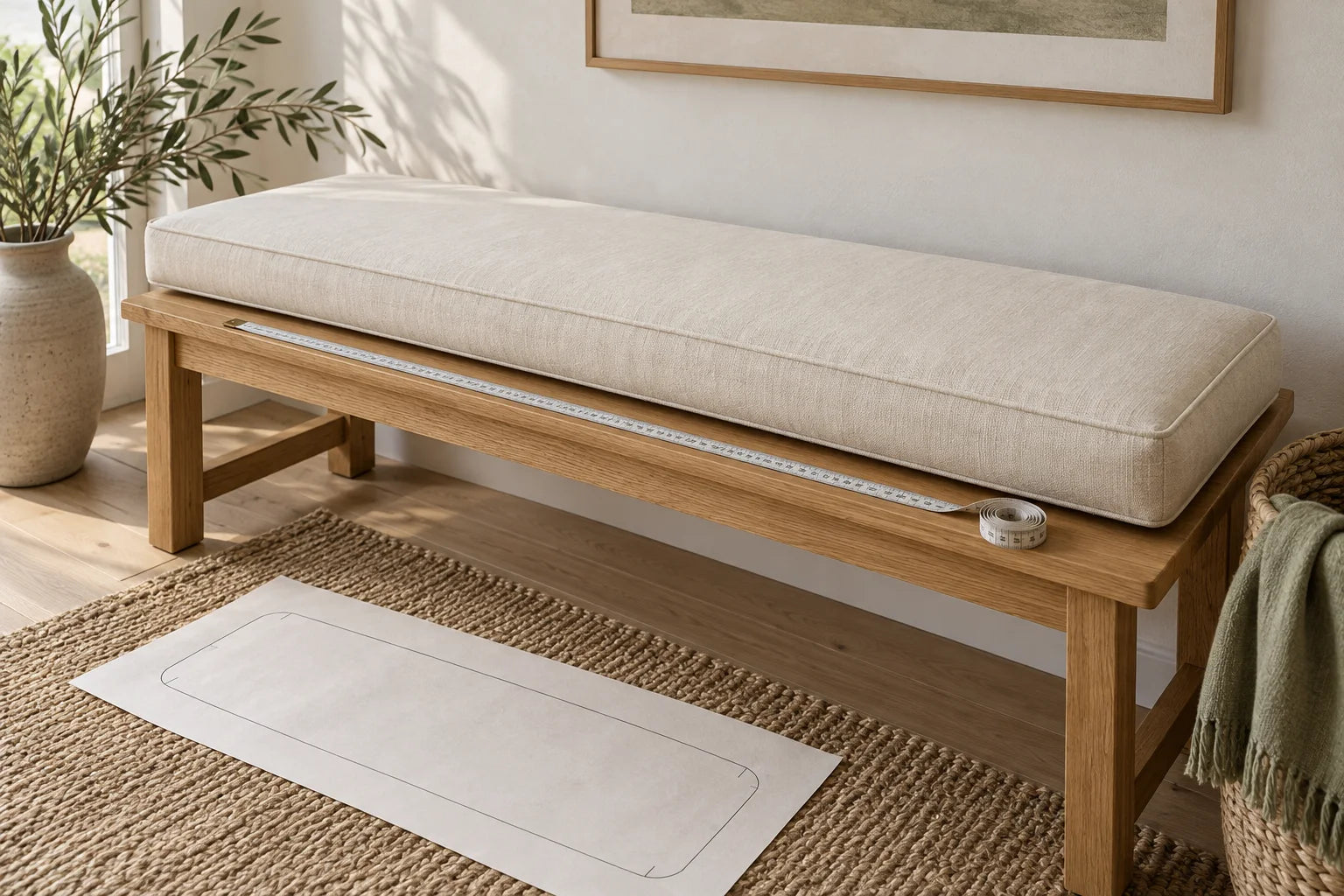
Draw top, bottom and sides. Mark front and back edges and any angled corners. An old cover can be used as a reference, but may be stretched or shrunk.
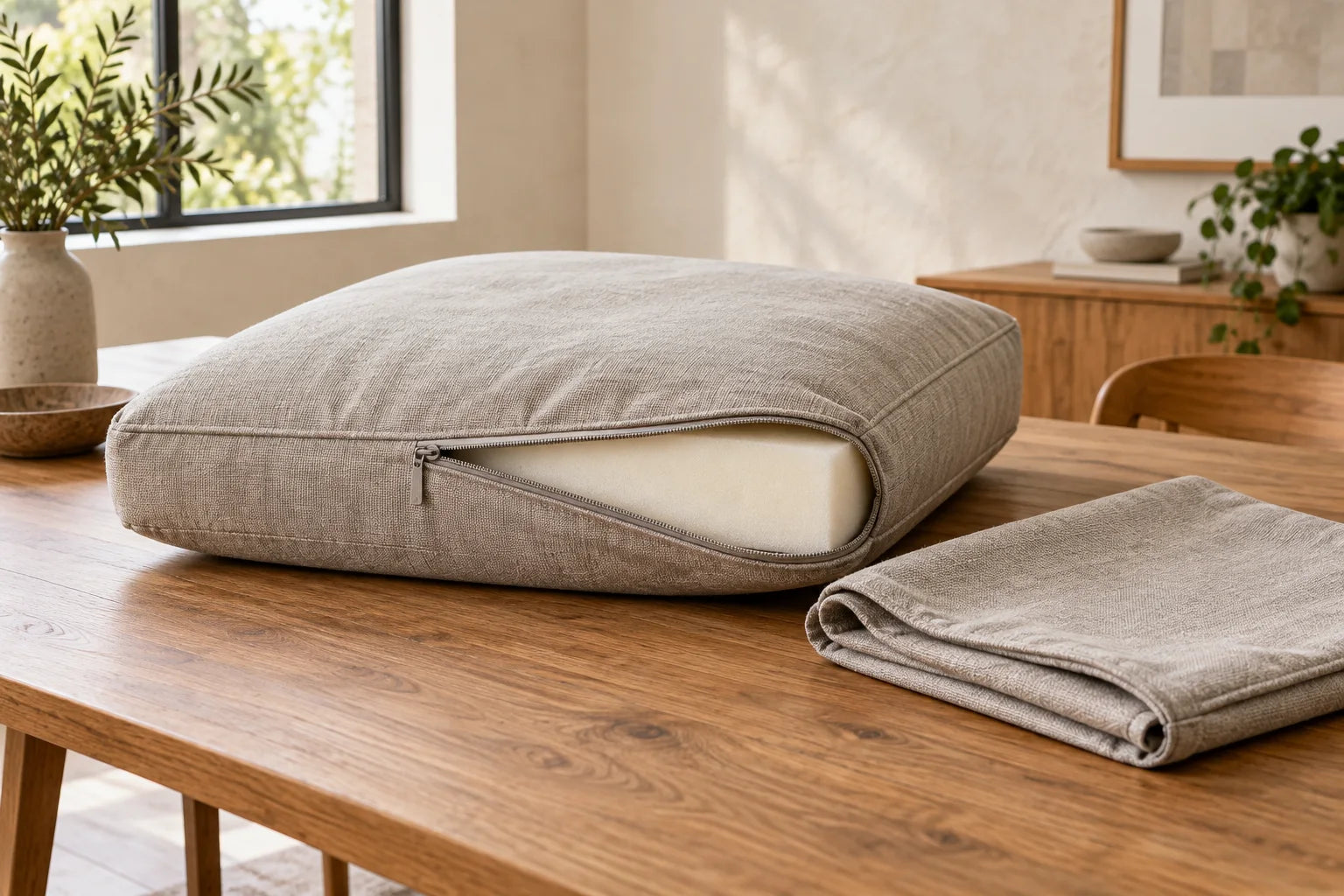
Compare the drawing with the dimensions of the cushion space on the furniture. Agree on foam and any possible middle layers before you finalize the fabric pattern. A changed core can change the fit.
Add seam allowances as a separate layer
Write the finished dimensions inside each drawn piece and the cutting dimensions outside. Choose seam allowances for your method, machine and construction. No single allowance suits every cushion.
Mark joining points at corners and centre. This makes it easier to distribute the fabric evenly when the sides are sewn together. For a new construction, a test in a suitable test material is worth making before the final fabric is cut.
Plan the opening
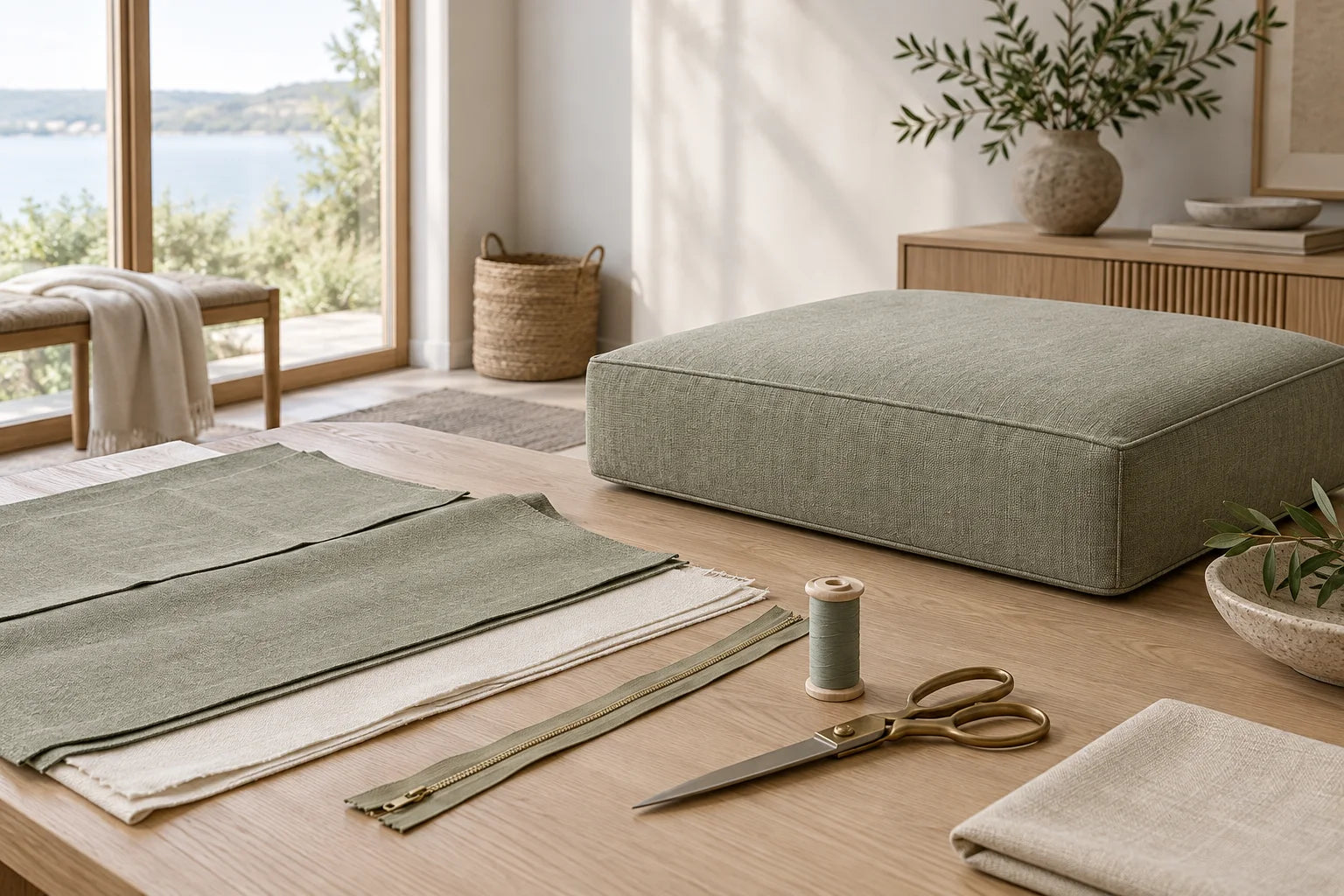
The zipper must provide practical access to get the contents in and out. Clarify placement in relation to attachment, visibility and the side facing the furniture.
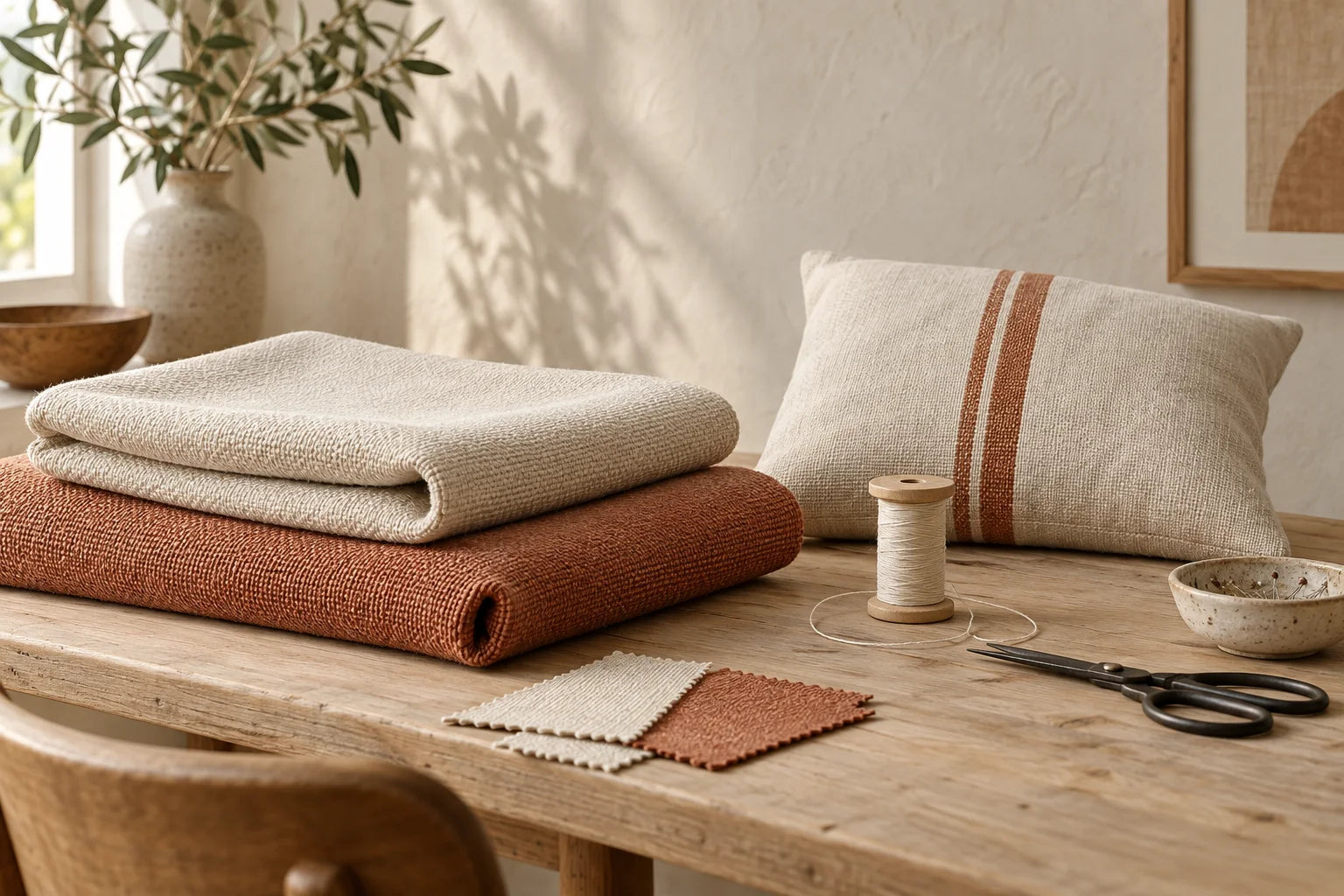
A zip does not automatically mean the cover is washable. Both fabric and construction must be suitable. For cotton any pretreatment must also be agreed before setting the cutting dimensions.
Test the most difficult joint
Sew a test piece with the layers that meet at corners, piping or zip. A machine can handle a straight seam in two layers and still have problems when more layers are joined.
Follow the machine's and tool's instructions. Assess seams, thread tension and the material's reaction to the test before sewing large sections.
Check the fit along the way
Test the cover without forcing in a core that does not fit. Check corners, fabric direction and seam placement. If you are reusing parts, the guide to new covers or new cushions can help identify the source of a fit problem.
Keep the pattern and material details once the result is approved. This makes an additional cover much easier to plan later.