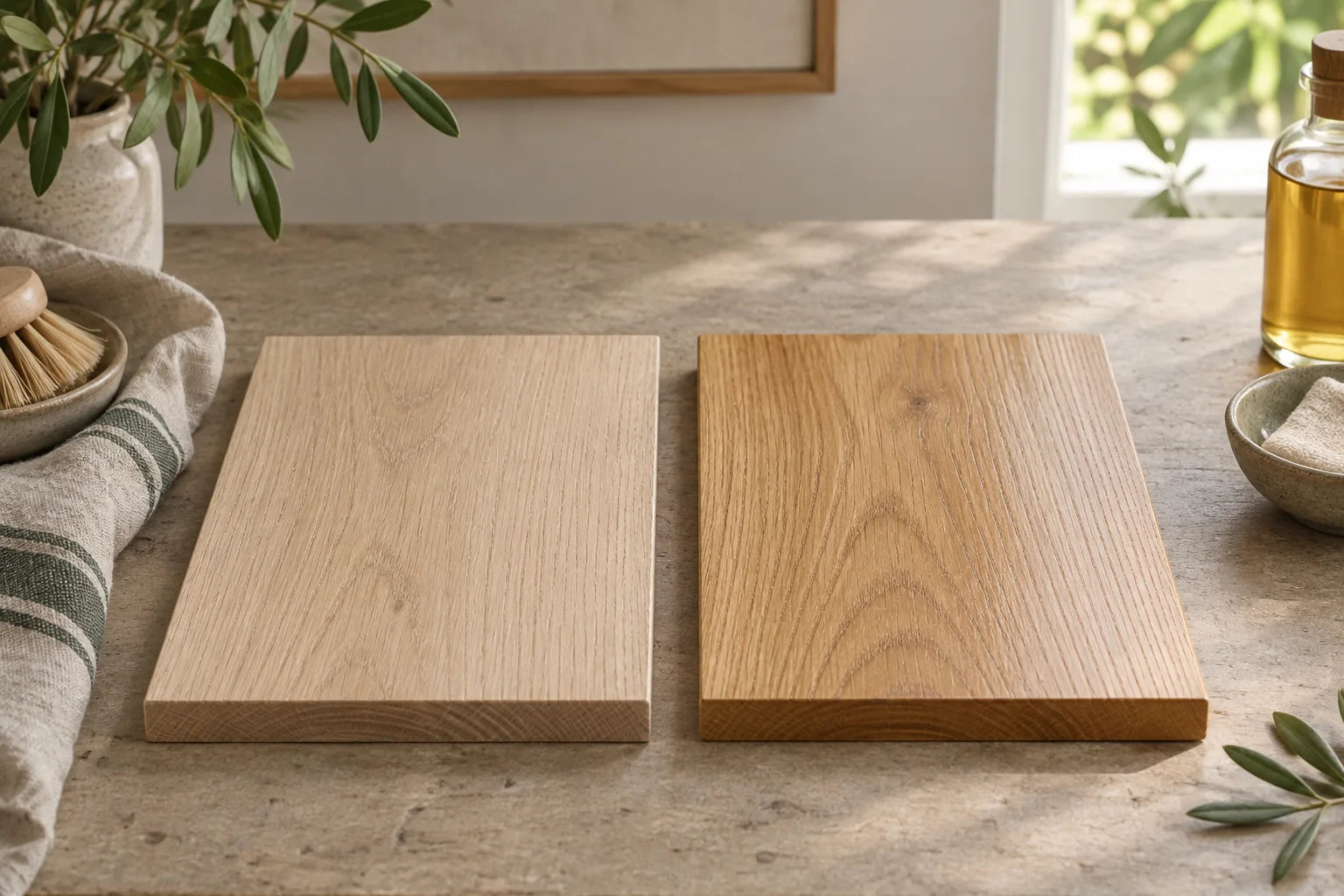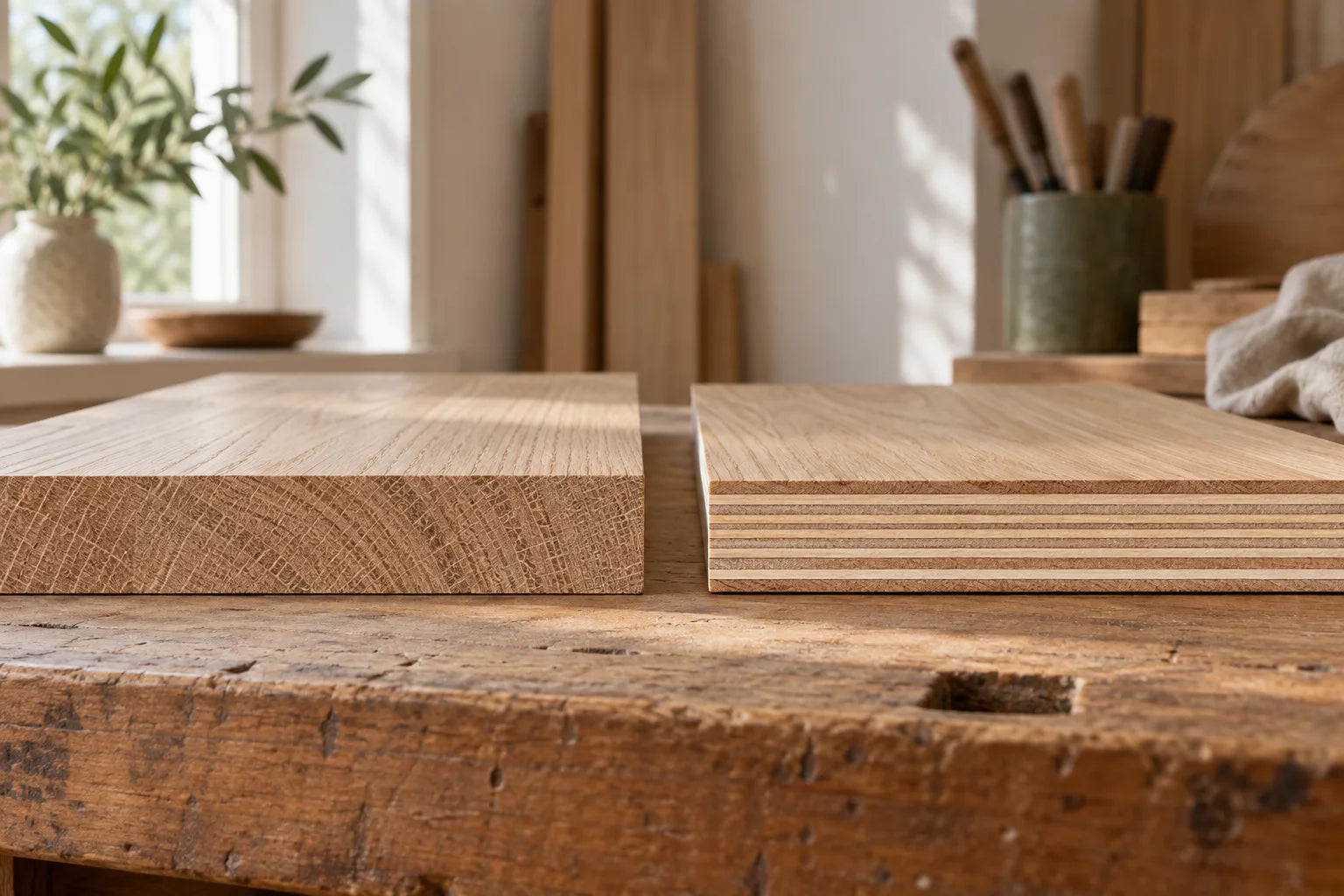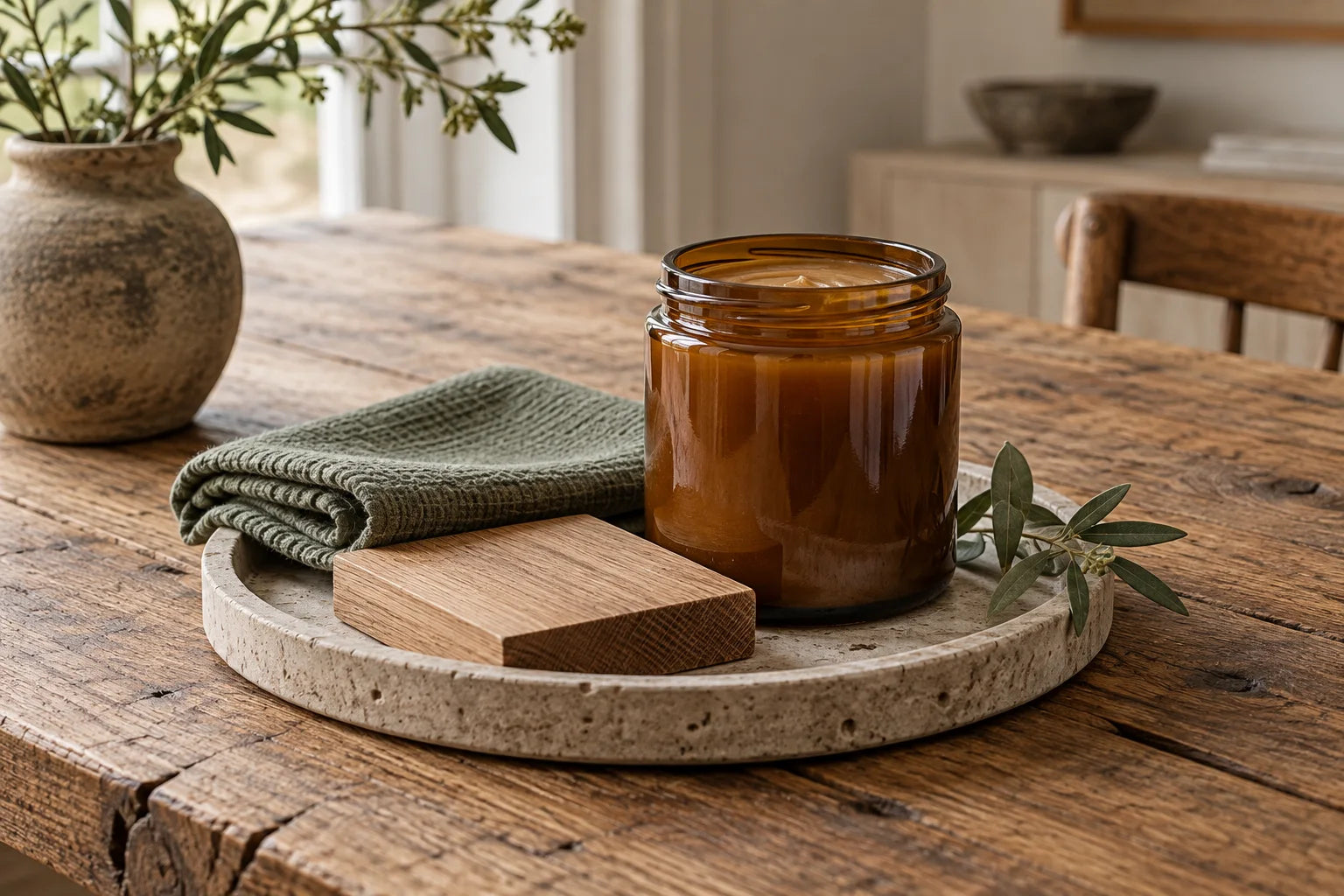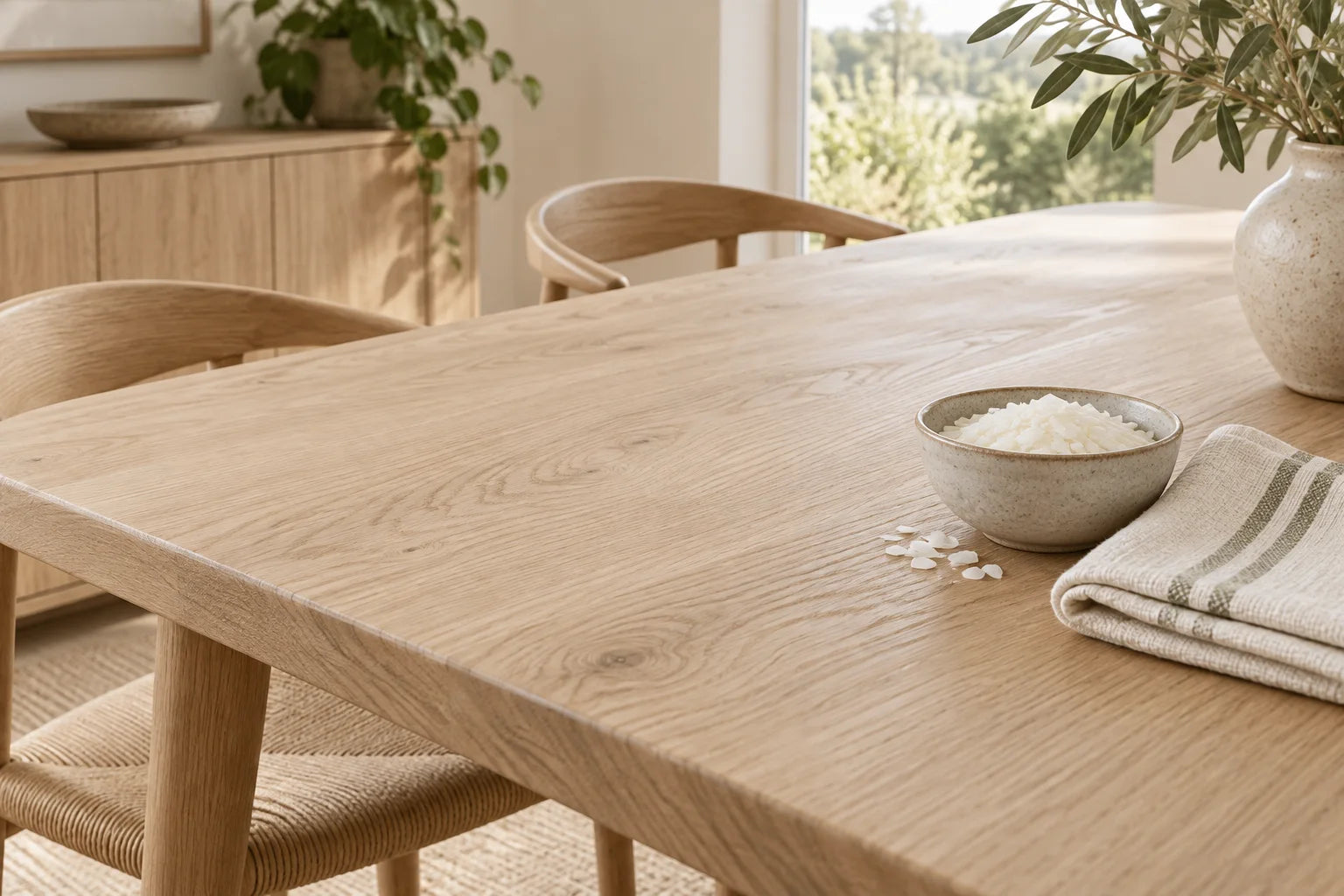
Soap treatment of an oak table begins by identifying the surface. Oak may be soap-treated, oiled, lacquered or have another finish. The wood type alone does not therefore tell which treatment the table should have.
If the surface is unknown or damaged, an assessment of repair and surface may be relevant before you attempt to change it.
Find the table's current treatment
Check the product description, receipt, or maintenance guide. Ask a previous owner if the table was bought second-hand. Information about later treatments is also important.
Do not use a wet test or sanding as the first method to guess the finish. If you cannot identify it, you should get help with the assessment. Read veneer or solid wood, if you are also unsure about the construction.
Distinguish between cleaning and re-treatment
Daily wiping and building up of a soap-treated surface is not the same task. Fritz Hansen recommends for its soap-treated products a soap intended for the purpose and adherence to the product's instructions.
Do not use a random recipe instead of the instructions for the table and soap. Dosage, procedure and intervals must suit the specific treatment.
Protect adjacent materials
Look for metal, leather, fabric and other surfaces close to the work area. Agree or read how they should be protected before treatment begins. A table top with inlays requires more care than a uniform wood surface.
Work on a manageable area following the instructions, and do not let water collect at joints or edges. Stop if the surface reacts unexpectedly or transfers colour.
A stain does not automatically require sanding
First, assess whether the mark lies on the surface or if there is damage. If you sand without a plan, the colour and structure may become uneven. With veneer, the material thickness is a special limitation.
Send a photo of the entire table and the stain if you request assistance. A close-up image alone does not always show how the area differs from the rest.
Do you want to switch to oil?
A change from soap to oil is a change of surface treatment, not just extra care. Read soap or oil, before you decide on an approach.
If you are considering soft soap, see why the surface determines the choice of soap. The goal is to use a documented method for your table, not to get as many care products as possible into the routine.