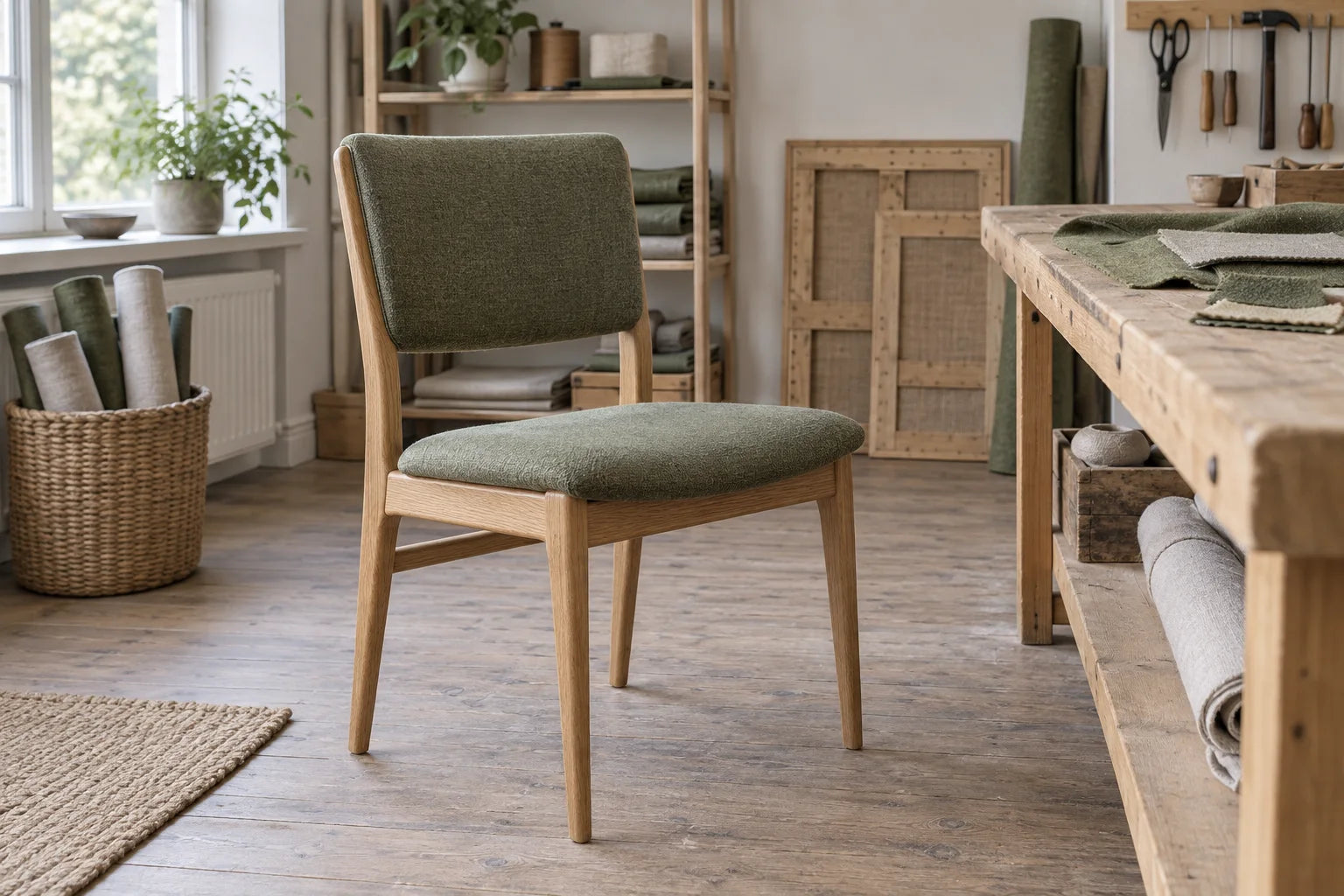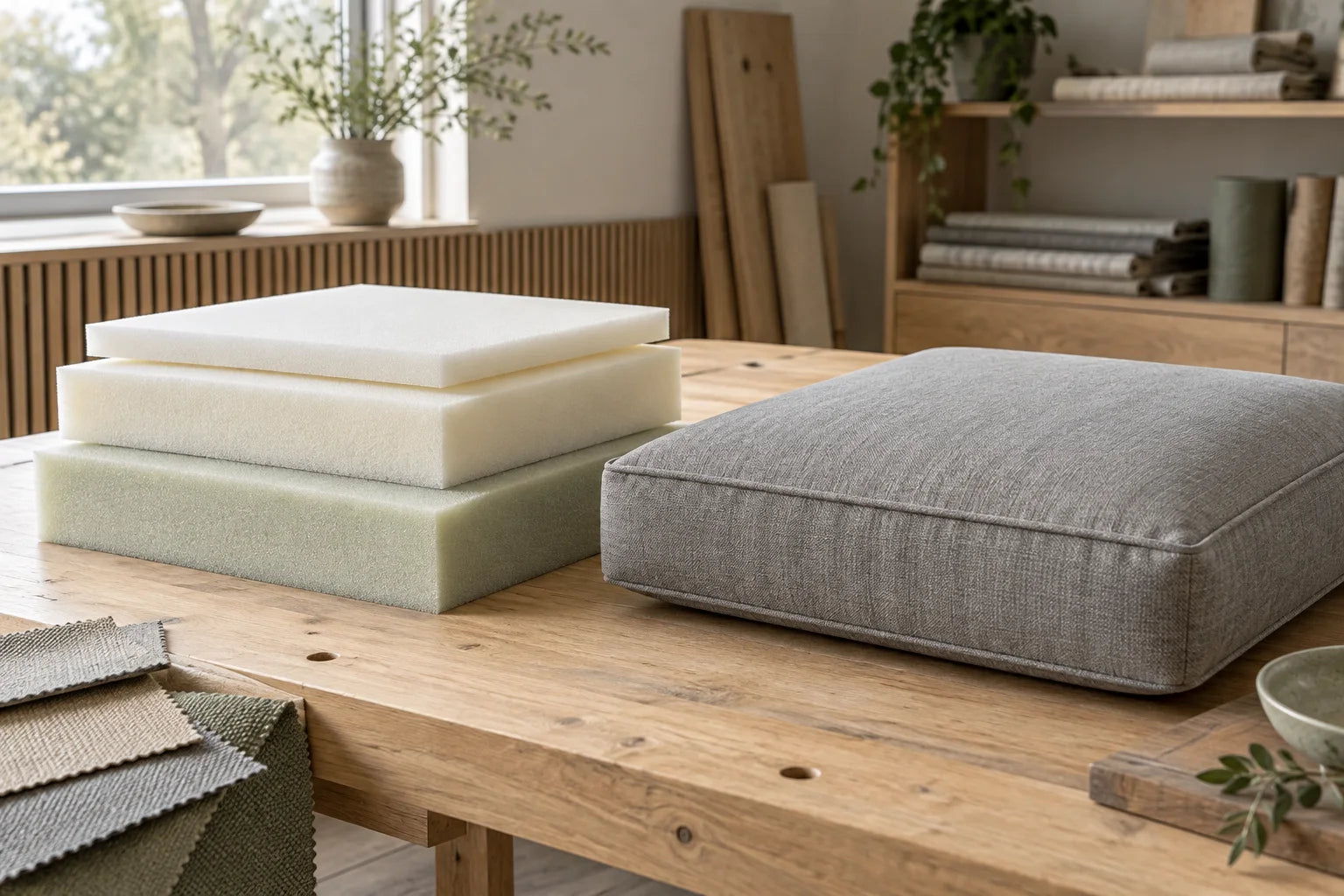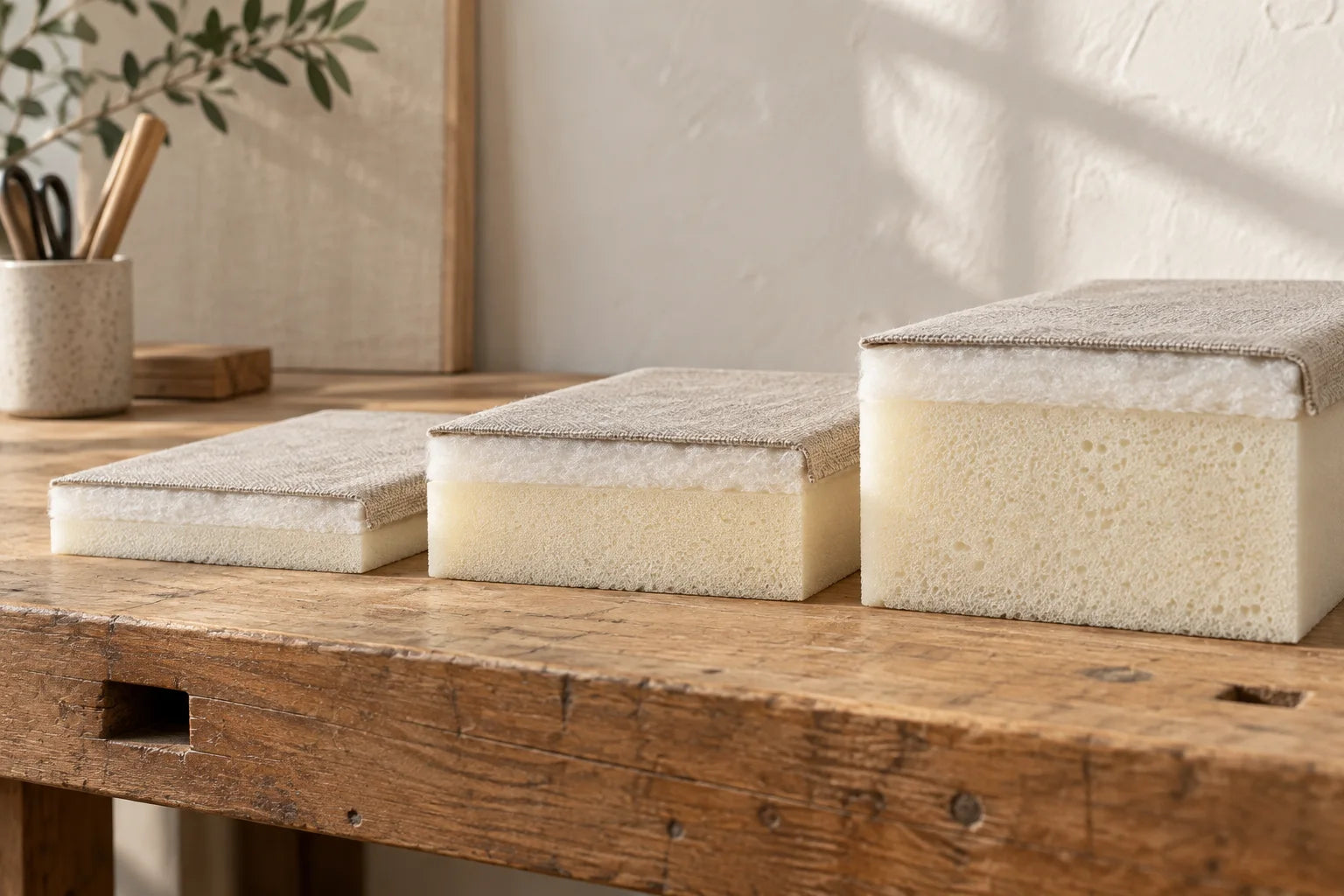
Foam for furniture upholstery is part of a complete construction. It works together with the cover, any intermediate layers, and the support underneath. Therefore, the same piece of foam may feel different on a rigid board and on a yielding substrate.
When you order made-to-measure foam, the description should therefore include more than just length and width.
Find out what the foam should do
Should the material provide the support itself, form an edge, or level the surface under the fabric? These tasks should not be mixed. Also describe whether the foam is to be used for the seat, back, or armrests.
Take a photo of the existing construction if it is available without damaging the furniture. If the furniture is still assembled, describe the feel in use: too soft, too hard, uneven or worn through. A concrete observation helps more than a guessed material designation.
Keep three measurements separate
Distinguish between the space available on the furniture, the foam dimensions and the finished cover dimensions. They are not necessarily identical. Intermediate layers, edge shape and cover fit can affect the result.
Agree what kind of measurements you are providing. For a curved or sloping seat, a template may be more useful than maximum length and width alone. Also send a photo showing the part's orientation.
Understand the quality without guessing the colour
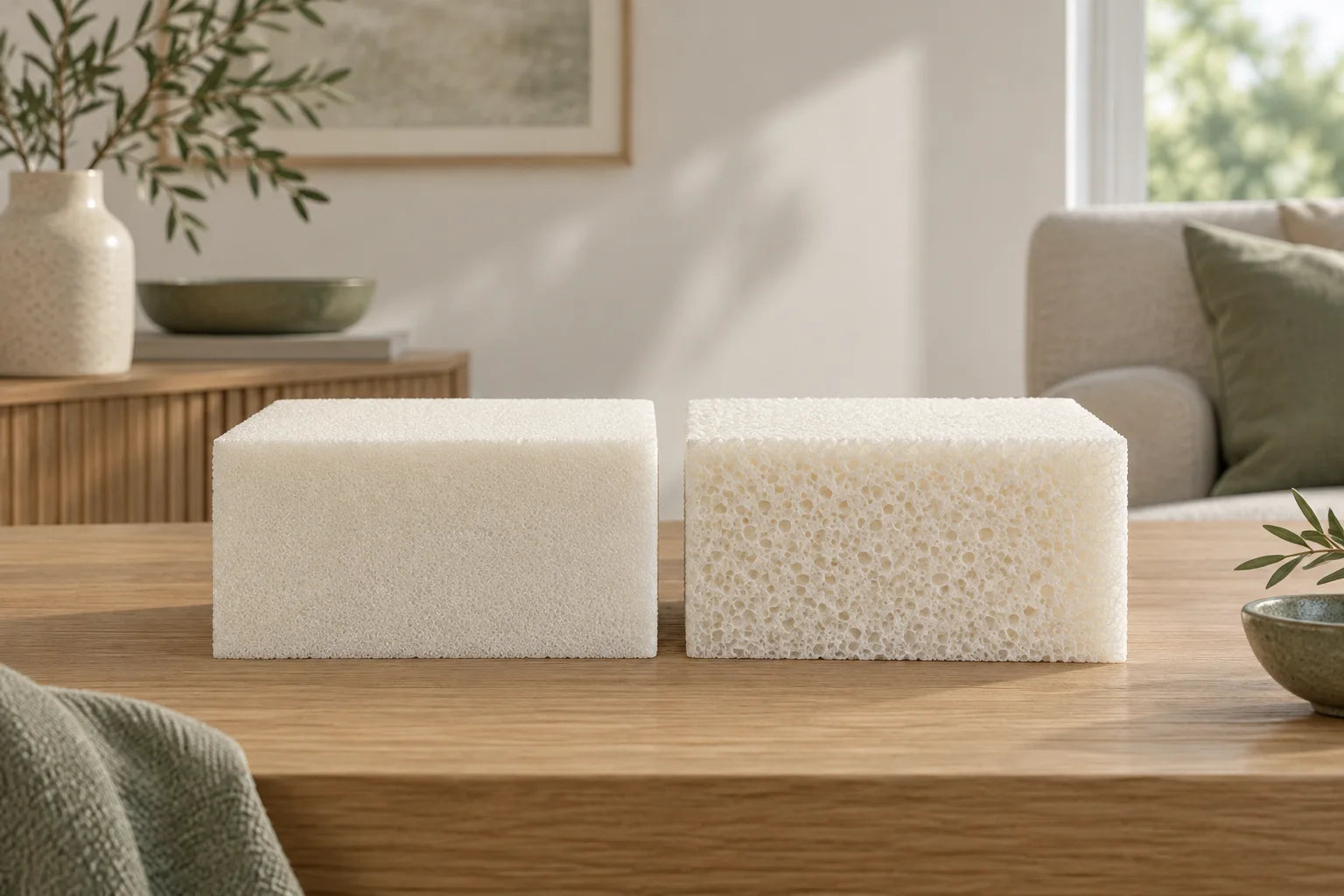
EUROPUR describes flexible polyurethane foam in several types with different physical properties. The colour of a foam sample is not a common quality code you can use across suppliers.
Ask for the exact material grade and its intended use. See the difference between density and hardness, and use the guide to foam in cushions, if it is a loose seat cushion.
Assess the base simultaneously
If a seat is sagging, both the foam and support must be examined. New filling may otherwise end up lying on the same defective structure. For chairs with upholstered backs, the same applies: loose joints are not resolved by a new soft layer.
Clarify what is to be preserved before the upholstery is closed. It is also now that you should decide whether the seat height should remain unchanged. A change of a few centimetres can be felt at a dining table, even if the cushion looks almost identical.