The best fabric for a chair is the one that suits both the chair and your daily life. Therefore, start with the use: a daily dining seat, an armchair and a chair in the entrance hall have different requirements for feel, cleaning and expression.
For recovering chairs the fabric choice should also suit the chair's curves, edges and underlying construction.
Describe the situations the fabric must withstand
Write down three specific details. Perhaps children eat at the table, the chair stands in a sunlit window, or you would like stains treated without removing the entire upholstery. This list is more useful than requesting 'something strong'.
Ask the supplier whether the quality is intended for furniture upholstery and for the specific use. Curtain fabric or decorative fabric should not be chosen solely because the colour is correct.
Ask for a product data sheet
A product sheet makes it possible to check fibre composition, abrasion resistance, lightfastness, and maintenance. Kvadrat describes, for example, abrasion, pilling, and lightfastness as different properties. One good figure therefore does not tell everything about the fabric's appearance over time.
Read the explanation of Martindale, and then use the checklist for durable upholstery fabric to compare two specific material qualities. Keep the name and colour number together with the quote.
Try the fabric on the actual chair
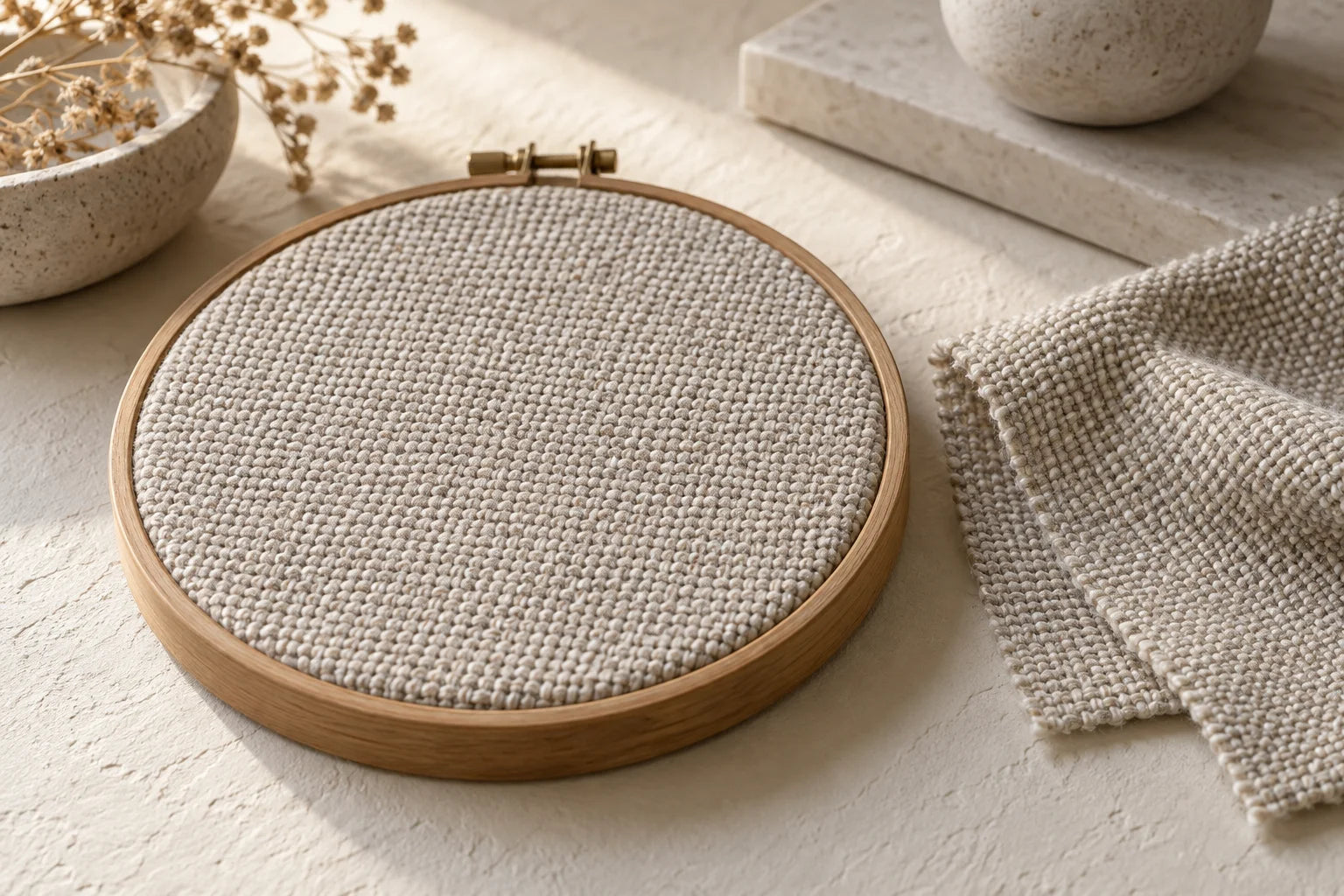
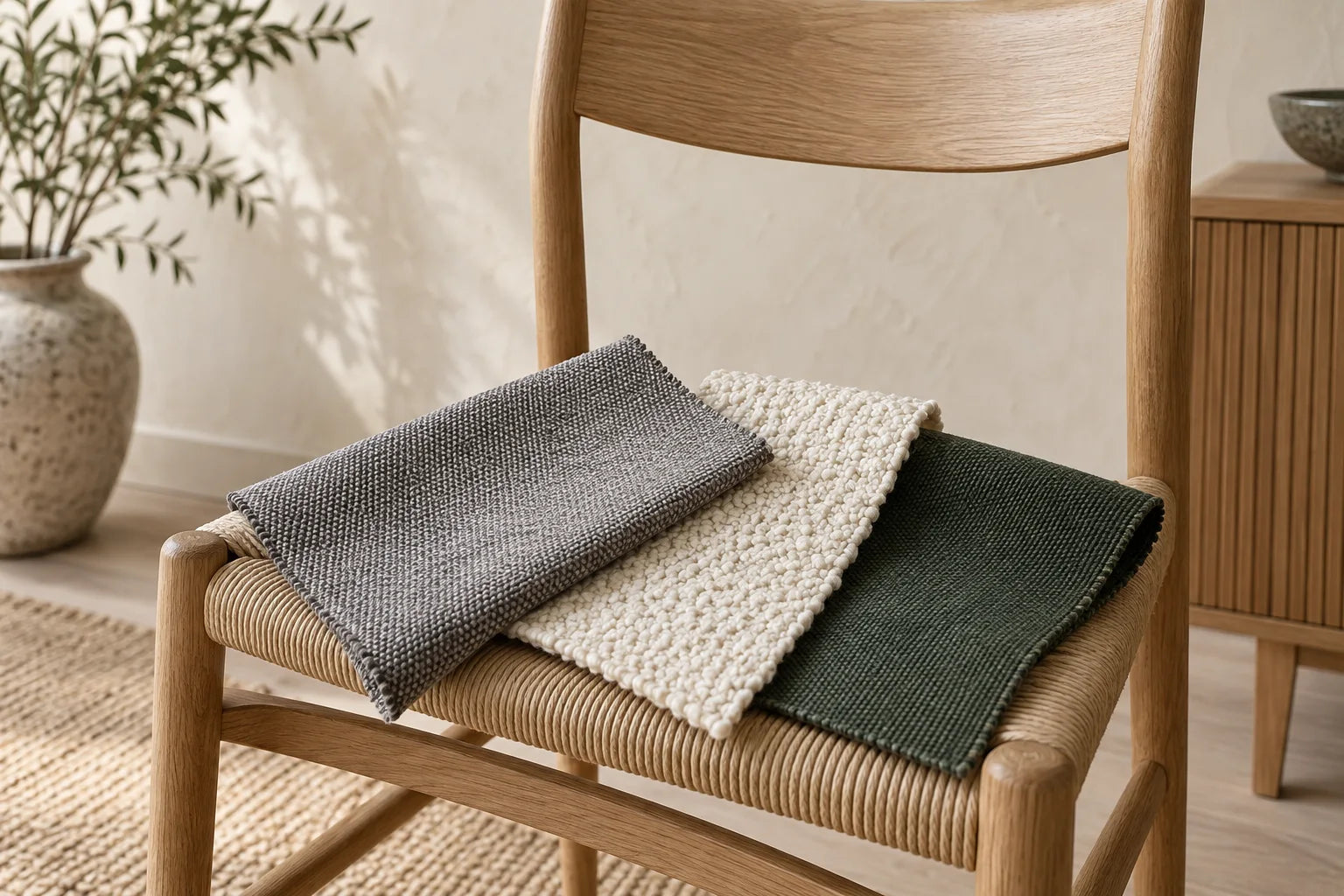
Lay the swatch over an edge or curve if it can be done without stretching or damaging it. See how the structure and colour change in the light. The fabric should be experienced both up close and from a distance.
Also examine how the material feels on the seat and back. A fabric you like on a curtain is not necessarily what you want against bare skin on a dining chair. A large sample is more informative than a small photo.
Think about the finished pattern
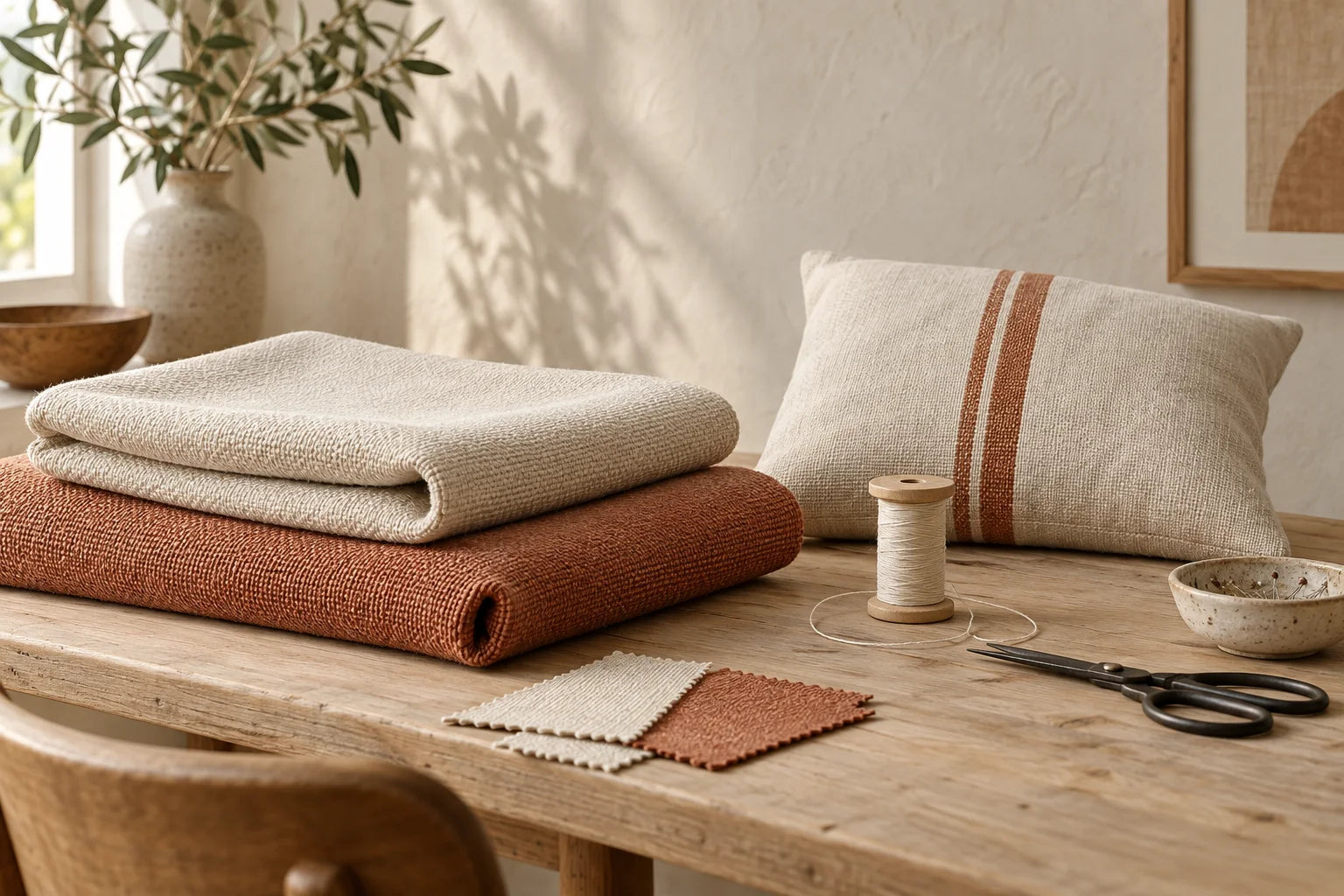
Stripes and large motifs require an agreement on placement. Should the pattern be centred? Should all chairs match? Should the front and back of the backrest follow the same direction? Agree on this before calculating the amount of fabric.
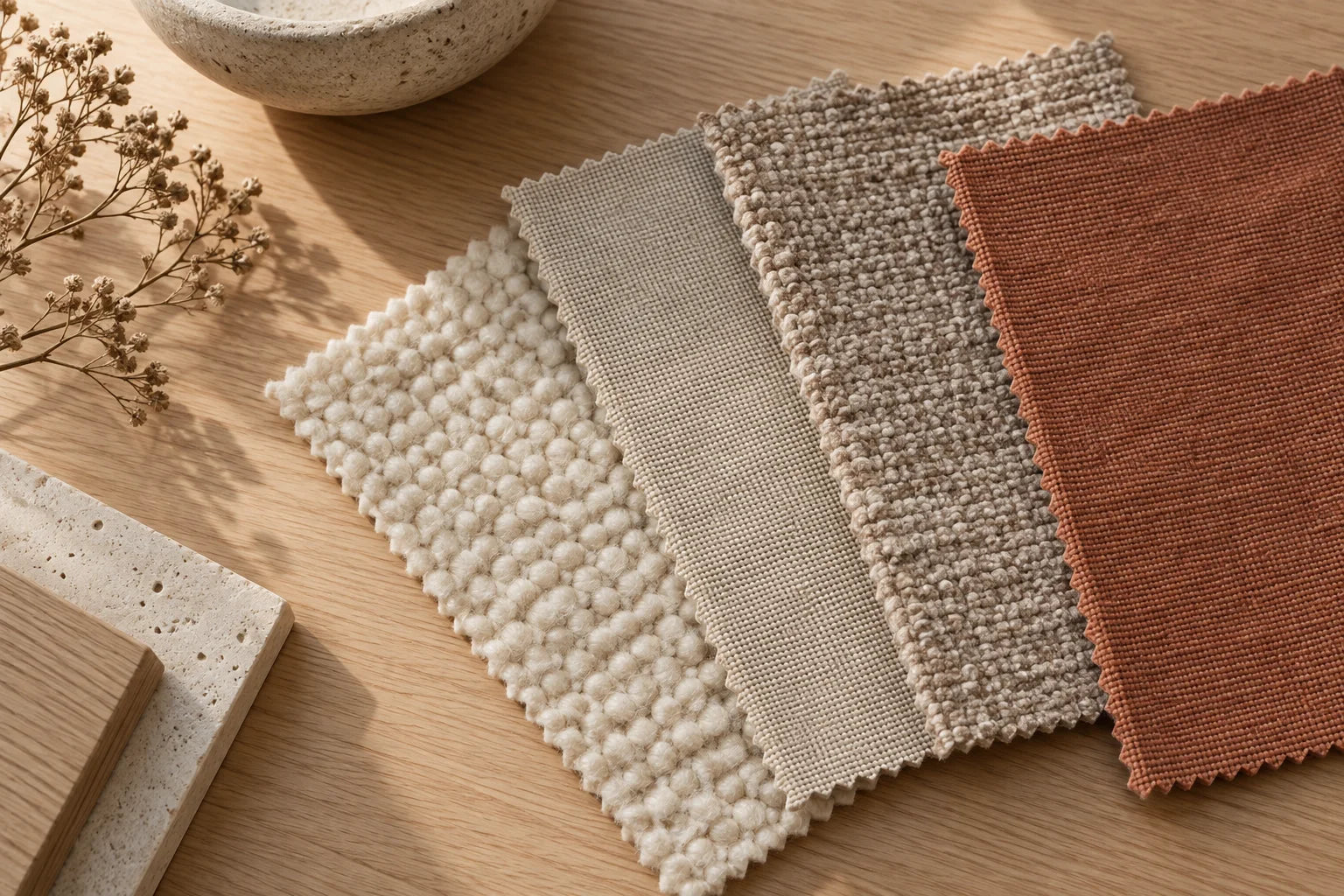
For a calmer expression, you can compare solid, melange and small-patterned fabric in the same colour family. The choice is visual; it does not replace an assessment of quality and care.
Clarify care before ordering
Ask for the specific washing or cleaning instructions. 'Easy to maintain' is not a sufficient specification. If washability is crucial, both the fabric and the finished upholstery must be suitable for washing. This also applies when you choose cotton as upholstery fabric.