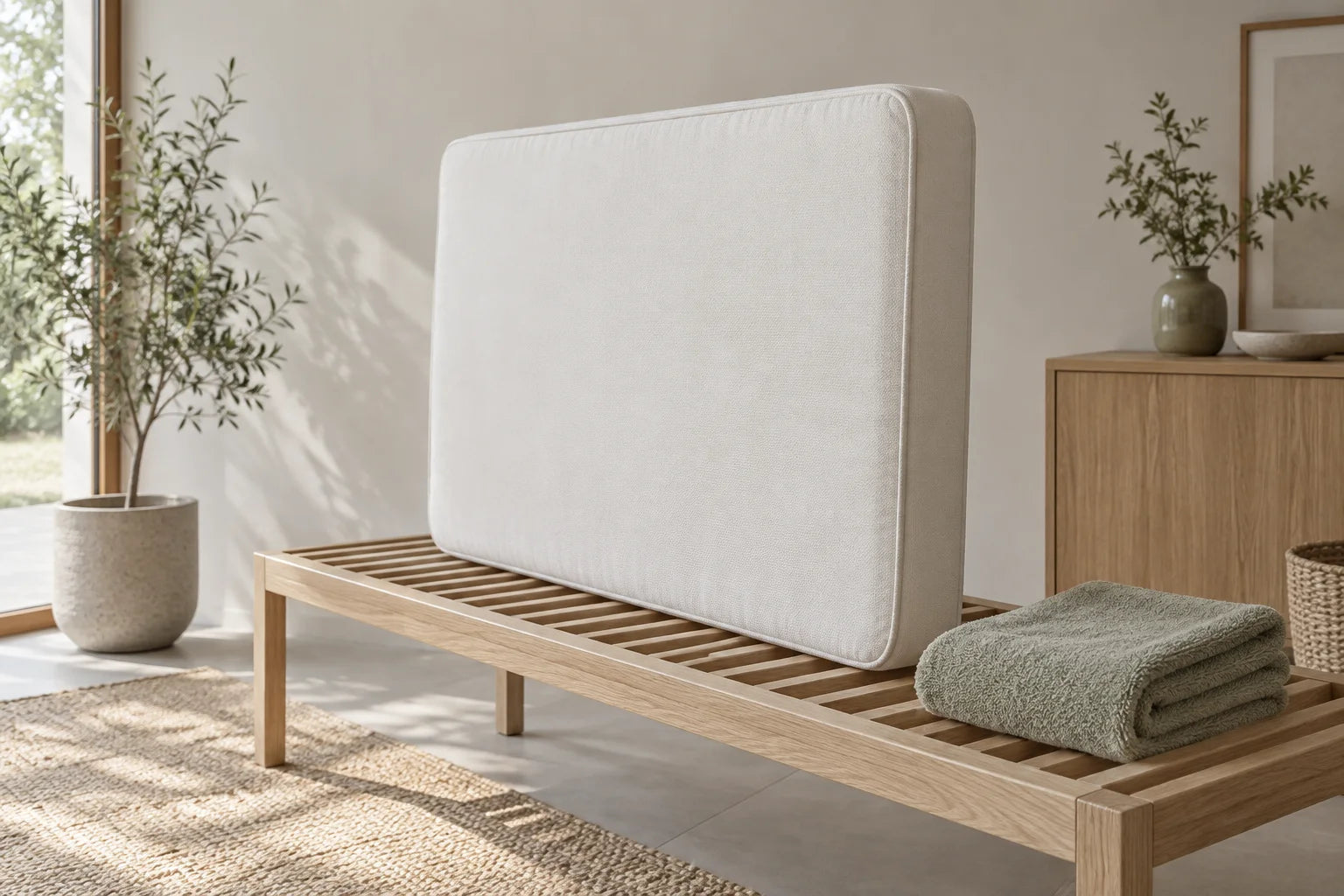
Cushions should be packed for longer storage only after they are clean according to their care instructions and dry throughout the entire assembly. A dry cover is not necessarily sufficient if the core has been wet.
For outdoor cushions the winter routine should inform material choices when ordering.
Check them before they are put away
Examine seams, zippers, undersides and edges. Note any damage now, so it is not discovered only when the cushions are to be used again. Take pictures of stains and wear if you wish to have something assessed.
Remove loose dirt according to the material's instructions. If further cleaning is required, the method and drying time must suit both the upholstery and the contents. See the guidance on washing foam rubber, before soaking a whole cushion.
Make sure all parts are dry
Arrange the parts so that air can circulate around them without deformation. Follow the manufacturer's drying instructions. Do not use high heat as a shortcut without documentation that the material can withstand it.
Carl Hansen & Søn's instructions for Sunbrella cushions stress complete drying after cleaning. The specific routine must still suit your material.
Choose storage location according to conditions
A cushion box is not automatically a dry storage space. Consider whether the location can develop condensation, water ingress, or moisture from the floor and wall. Avoid pressing cushions into a space where they lie close to a known damp surface.
If you use a cover or a container, follow the instructions for that solution. Tightly wrapping a damp cushion does not solve the problem.
Mark the parts without damaging the fabric
With multiple cushions, it is useful to keep a placement plan and use gentle labelling. Write which parts belong to which pieces of furniture. Also record fabric names and care instructions.
This is especially useful for caravan cushions, where the same part can have multiple placements. A photo of the setup saves guessing next season.
Inspect them when you take them out
Check for odour, moisture and condition before use. If a problem recurs, the storage conditions must be investigated before the cushions are simply cleaned again.
Use the guide to outdoor materials with a new order. The best winter routine is one that fits the cushions' size, material and the room you actually have available.