Cotton as furniture fabric must be assessed based on the specific quality. The fibre can be used in various weaves and blends, and the word 'cotton' tells neither that the fabric is suitable for upholstery, nor that a finished cover can be machine washed.
For reupholstery it is therefore important to select both a suitable textile and a construction that fits the usage.
Start with the intended use
Ask whether the fabric was developed for upholstery and what information the manufacturer provides about wear and care. A fabric may suit curtains, cushions or clothing without being the best choice for a seat used every day.
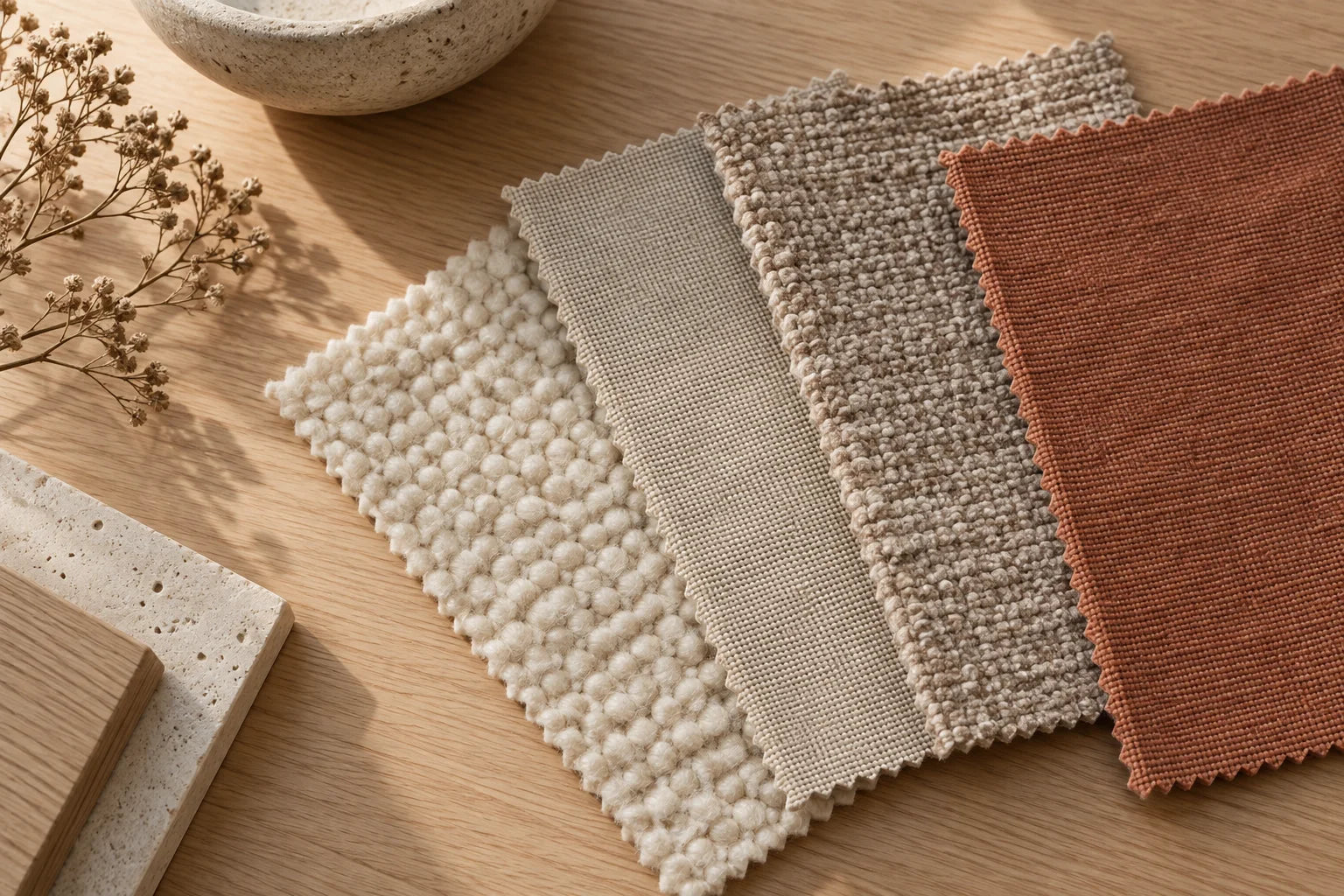
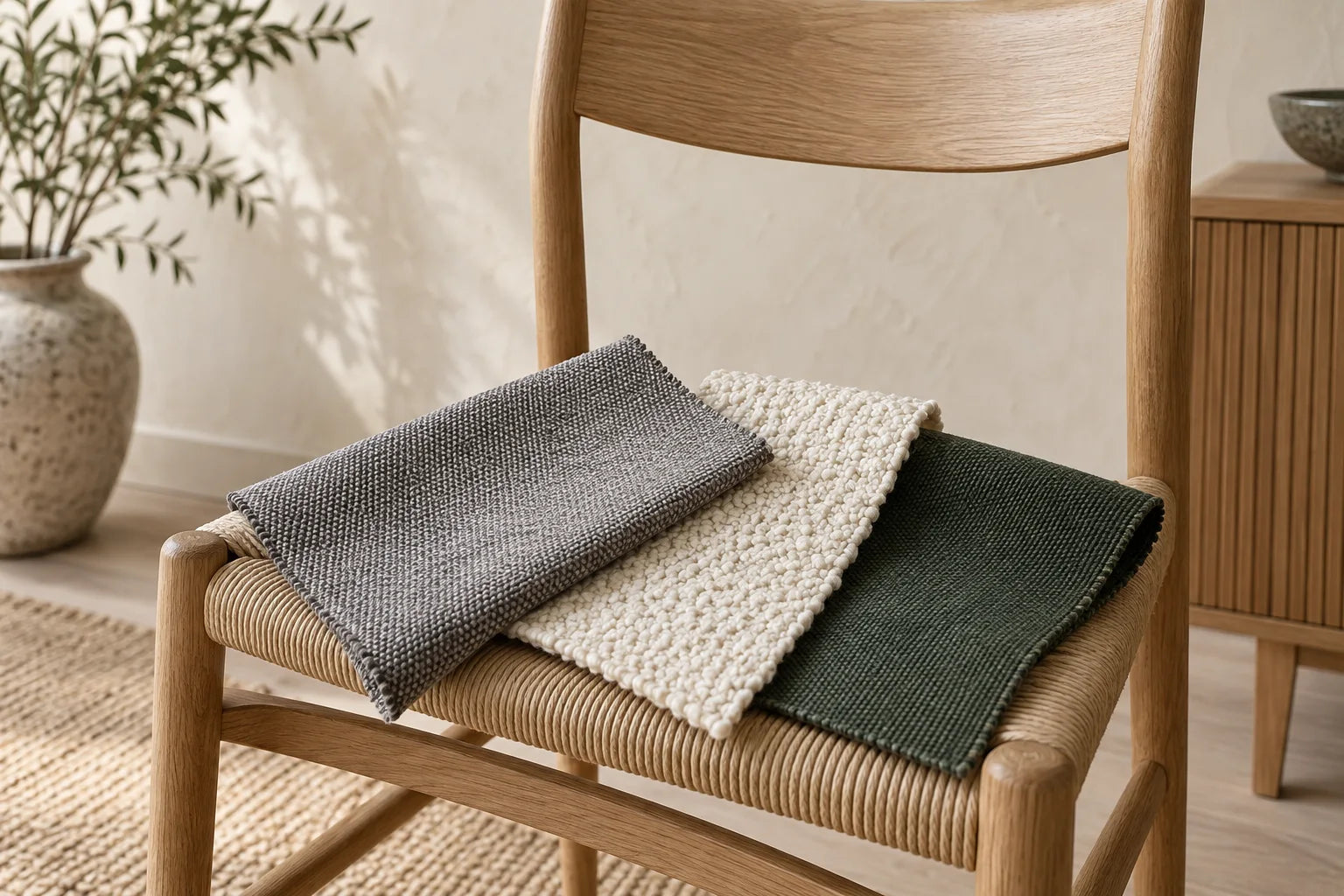
If cotton is a desire due to a specific feel, then compare physical samples. A tight and smooth quality may be experienced differently than a coarse or loose weave, even if both contain cotton.
Clarify washing before sewing
Some cotton textiles can be washed according to their instructions. This is not permission to wash all cotton furniture upholstery. Also inserts, thread, zips and the upholstery's shape must be included in the assessment.
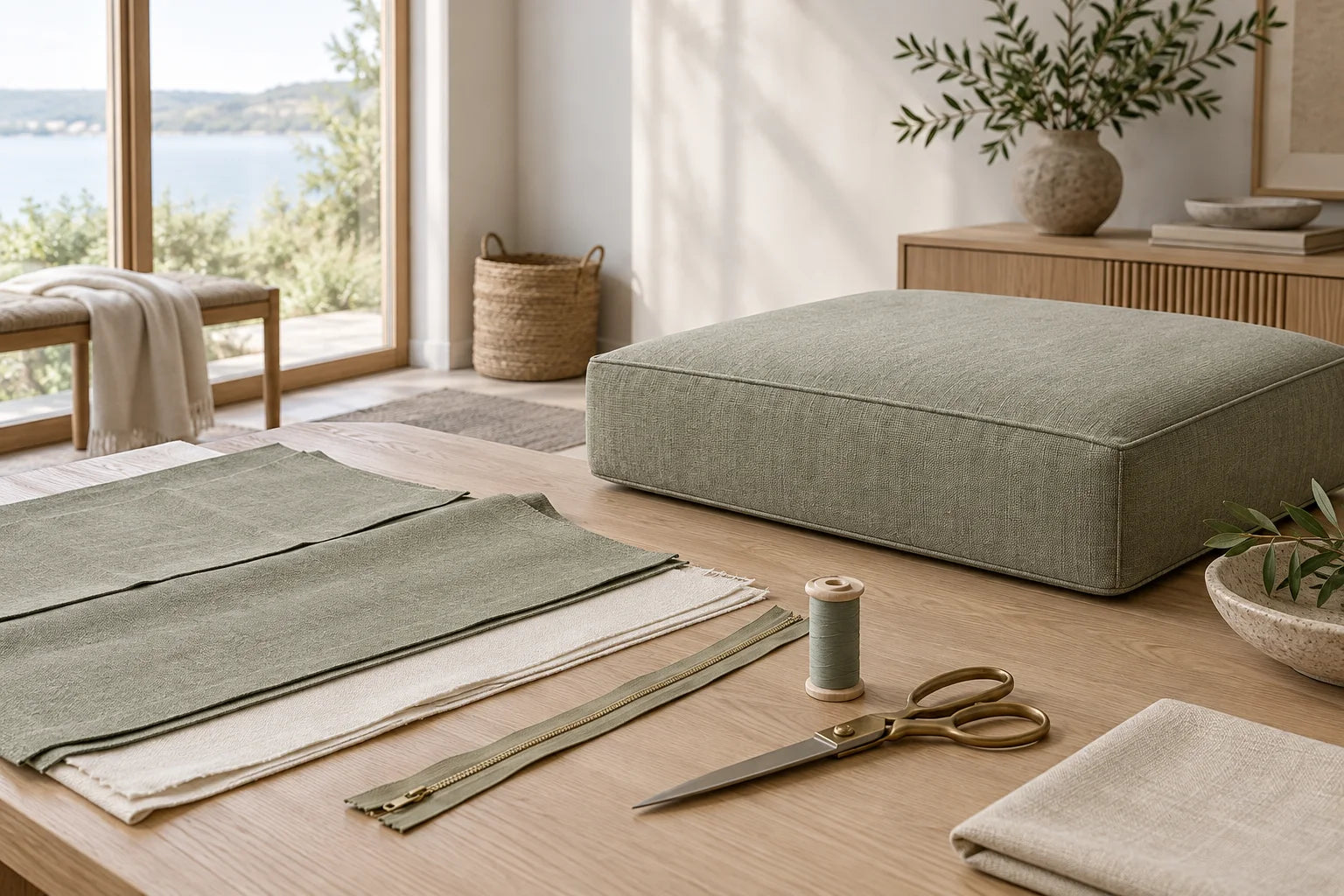
If you sew it yourself, get guidance on any pre-treatment before measuring and cutting. Do not use a general temperature or an expected shrinkage figure without documentation for the fabric. The guide to sewing cushion covers helps keep dimensions and seam allowances separate.
Choose colour and pattern using a large enough sample
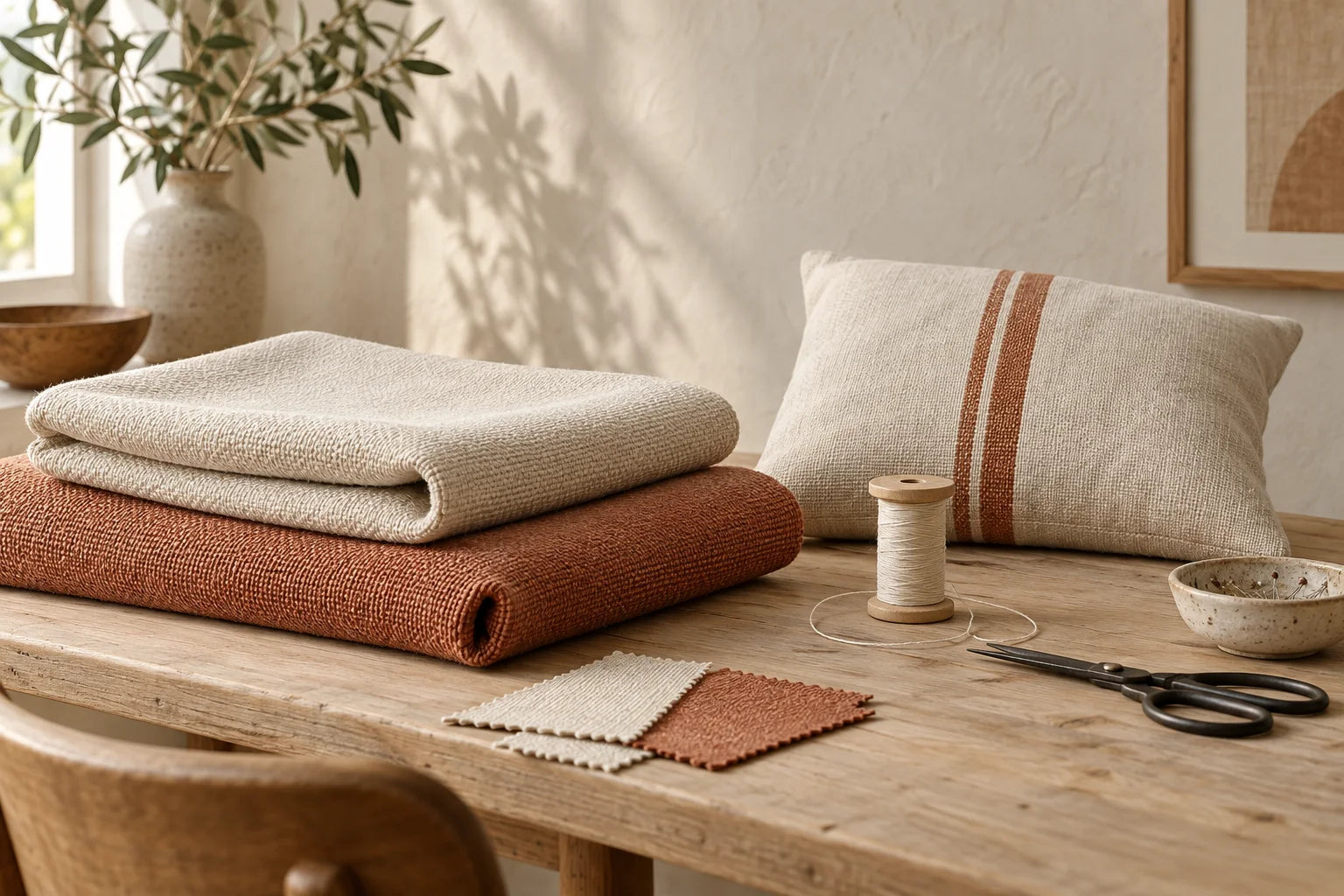
View the fabric in the light where the furniture will stand. A large, solid-coloured surface may look very different from a small sample. With stripes you should also decide on direction and placement on the seat, back, and side pieces.
If you have several chairs, consider the expression as a complete set. A consistent direction makes it easier to achieve a calm result, but it can also affect the cutting and material consumption.
Compare with your needs, not a debate about fibres
Cotton, wool and blended fabrics cannot be ranked for all furniture at once. Compare concrete products based on the requirements you have written down: feel, appearance, cleaning and daily load.
Use the checklist for durable upholstery fabric along with the product sheet. Once the quality is selected, save a sample, name, and colour number. This makes future care and any potential ordering of new upholstery significantly more precise.