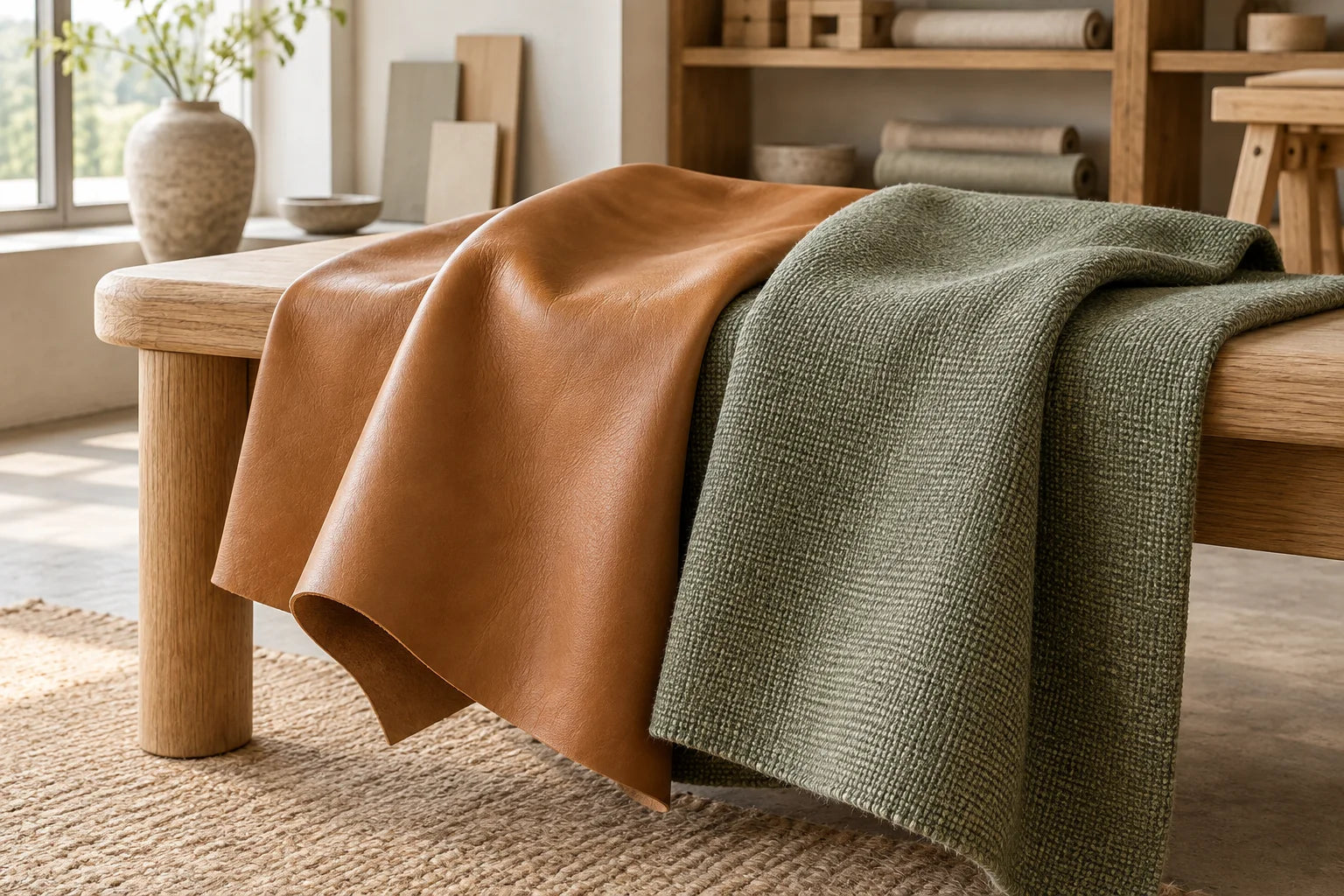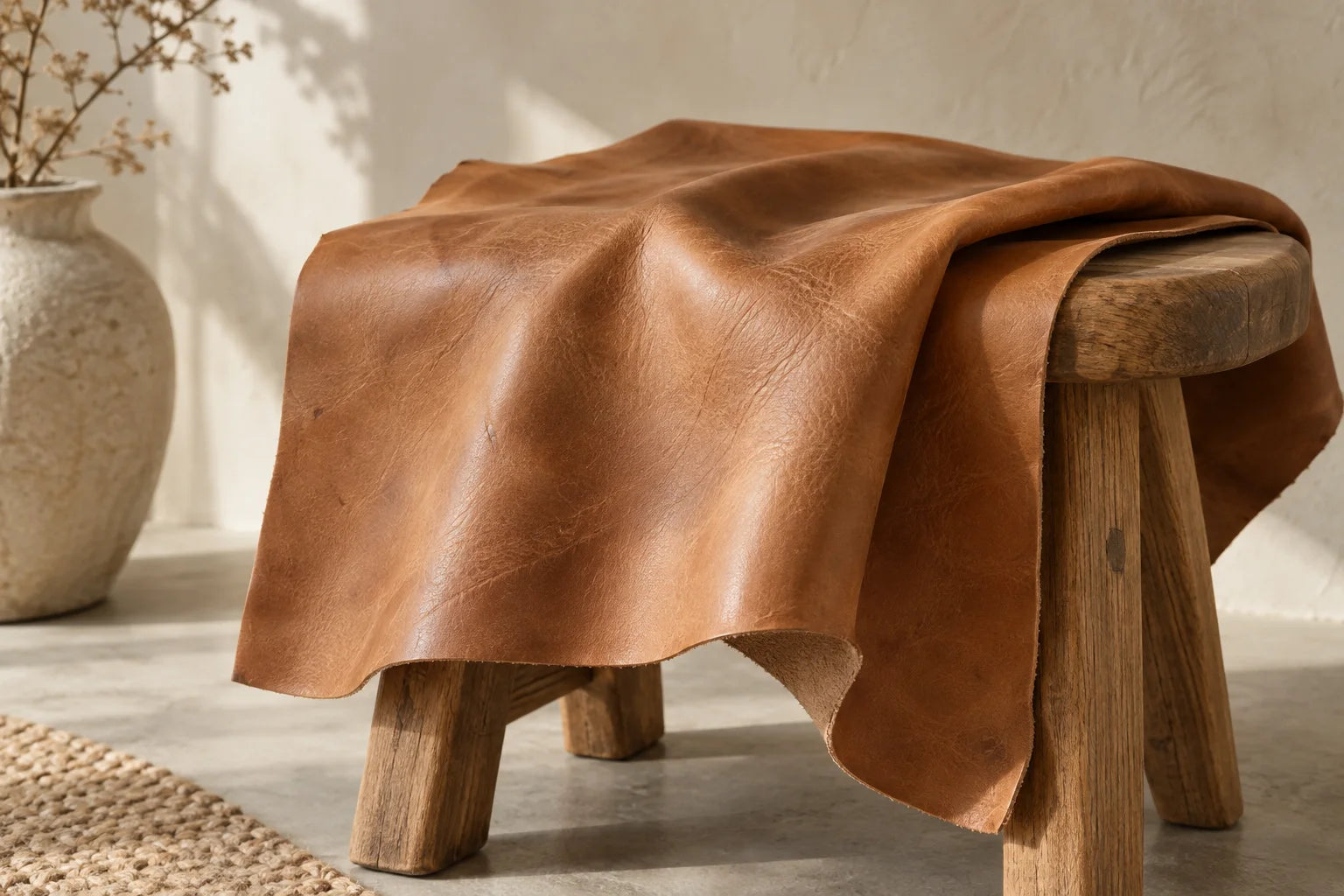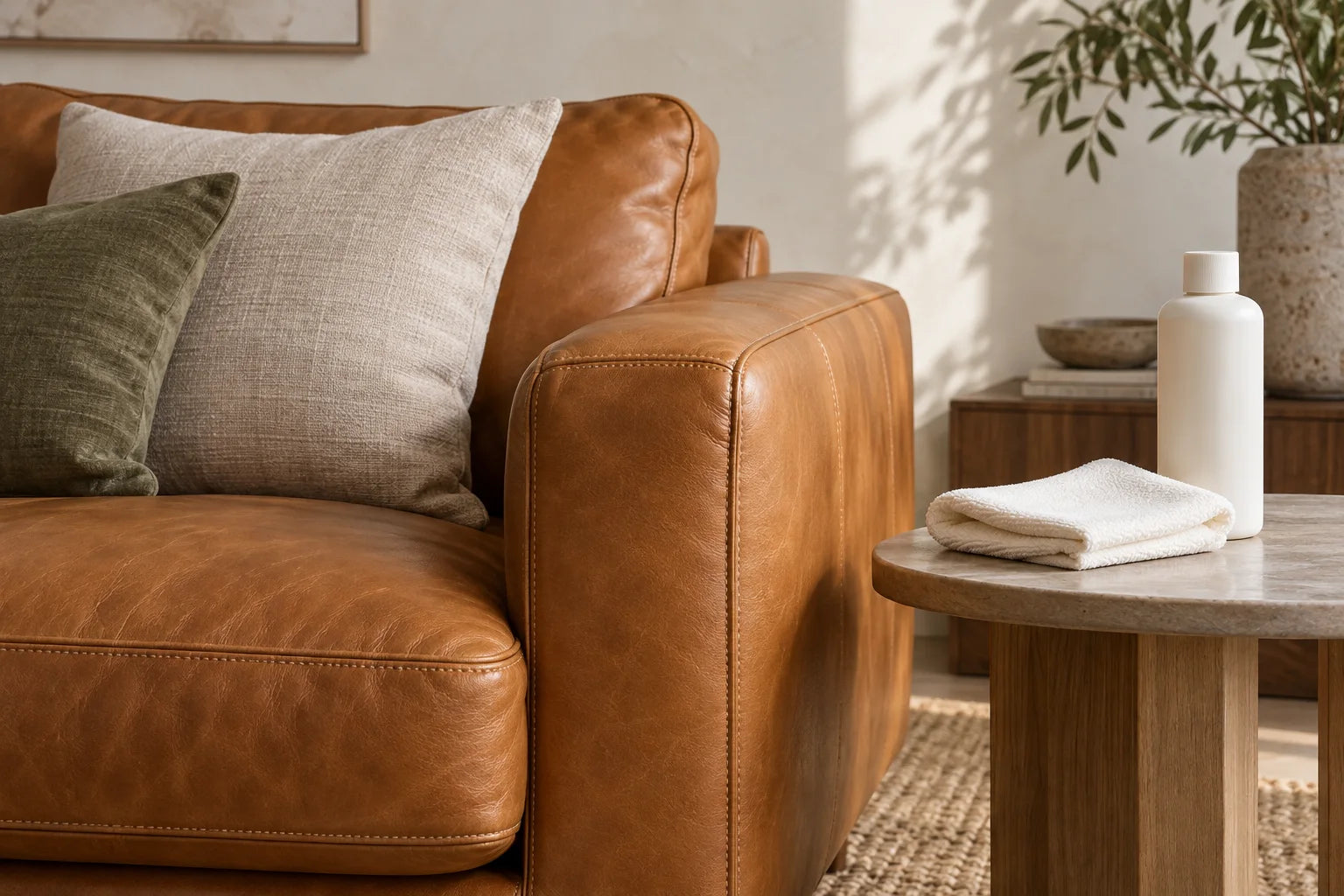
Before you buy leather care for a sofa, you must know which leather surface the sofa has. The same product cannot be used on pigmented leather, aniline leather and nubuck without further ado. The safest start is the furniture's marking or receipt and the manufacturer's care instructions.
If the surface is already damaged, there may be a need for an assessment of repair rather than more care product.
Find the information that governs the choice
Look for the manufacturer, model, leather name and colour code. Check the order confirmation and under the sofa, and check whether a previous owner has kept samples or documentation. Also note what the sofa has already been treated with.
A photo can help to describe the problem, but it cannot always identify a leather type securely. Therefore, do not use colour and gloss alone as proof of which treatment is correct.
Distinguish between cleaning, care, and repair
Cleaning deals with dirt on the surface. Care is the treatment the manufacturer may recommend for the material. Repair deals with damage, for example a broken stitch or a damaged surface.
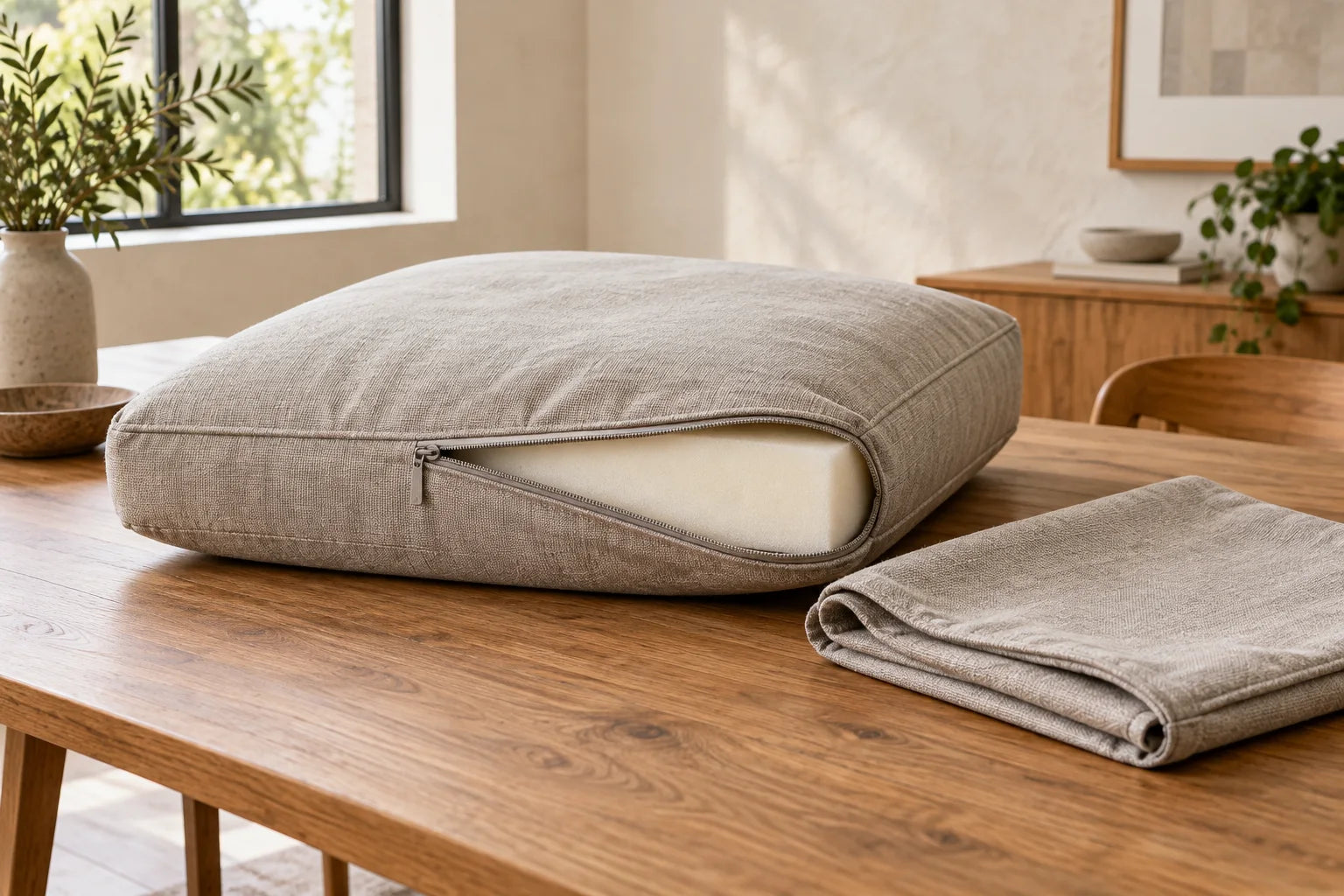
If a sofa feels saggy, the leather is not necessarily the problem. The cushion's filling and support should be assessed separately. See new cover or new cushions for that scope.
Make a small test before treatment
- Find instructions for the exact material grade.
- Check that the care product is suitable for the surface.
- Follow the manufacturer's recommendation for testing in an inconspicuous area
- Assess the result only after the specified time has elapsed.
- Stop if colour transfers, the sheen changes or an unexpected reaction occurs.
A test on one area does not guarantee the result for the whole sofa, especially if the surface has worn unevenly. It also does not replace identifying the material.
React to stains without experimenting
Note what was spilled and when it happened. If you have already treated the stain, save the product name. This is valuable information for a subsequent assessment.
Avoid mixing several pieces of advice and products in the same area. Otherwise, it will become difficult to determine whether the change comes from the stain or the treatment. For aniline leather expectations of natural changes also form part of the assessment.
Keep a simple care history
Keep the instructions with the sofa’s information and record treatments and dates. It takes little time and makes the next decision easier. If the sofa is later recovered, this information can help when choosing a new leather grade, that fits better with your everyday life.