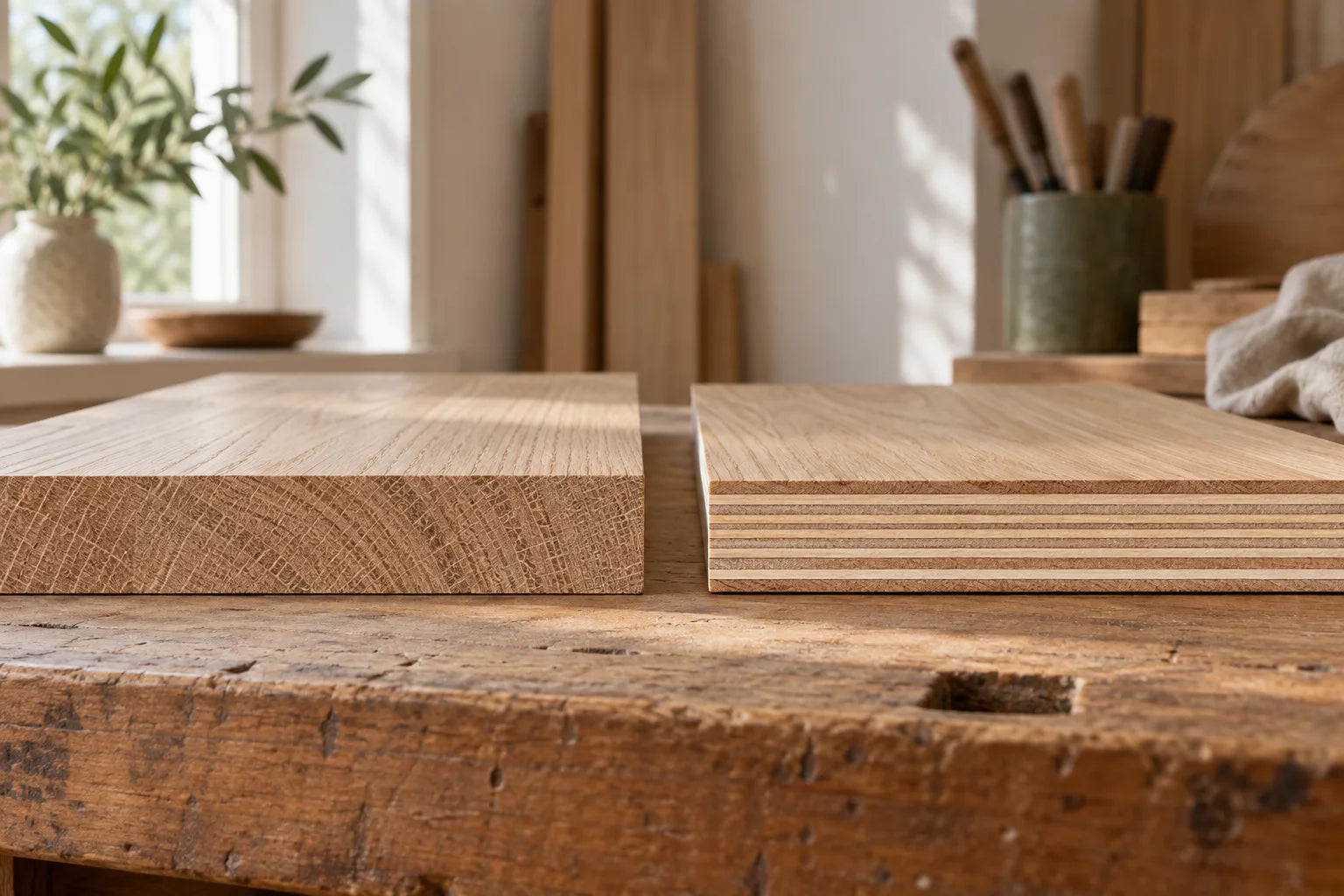
Veneer is a thin layer of wood on a substrate. Solid wood consists of wood through the material's thickness, but can still be assembled from several pieces. The difference is significant for repair: a surface of veneer has a limited layer to work with.
Before repairing a piece of wooden furniture it is therefore important to understand both construction and finish.
Check several areas
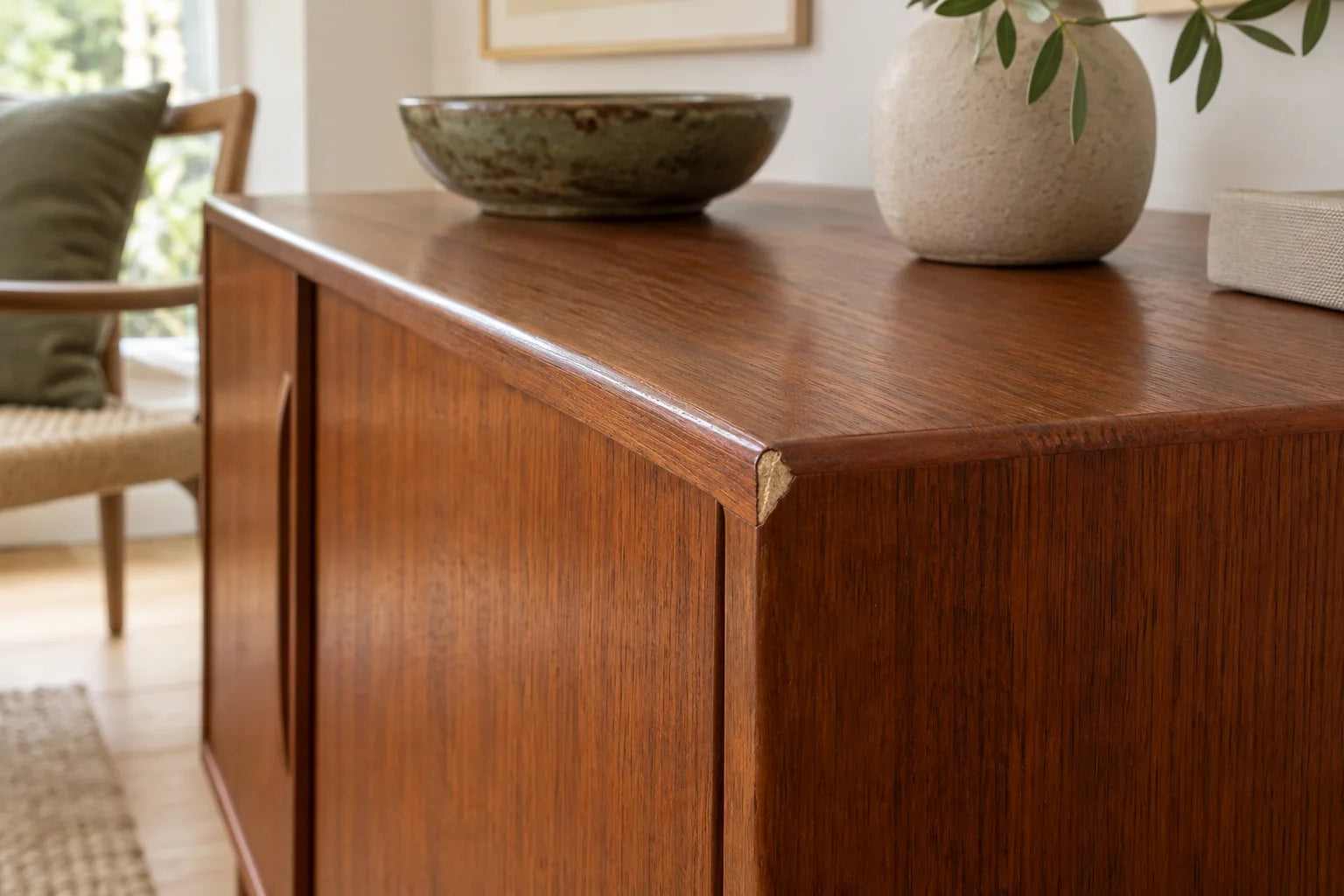
Inspect edges, the underside and existing damage without creating new damage. Grain, edge banding and joints can offer clues, but a neat edge alone does not prove the whole panel is solid wood.
A piece of furniture can also combine materials. The legs can be solid, while the top or sides are veneered. Therefore, describe the specific part you wish to treat.
Veneer is wood, not just a printed pattern
A veneer layer has a natural grain pattern. Laminate and other surfaces are a different material type. If you are unsure, have the identification clarified before choosing oil, varnish or sanding.
Carl Hansen & Søn's guidance for veneer table tops highlights the thin surface layer and the need for careful treatment. The thickness varies between products; one manufacturer's measurement should not be assumed for your furniture.
Damage can occur in different layers
A scratch in the varnish, a hole in the veneer, and damage to the substrate are different tasks. Take an overview photo and a close-up photo with a scale. This helps to show both location and depth.
If the veneer has lifted, you should avoid pressing, wetting, or gluing on a whim. The repair must match the wood layers, substrate, and existing finish.
Sanding requires a reasoned plan
Excessive sanding on veneer can penetrate the visible wood layer. This is particularly true for edges and areas that have already been processed previously. Do not assume that a stain can be removed simply by continuing a little longer.
Read the guide to teak veneer, if you have an older veneered piece of furniture. If the lacquer is intact, gentle cleaning may be the relevant first step.
Choose the result before the method
Do you wish to preserve colour and signs of use, repair a local damage or change the entire surface? The answer determines what should be examined. The guide on patina and restoration helps you describe your request.
Store up information about materials and completed treatment if the furniture is repaired. This makes future interventions more precise.