Old odour in a wooden furniture piece can have several causes, and one specific treatment cannot be guaranteed to resolve them all. Begin by identifying where the odour originates and whether there are simultaneous signs of damp, dirt, or a material that needs assessment.
You can receive assistance with a limited assessment through furniture repair. Describe the problem before choosing a product.
Locate the odour
Is it strongest in a particular drawer, on the back panel, at the upholstery or in the whole piece of furniture? Remove loose items, and note differences between the parts. Photograph the back and underside as well, if this can be done safely.
State where the furniture has stood, and whether the smell changed after moving. A cellar history is relevant information, but is not in itself a secure diagnosis.
Look for moisture and visible changes
Look for staining, swollen panels, loose layers and visible growth. Suspected mould or chemical contamination needs a separate assessment. A general furniture-care recipe does not prove that the cause has been removed.
Do not try to hide the smell with perfume or a new finish before the cause is clarified. It can make it more difficult to follow whether the problem actually changes.
Clean only according to the material's instructions
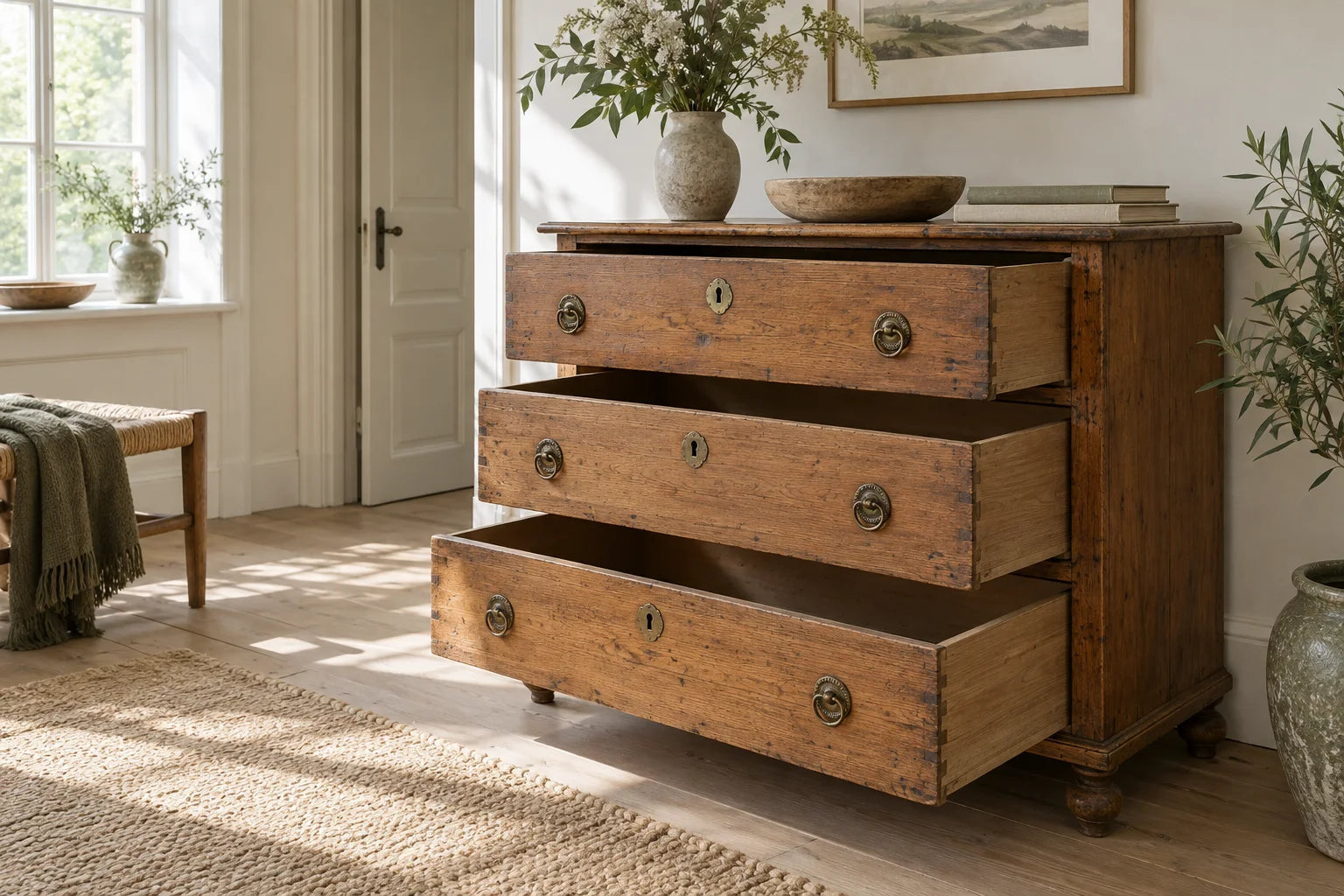
A chest of drawers may have lacquered outer surfaces, untreated drawer sides and a different type of back panel. These do not necessarily need the same treatment. Excessive wetting can cause problems at joints and in panel materials.
See cleaning of lacquered furniture and soft soap on wood, before you choose a method. A household cleaner is not automatically suitable because the smell is old.
Provide a clear basis for the assessment
Note which products have already been used, where and when. Keep packaging or product names. If the furniture has been treated multiple times, the sequence is useful.
Do not promise yourself that a specific number of days of airing will solve the problem. Air around the furniture may be part of a practical inspection, but a persistent cause must still be addressed.
Clarify what you want to preserve
If a part needs replacing or the surface needs changing, there should be a clear aim. Read restoration and patina and describe whether original material, appearance, or function takes priority.
A good solution begins with a more precise problem formulation than "the furniture smells old".