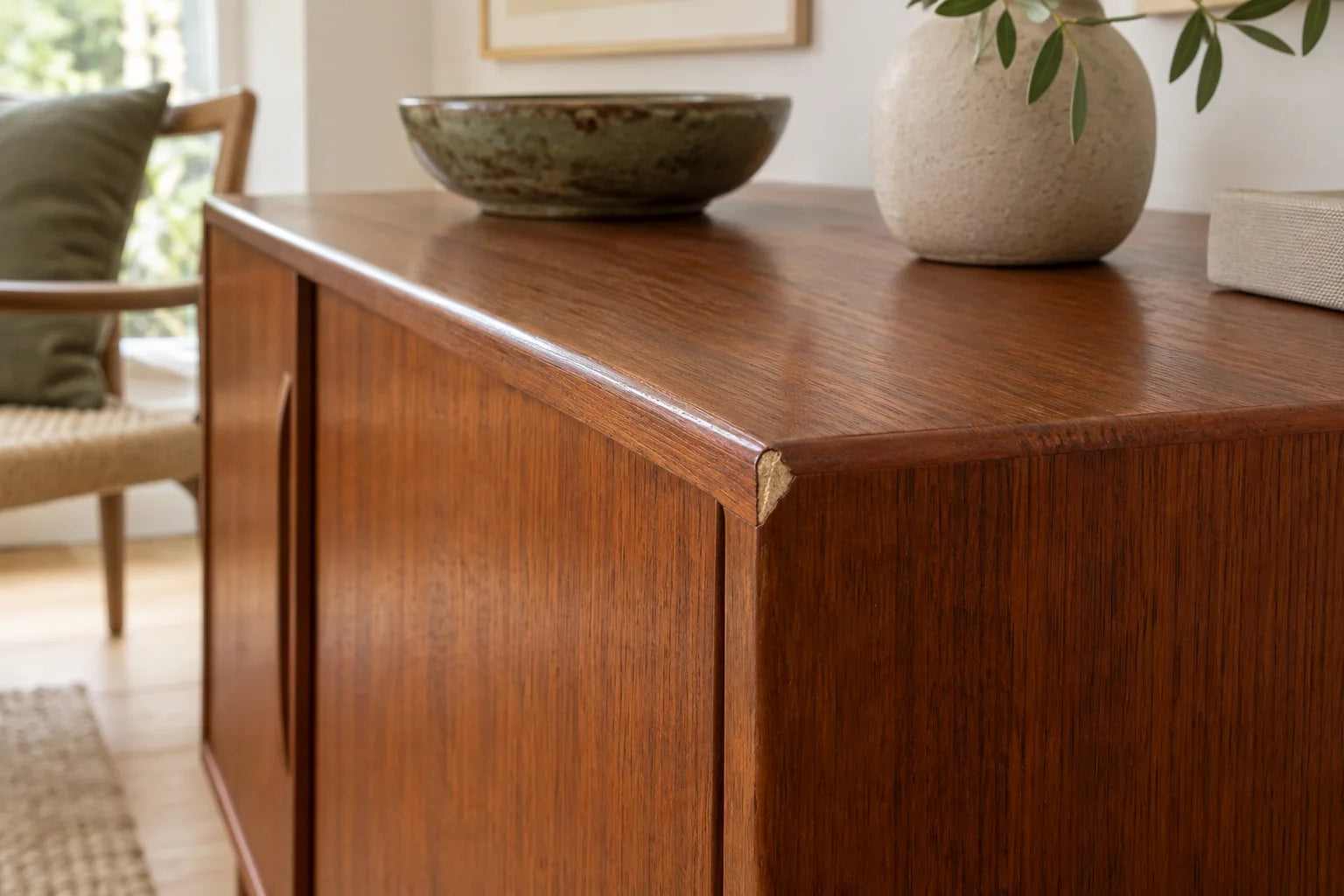
Damage to teak veneer should not automatically be sanded away. The visible wood layer may be thin, and a stain, a flaking and a dent may require different solutions. Start by finding out which layer the problem is in.
For wooden furniture repairs images of the whole piece of furniture and the location of the damage are a better starting point than just a very close crop.
Describe the damage without changing it
Is there a dark ring, a missing chip, a crack or an area that has lifted? Note whether the damage is new and whether it followed exposure to moisture, heat or an impact.
Avoid testing with more water or heat. It can alter the problem and make it harder to assess the original condition. Keep any loose pieces if they have already fallen off.
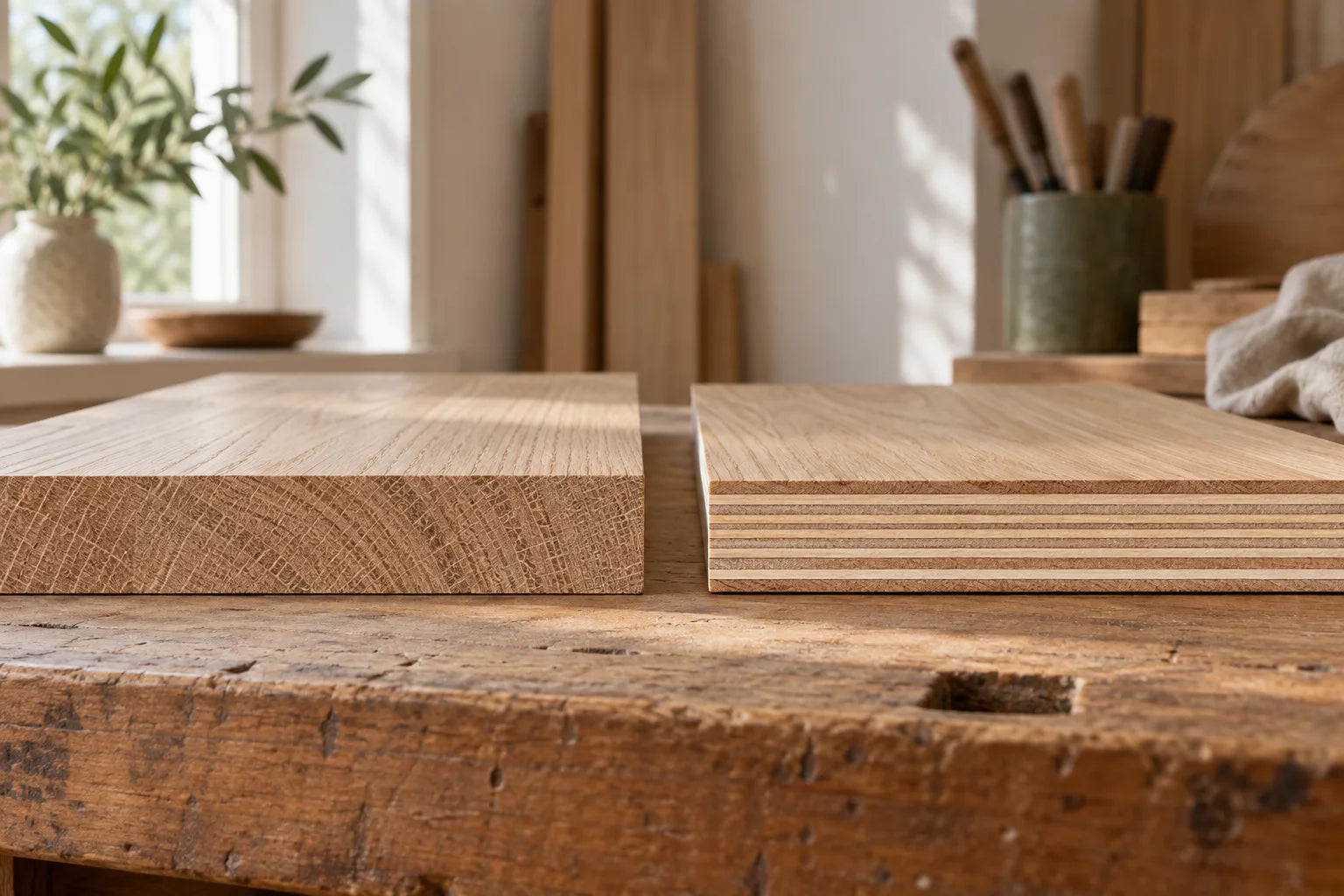
Check if it is actually veneer
Check the underside, edges and existing damage. A teak-coloured piece of furniture is not necessarily teak all the way through, and a solid edge may sit on a veneered panel.
The guide to veneer and solid wood helps with the most important differences. If the material is still uncertain, it should be identified before choosing a method.
Do not sand if the layer thickness is unknown
A veneered surface has limited material to work with. Previous sanding may have made certain areas thinner, especially at edges. Therefore, there is no universal grain size or time indication that makes sanding safe.
Carl Hansen & Søn's veneer guide emphasises the need for caution. It is a general limitation of the construction, not a concrete repair method for an old teak piece of furniture.
Clarify colour matching and patina
A new veneer panel or local treatment may differ from an older area. Request a realistic description of the expected finish. 'Invisible repair' should not be assumed based on a photograph.
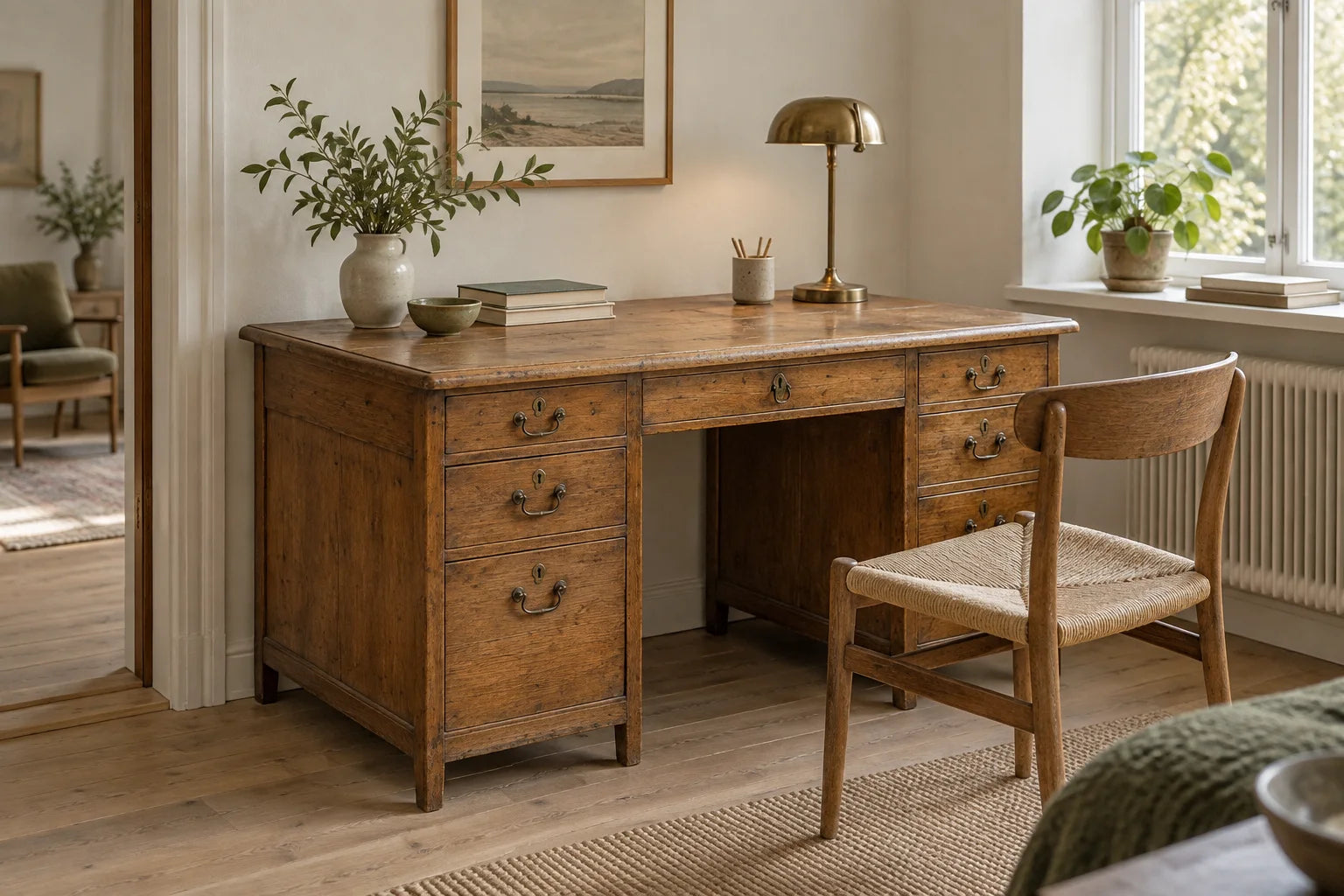
Read the guide to preserving patina, if the goal is to keep the furniture's age and character. Sometimes a limited visible repair is a more appropriate goal than changing the entire surface.
Select finish based on the existing surface
Do not apply oil simply because the wood is teak. The furniture may be lacquered or otherwise treated. See choosing oil for indoor furniture for the questions that need to be clarified.
Finally, describe the task with area, method, expected finish, and any limitations. This provides a better basis than simply ordering 'remove the stain'.