Materials for chair weaving must suit the chair's construction. Colour and appearance are not enough. What is also decisive is how the material is led, tensioned and fastened, and what function the seat has.
When you need help with chair weaving, photos of both seat and underside are therefore a good supplement to the material's name.
Use the shape as your first guide
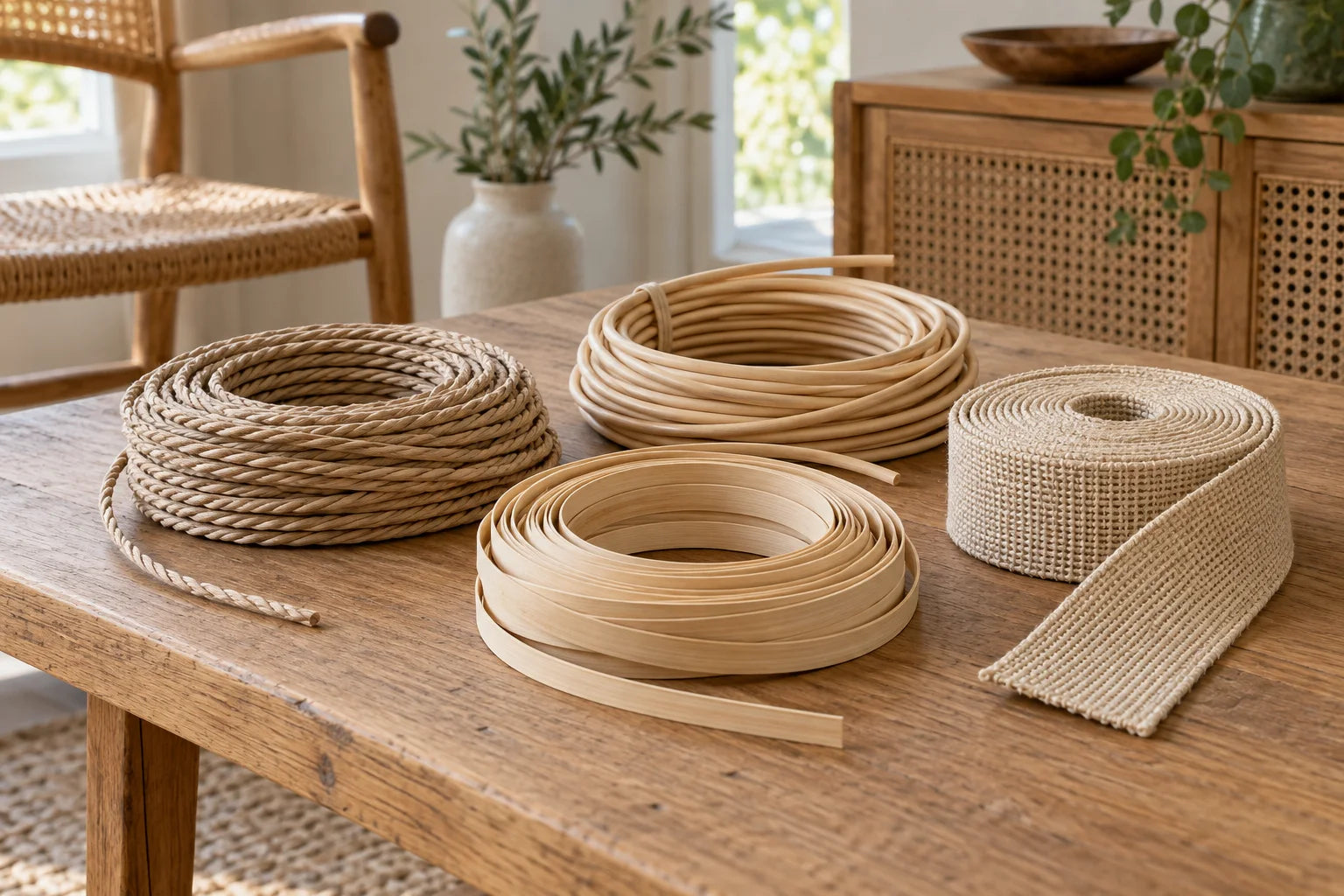
| What you see | A relevant path to investigate |
|---|---|
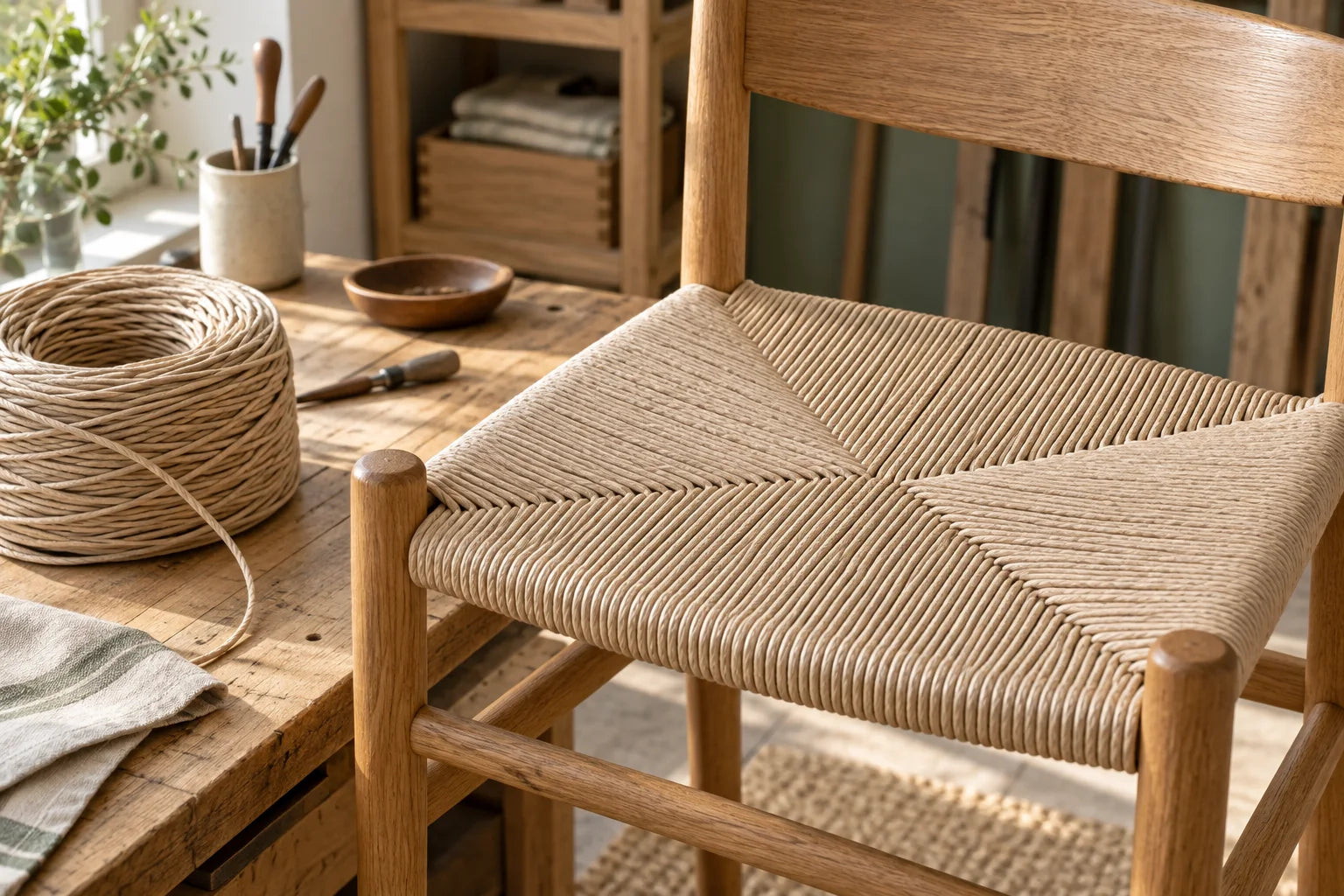
| Twisted cord in a tight pattern | Paper cord or another type of cord |
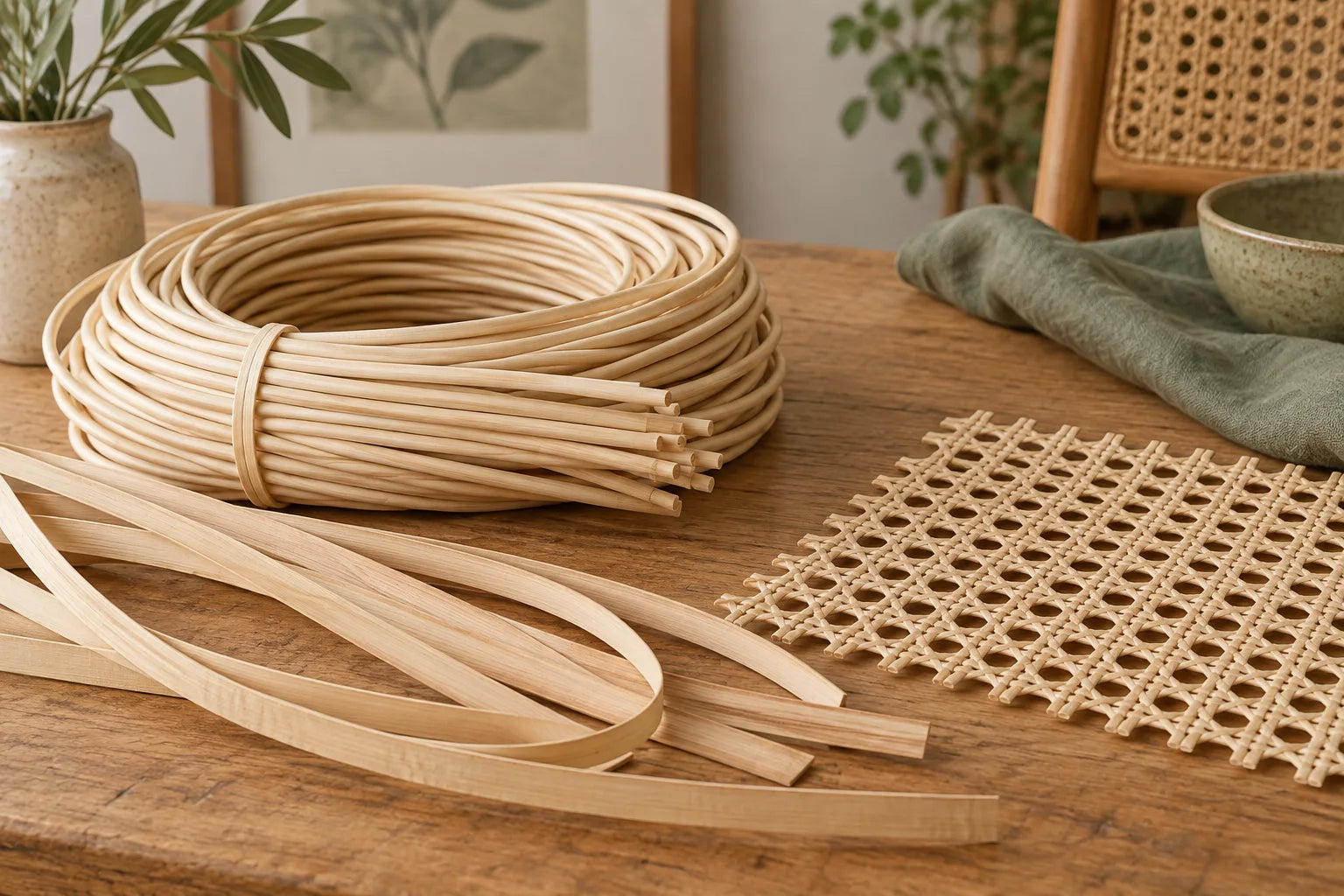
| Round, smooth rattan canes | Rattan cane |
| Narrow, flat strips | Cane strips and related materials |
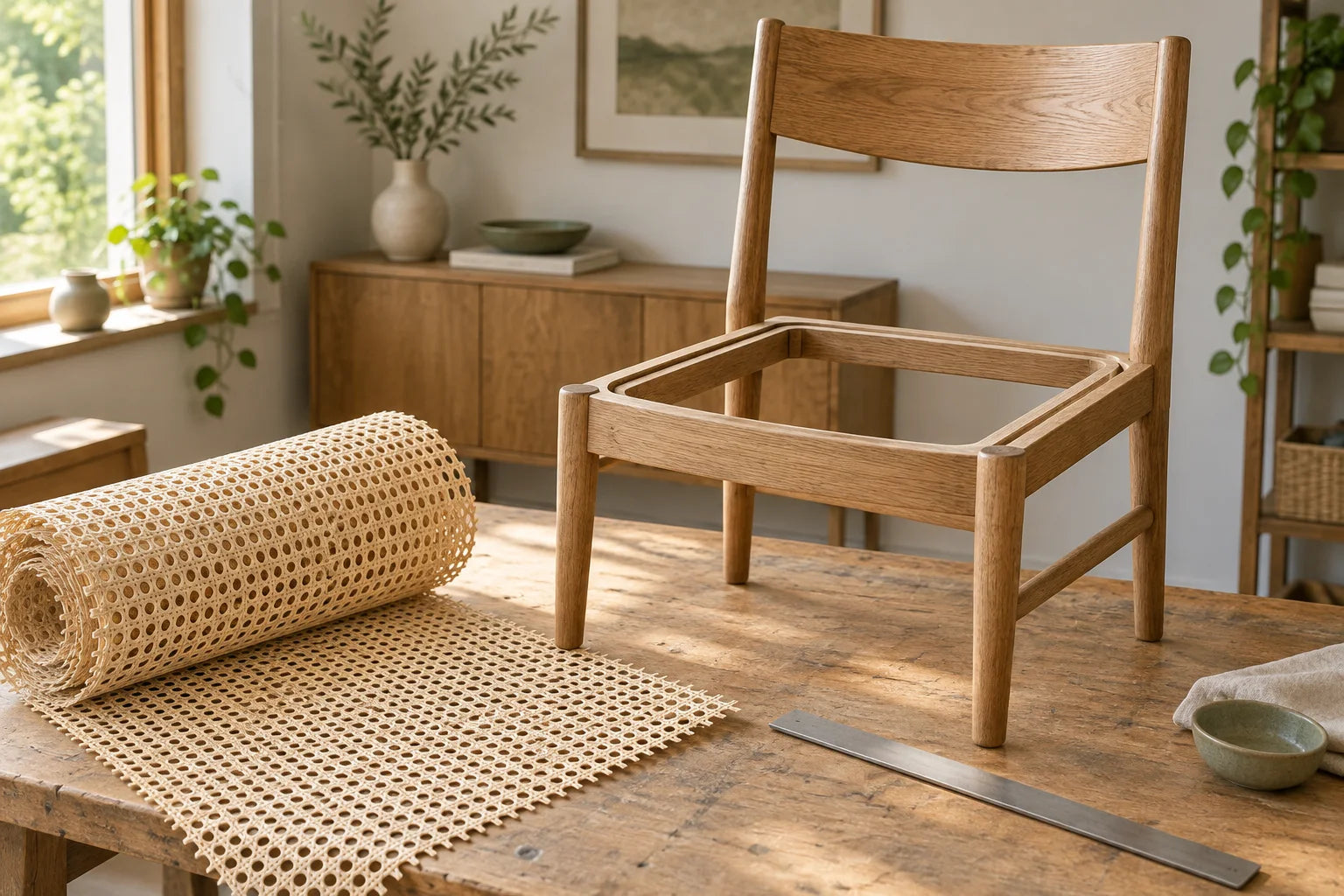
| Open mesh with repeating octagons | French caning |
| Wide straps across the seat | Webbing or woven straps |
The overview helps you describe the material; it does not guarantee identification. Synthetic materials can imitate natural ones, and old chairs may have been altered.
Material and mounting are two choices
A pre-woven sheet can resemble a hand-woven pattern, but the frame may use a different fastening method. Look for grooves, holes, nails or other finishing details without unnecessary disassembly.
Read French caning by the metre, if you are considering a prewoven sheet. If the seat uses tightly woven, twisted cord, paper cord for chair weaving is a more relevant starting point.
Be precise about dimensions
Another thickness or width may alter the pattern's scale and the space the material occupies at the edge. Therefore, do not order solely based on a colour description such as 'natural'.
Show a scale next to an intact part, and have the quality confirmed. If more chairs need to be made, it is useful to compare them all before ordering. They may have different material due to previous repairs.
Distinguish between natural variation and damage
Natural materials can vary in tone and surface. A broken thread, a loose fastening, or a crack in the frame must instead be assessed as a structural problem.
The guide to rattan cane explains some of the terms. Use it together with images when you want to describe what should be preserved or replaced.
Ask for the care instructions
Once the material has been selected, the maintenance instructions should be kept with it. A tip for paper cord does not automatically apply to rattan or a woven plastic strap. Keep the material details together with images of the finished seat. This makes the next maintenance or repair easier to plan.