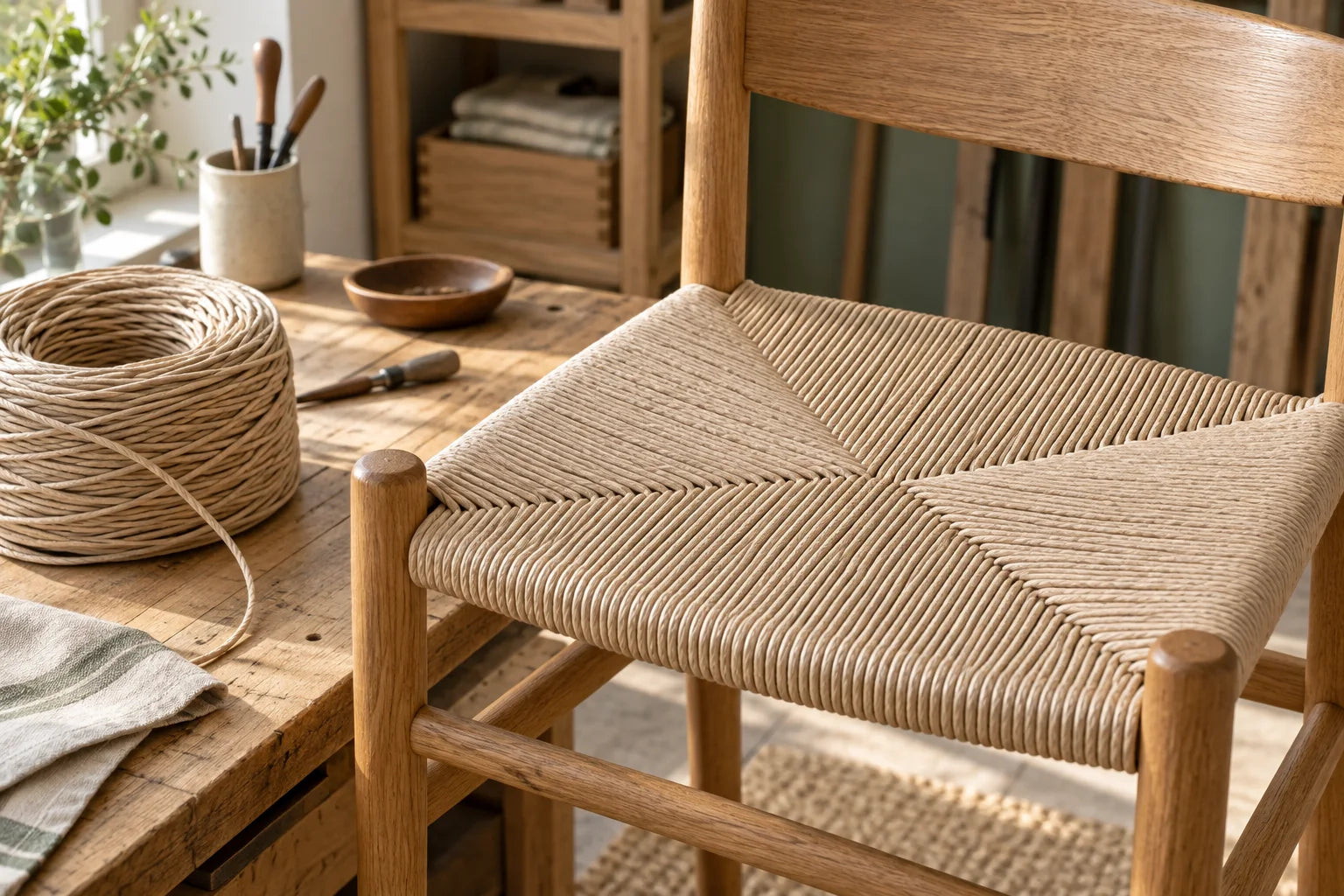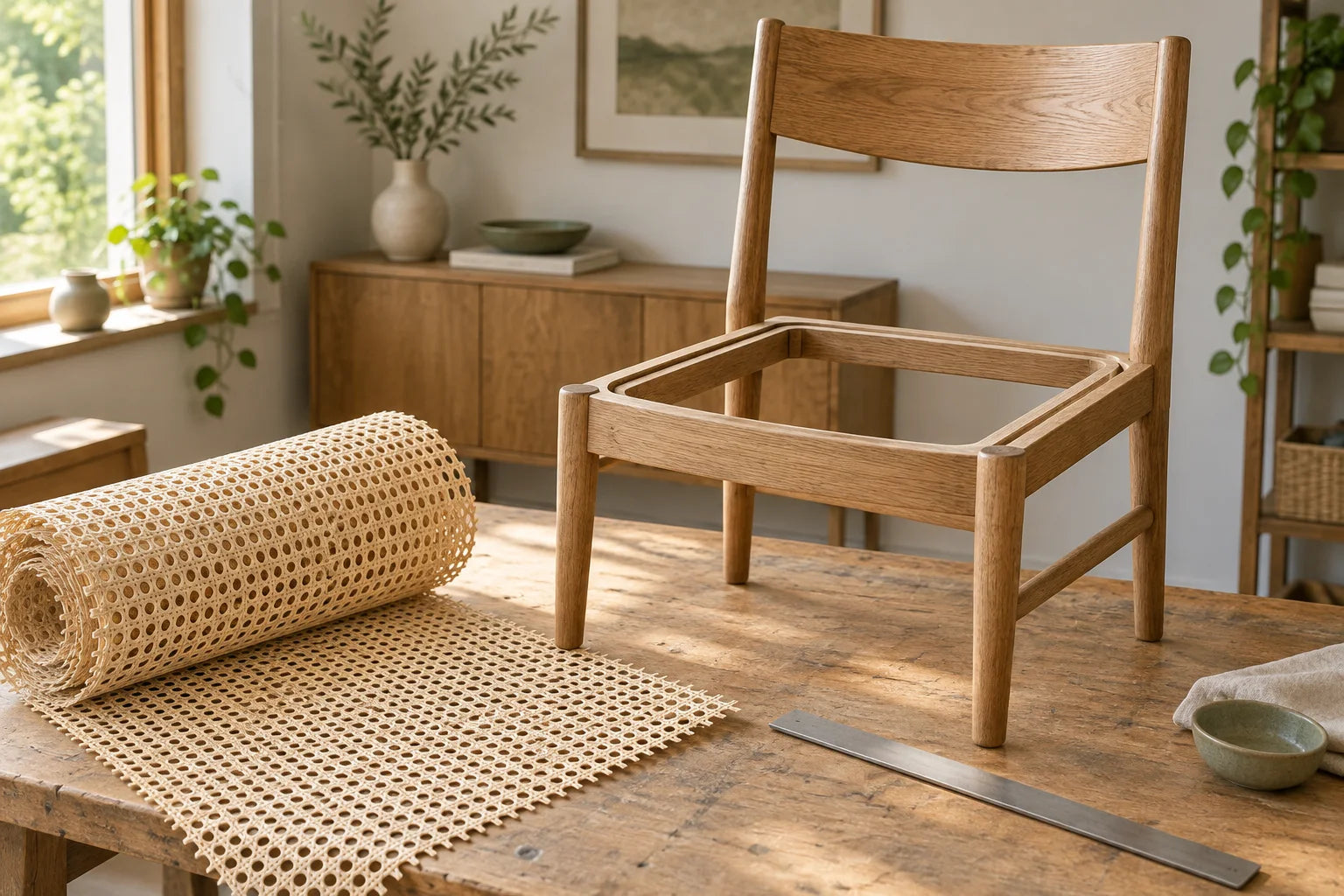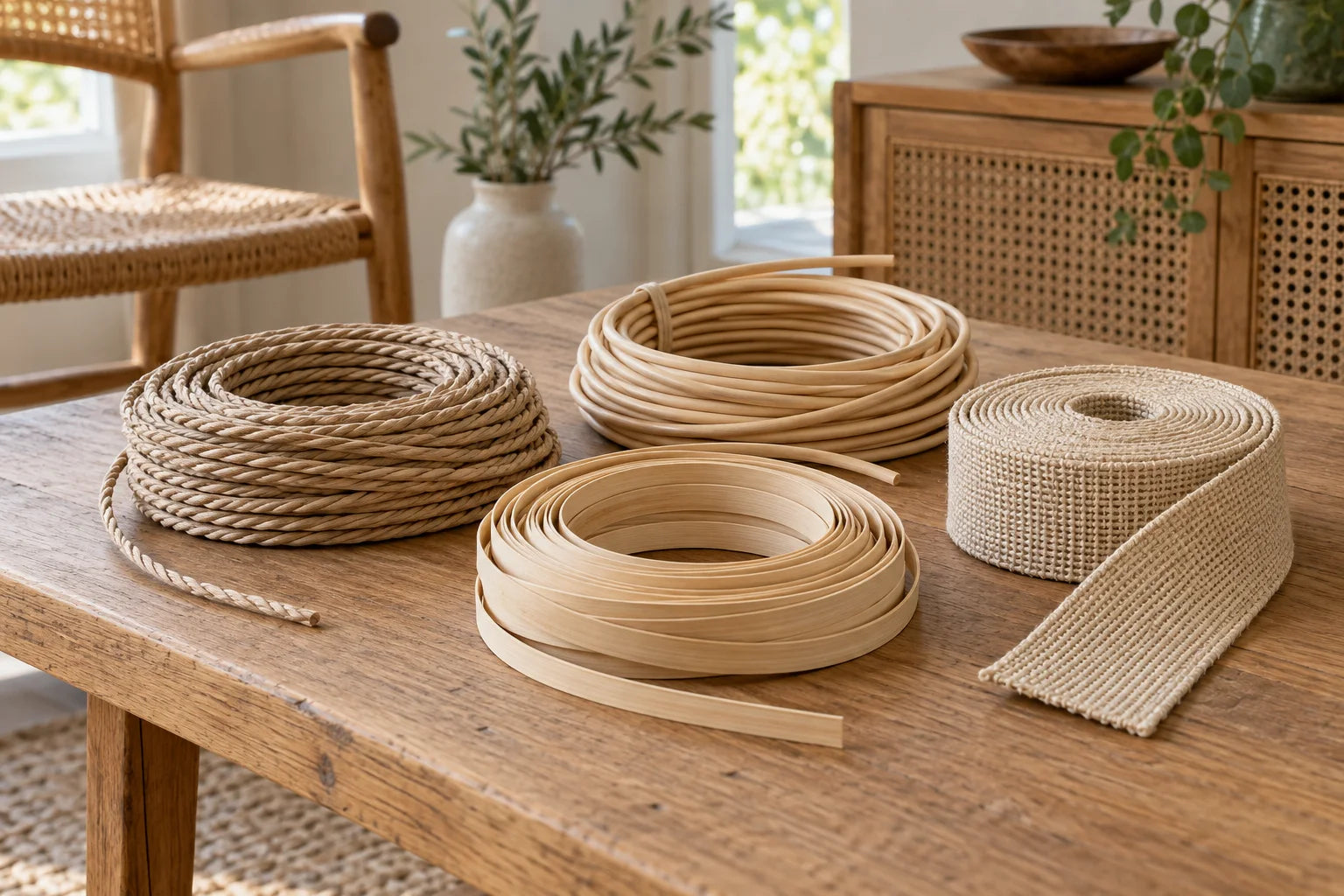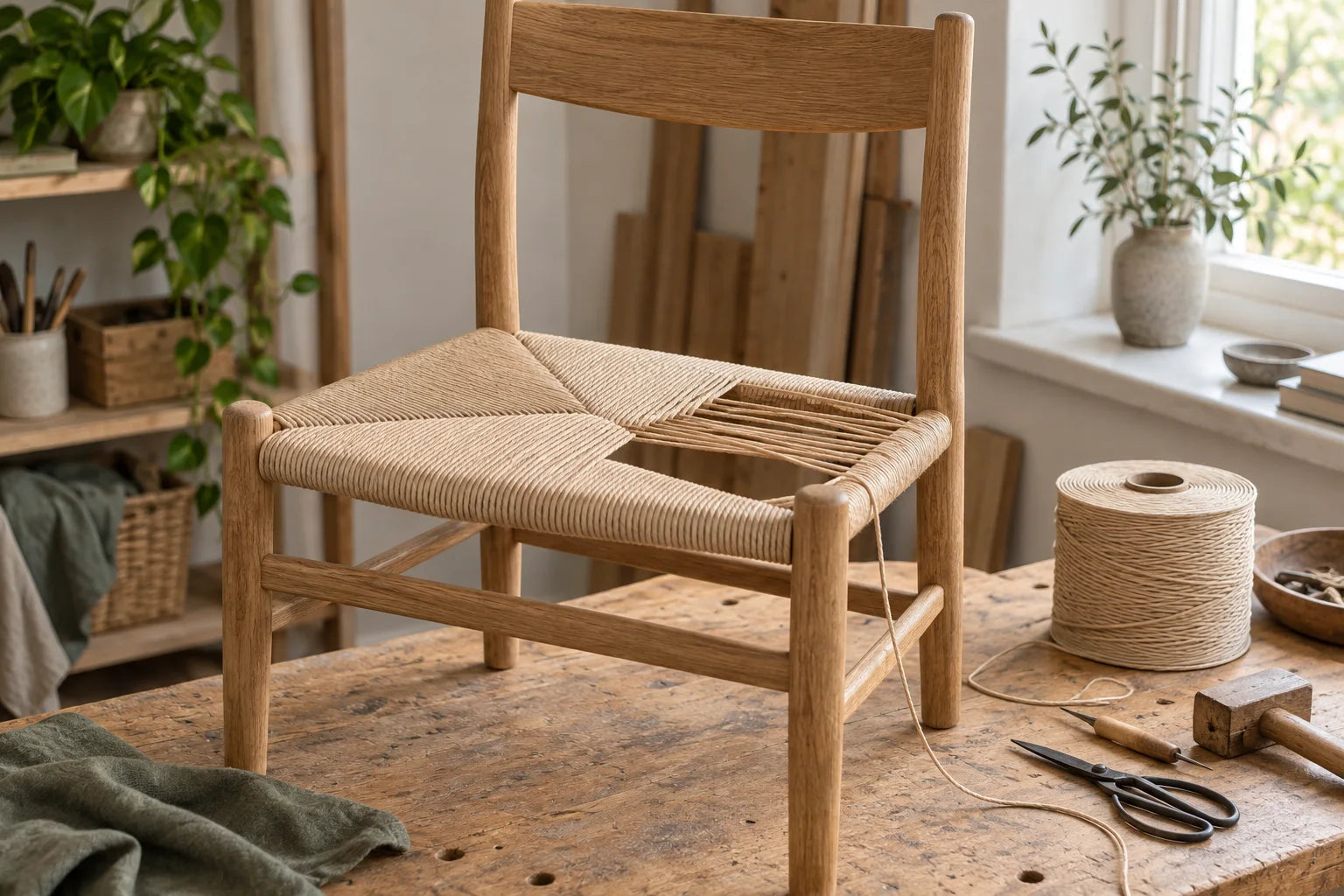
Chair weaving as a do-it-yourself project begins by identifying the technique. Paper cord, hand-woven cane strips, and pre-woven French caning require different materials and work processes. A video about a similar chair is not necessarily a guide for yours.
Use chair weaving to clarify the construction if you are unsure, before you begin cutting away old material.
Document the pattern systematically
Photograph the top, bottom, corners and ends. Take both overview images and details. Note where the threads begin and end, if they can be seen without loosening anything.
A simple sketch can help with the sequence, but it does not replace a method suited to the chair. Keep an already loose piece of material if you have one. Do not cause new damage just to obtain a sample.
Choose a project with a clear method
It is easier to plan when the chair's model, material type and pattern are known. If several parts have been changed previously, you may end up with a construction that does not match the instructions you have found.
Read about paper cord or about French caning by the metre depending on the chair. Confusing the two can lead to buying the wrong material, even though both look like weaving from a distance.
Check the wood first
Look for cracks and loose joints. If the frame needs repair, it must be addressed before you spend time on a new seat. Tension in the weaving and stability in the frame must work together.
Do not use an unstable chair as a practice subject that is later expected to be put into direct use. First, have the structure assessed for suitability for the planned repair.
Plan materials and workspace
Compile the precise material list from a model- or method-suitable guide. Clarify dimensions, necessary lengths, fixing and tools. A general shopping list cannot cover all patterns.
Ensure that the chair can stand securely and be protected while the work is in progress. Keep loose ends and tools separate, and avoid letting partially finished weaving be stressed. With sharp tools, the manufacturer's instructions apply.
Assess the result before use
A uniform pattern is only one part of the quality. Fixings, finishes and frame must also be in order. If you are unsure about tension or construction, have the work assessed before the chair is used.
The guide to materials for chair weaving can help describe a problem precisely. Save your reference photos; they are also useful if the work is to be taken over or corrected.